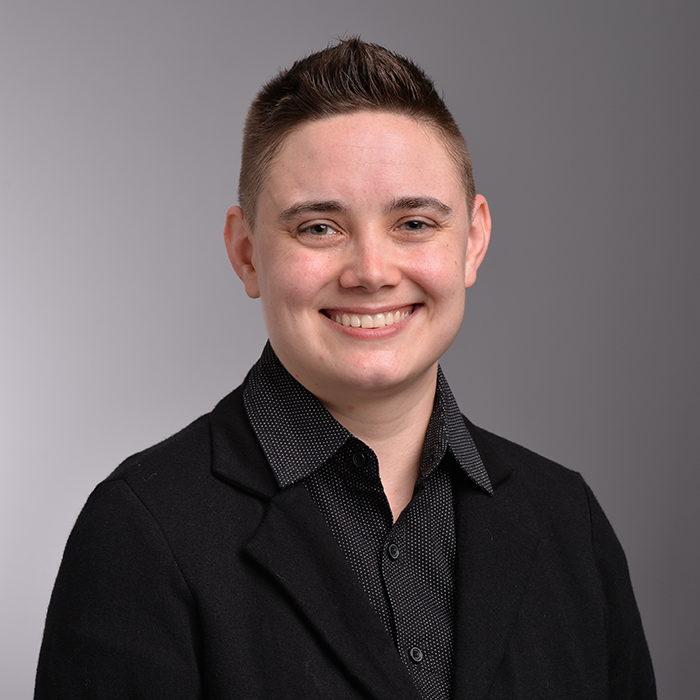
Dr. Kelly Coburn is an Assistant Professor in the Department of Speech-Language Pathology & Audiology at Towson University. Kelly demystifies the first year on the tenure track by sharing their experience and advice. Kelly discusses their teaching, research, and service responsibilities during the first year and how those will change for Year 2. They also share some tips for time management and determining priorities for the first year as an Assistant Professor. During the episode, Kelly mentions the National Center for Faculty Development and Diversity which you can find more information about here: https://www.facultydiversity.org/ You can learn more about Kelly and their work on their Towson University faculty webpage and connect with them on Twitter @KCoburnSLP.
Transcript
NOTE: This podcast was transcribed by a free tool called Otter.ai. Please forgive any typos or errors.
Danika Pfeiffer
Hey, Kelly, thanks so much for joining me today.
Kelly Coburn
Thanks so much for the invitation.
Danika Pfeiffer
Absolutely. Let’s jump right in. Can you tell us a little bit about yourself growing up before you started your academic journey?
Kelly Coburn
I was always a really nerdy kid. So I kind of feel like I’ve always been on an academic journey. I started reading really young and I’ve always loved words and language and reading and I was always the kid who, like wanted to play school after school and I always wanted to be the teacher. So I had those kind of weird nerdy experiences where it kind of seemed like I was headed towards an academic or educational path. I also have one sibling who was diagnosed with autism when we were kids. And so that really shaped my experiences and my exposure to things like speech, language therapy, and special education. Because in addition to having autism, he was a late talker. So I learned about speech therapy really young because I had a sibling who was attending speech therapy and that always seemed like a pretty cool thing to me. For a long time, I thought that I wanted to be a special education teacher. And then the more that I learned about that and discovered speech language pathology as a potential career, I realized that classroom management is probably not my thing. And even though I did want to work in special education settings, I wanted to work with kids one on one and then smaller groups rather than managing a whole classroom.
Danika Pfeiffer
That makes total sense. I think I’ve interviewed now many people have had the same experience of playing school. When they’re younger and kind of starting to lean toward teaching from an early age. So when did this happen that you started to really narrow in on speech language pathology was that when you were in college or before?
Kelly Coburn
I was in high school, I remember being in my guidance counselor’s office and we were talking about different colleges and different potential majors and I loved English and I love literature and I loved science and also this special education direction. And we were like flipping through books. About different schools and different majors and Oh, communication sciences and disorders. What’s that? And so I decided to become a speech therapist when I was 16. And I really thought that I was going to change my major about a dozen times once I actually got to college, but I didn’t and I stuck with it. And I’m still a speech language pathologist and I’ve taken it to this really extreme level. Yes. And
Danika Pfeiffer
yeah, we’ve been away all the way through to a PhD. So tell us a little bit about your training then.
Kelly Coburn
So I got my bachelor’s and my master’s degrees both from the University of Pittsburgh where I studied communication sciences and disorders and then focused in on speech language pathology. After I graduated with my master’s I then went into clinical practice in special education settings where I worked for seven years before going back to get my PhD. At that time, I went to Penn State and got my PhD, also in communication sciences and disorders with a focus on autism, and after that did a postdoctoral fellowship in the Department of Psychology at the University of Alabama.
Danika Pfeiffer
Okay, so yes, see all of this great training that you have and but also you have a lot of clinical experience in form your research, which is always a good thing.
Kelly Coburn
Yeah. And that was very important to me that I had that clinical backing because I had always kind of thought that I might go back and get a PhD. It just seemed like the sort of thing that I would do. But by the time I finished my master’s, I really needed a break from school. And I really wanted to get that clinical experience, because I knew that it would inform the research I would do in the future and I’ve always wanted my research to be clinically driven. So I’m really glad that I spent that time learning what’s going on in the field and what kind of practices are in use because it really helped to shape the research questions that I asked now.
Danika Pfeiffer
Yeah, that makes complete sense. And then you pursued a postdoc with me. Do you want to do that?
Kelly Coburn
By the time I was wrapping up my PhD, I didn’t really feel ready for the tenure track. I wanted to get some more research, training and experience and learn some different skills work with slightly different populations. I had done research mainly with adults exclusively with adults during my doctoral program, and my postdoc was working with children more. So I got to expand my experience in that way. And I think that that postdoc experience really helped me to clarify my research goals when I then applied for tenure track positions.
Danika Pfeiffer
Okay, great. So let’s talk about that process. This season. I’ve been talking with so many people about their varied experiences going on the job market. What was your experience, like applying for jobs?
Kelly Coburn
I applied to tenure track faculty positions during my postdoctoral fellowship. And I applied pretty broadly like geographically speaking, I knew I wanted to be in a CSD or SLP program, and so I was looking for places that were seeking faculty in my area of expertise. With a little bit of flexibility. Not everyone is looking specifically for an autism researcher, but they might be looking for someone with specialties in child language which my clinical experience helped me to be a really strong candidate. For. So there was some flexibility around research area, but I was also thinking about geographic area and although I said you know, I applied to a pretty wide range of places like East Coast or West Coast all across the US for personal reasons. There are some places that I would be more and less comfortable living. So it was it pretty broad, but also like, I tried to be very conscientious about what I needed out of a job and also out of a living situation.
Danika Pfeiffer
Yeah, yeah, that makes a lot of sense. I think a lot of people have mentioned importance of location and how that really factors in you know, you want to find something that on paper sounds like something you would enjoy but also is in a place where you could live. Yeah, totally limiting. Yeah. And how many cycles did you go on the job market?
Kelly Coburn
I was only on the tenure track job market for one cycle. I had only applied to postdocs while I was in my doctoral program because I knew that that was what I wanted to do. And fortunately that first cycle worked out for me and I was offered a position that I was happy to accept and it has really worked out. Yeah,
Danika Pfeiffer
which is amazing. Awesome. So let’s talk about that position. You are now wrapping up your first year on the tenure track. I feel like there’s a lot of mystery about what is the first year on the tenure track. What does it look like? Let’s talk about what it looks like for you. It can vary from person to person. But let’s start off with your teaching. Can you tell us a little bit about your teaching expectations and what your teaching looked like in the first year? Sure. So
Kelly Coburn
over this first year, I’ve taught three courses in five sections. So five different classes but only three different sets of material which really helped with planning and you know, you feel that teaching load but it’s not completely overwhelming because you’re you’re doing the same thing multiple times. So I taught undergraduate child language development, and graduate autism for the SLP which is actually something that really drew me to this department at Towson because not every SLP master’s program has an autism related course and I think that that’s something that as a discipline, we need to reevaluate because every speech language pathologist is going to work with autistic clients regardless of the setting that you practice in just because autism is so common. So I was really thrilled to have the opportunity to teach that class in my first year and I also taught professional issues to our graduate students, which was an experience I didn’t expect to have but that I absolutely loved. I also had clinical supervision as part of my teaching load in the first year so I supervised a diagnostic team of our graduate student clinicians each semester.
Danika Pfeiffer
Okay, grades and going into the first year. I think a lot of people think about reduced teaching load for the first year if that’s something that they want to try to negotiate or not. Is that something that you tried to negotiate or was that something that you were kind of open to just getting, getting in and getting started with the teaching love that you would be expected to have for the rest of your tenure track experience?
Kelly Coburn
It didn’t really occur to me to negotiate teaching load for my first year it was something that was offered to me was a slightly reduced course load in the first year, which the idea of that was that it would help support getting my research program set up. And I think that that is a really important consideration for people who are going into their first year of a tenure track position, because it’s hard and it’s hard to balance all of your responsibilities in this new situation. And research is the part I think that’s the most self structured because you’re responsible to yourself more than anyone else. So having that extra time to get established. And figure out what you need to get your research moving is really valuable. So I did not specifically negotiate for it, but I’m really glad that it happened and I would definitely recommend that other people negotiate for a reduced teaching load if you can.
Danika Pfeiffer
Yeah, I agree. That’s something that I think was helpful for me and having less teaching that first year just for the reason that you mentioned of trying to get going and having the time to do that because teaching for me, I don’t know about you, but there I knew it was gonna be a lot of planning time, but I think I really underestimated just how much time I was going to need to get myself going with teaching and getting all my lectures ready and feeling prepared for class. That was something that for me just took a lot more time than I expected.
Kelly Coburn
Yeah, I think the prep time is one thing and then what really surprised me was the amount of time I had to put into grading. And it’s just not having done it before, especially at that scale. Like with that number of students. I was always under estimating how long it was going to take me to turn assignments around and get feedback. to students. So that’s something that I’ve been reflecting on a lot and thinking about how do I plan this better going into my second year when my teaching load will increase? And they’ll be all the same courses that I’ve taught before but an additional section of one of them so a greater number of students I’ll still have all of the other responsibilities as well. So how do I structure my schedule and plan my own time so that I’m getting feedback to my students in a timely manner so that they can incorporate that feedback into the work that they’re doing going forward?
Danika Pfeiffer
Yeah, I think that’s right to be thinking about that. Now as you revise courses and figure out how this better streamline our workload. You know, that’s always busy. Time is so precious. And so we don’t want to spend all the grading for sure. Yes. Yeah, I’ve been thinking about this to have just I did not think about when I was interviewing, asking about the size of the classes that I would be teaching. I was so focused on the content area, you know, will I be able to teach the things that I have expertise in, you know, and I wasn’t thinking so much about the size of the classes. So I think that’s something for people that are on the job market to ask about and think about when you’re especially if you are fortunate to have multiple offers and you’re comparing different programs is also asking about the number of students that you teach, because grading does play a huge part into your time. So kind of budgeting for that and thinking about
Kelly Coburn
totally agreed. And one of the things that I found really helpful was that in my undergraduate courses, I had a proctor or an undergraduate teaching assistant, who had taken the course the year prior and was able to help with things like study sessions for students and do some of that grading. So that’s also something that as you’re entering the tenure track or starting your first teaching job you should think about and possibly negotiate for, like, is there a mechanism for me to get help with these really time consuming tasks?
Danika Pfeiffer
Absolutely. Yeah. Great. Okay. You mentioned as part of your teaching that you also did some clinical supervision and I think some of the listeners will also have responsibility in clinic. What did that look like for you?
Kelly Coburn
For me clinical supervision was a relatively small part of my teaching load. I was supervising one diagnostic team of four students each semester, which was really, that’s it’s just a really cool setup for doing diagnostics. So we would get the whole team together. One student was the lead who would plan the different activities that we would do, and sort of run the whole session and you’d be responsible for writing up the report, but the whole team really worked together collaboratively to conduct the evaluations and to gather the information and write it up. It was definitely a challenge for me because by the time I entered this supervisory role, I hadn’t been in clinic for four years and I was kind of scared like, am I gonna forget how to do this, especially because my prior clinical experience was very treatment heavy and now all of a sudden I’m doing evaluations all the time. But it was a really great way to dip my toe back into clinical practice where it wasn’t the biggest part of what I was doing. But it was enough that I got familiar with the kinds of programs that our graduate students are involved in and the way that our clinic runs and what’s happening here now so that, whether I continue doing clinical supervision in the same capacity or a different capacity, or if I’m focused more on classroom teaching, I have that strong sense of what my students need. To prepare them for their next.
Danika Pfeiffer
That’s great. For those that may be thinking about whether or not they want to take on clinical supervision as part of their tenure track position. Do you have any thoughts on kind of the pros and cons maybe of taking on clinical supervision as part of your position?
Kelly Coburn
Yeah, I’ve been thinking about this a lot. Actually. It was very important to me at the outset to get involved in clinical supervision because I want to remain aware of what’s happening in the clinical ecosystem,
Unknown Speaker
I guess. Yeah.
Kelly Coburn
I’m not sure the best way to phrase that but I you know, I can remember when I was in my own undergrad and graduate programs, like you could always tell like, oh, this professor hasn’t set foot in a clinic in about 30 years and they’re like so out of touch and I’ve no idea where real people are like, like, obviously, my perspectives on professors have changed a little bit now that I am one going but I just wanted to maintain that connection to clinical practice and to all the sorts of like, filling and scheduling and the nitty gritty details of what clinical practitioners have to do. So it was really important to me to regain that and also to have an opportunity to use my clinical skills so that I don’t lose them over time. So those were big pros. Cons, I think, are mostly about the time commitment. It’s just another thing that I underestimated how much time was going to go into preparing for these evaluations, because it’s not just me as a clinician going in to do an evaluation but it’s me training these students in not only good diagnostic practice, but also what is a standardized assessment. How do we administer standardized assessments generally, how do we administer this specific one? What kinds of questions do you have? What kinds of non standardized measures are we going to use? And how does informal observation work? And like what kind of notes do we need to be taking? And then the process of writing and revising reports also took a lot of time? And I think it’s different probably depending on whether you’re focused mostly in evaluation or treatment. And the kinds of clinical work that you’re doing and what your past experiences have been. I think if my prior clinical work had been more diagnostic focused, it maybe would not have been such a heavy time commitment for me where I was, you know, the first semester I was trying to figure out what am I doing as a clinician while I’m trying to teach new students how to do it. So it was really it that that was a really big challenge for me and to be doing that, well, I was also trying to get a research program set up and learn how to structure my own time and like it’s a lot so I think that’s, you know, it’s important to me as part of my professional personality to maintain my clinical sensibilities, and also, be aware that it’s another responsibility that you’re going to have to balance with everything else that you need to do on the tenure track.
Danika Pfeiffer
Yeah, thank you. I think that’s really helpful to think to hear your thought process. So the pros and cons and we were both on the tenure track together starting out and I was not in the clinic and I can totally see the benefits of being in the clinic when you’re designing your assignments and really seeing where are the students in their development. You know, you saw that in the clinic with them during these diagnostics, and I only saw that in the classroom setting. So I’m sure that that can also really inform your teaching in the classroom as well, so I could see that.
Kelly Coburn
Oh, definitely.
Danika Pfeiffer
Let’s move on to research. So what did your research expectations look like? This will vary, you know, from institution to institution. But what did your research expectations look like for the first year
Kelly Coburn
and the first year I was expected to spend 45% of my time on research 50% on teaching and 5% on service that’s changing a little bit for the second year. The amount of time I’m spending on teaching will increase in the amount of time I have available to devote to research will decrease. I’ll also have increased service expectations. So it was really good in the first year to have that much time devoted to research because I think startup is probably the hardest part. Once you get momentum, it’s easier to keep it going but when you’re like I have to establish a lab and I have to purchase any assessments that I want to use and I have to learn how this IRB works so that I can submit an IRB proposal and have permission to recruit participants and run studies and just learning all of those details of a new university system and getting everything set up it was really, really valuable to have that additional time.
Danika Pfeiffer
Yeah, and I think it’s pretty common in a lot of places that from the first year to the second year, how your workload is divided up will change and there’s probably going to be less research time in the second year, because you’ve kind of established or hopefully established some of those things and gotten your lab going but what that will look like exactly will vary from place to place. What were the things for research that you were really focused on accomplishing in your first year?
Kelly Coburn
The first thing that I focused on was wrapping up some manuscripts that were in progress from my dissertation work and from a project that I had been working on during my postdoc, and those are because academia is a slow machine. Both of those manuscripts are under review now. So that was sort of my first priority was wrapping up the old stuff. And as that was going on, I had goals for which projects I wanted to expand on from my dissertation. I wrote an IRB protocol and submitted it and fortunately got approval to recruit new participants. So I will be expanding on my dissertation study recruiting a more diverse pool of participants. So it was really it’s, I think that was the big focus of my first year was just let me get these projects out. So that you’re, you want to maintain that pipeline. of the projects that you have in progress at different stages so that you’re consistently publishing because that’s a whole big thing on the tenure track. And then getting started so that I can collect new data. So maintaining projects at each stage, I guess.
Danika Pfeiffer
Yeah, that makes total sense that I know that was big for me too, as well was trying to wrap up old things from the postdoc, and kind of get them out and then be able to start my own new projects with new collaborators and with projects that I was really passionate about that maybe I didn’t get to do during my postdoc period. So I think that was one of the most exciting things for me this year was kidding to finally go back to some of my passion projects. That’s so exciting. Yeah. I think for me, getting started there. I had a lot of questions. About, like, how should I be dividing up my time? It’s great to have so much independence when you start on the tenure track, but then it’s like, oh, I don’t know what I should be prioritizing. Did you have any tips on how you navigated that
Kelly Coburn
that was tricky for me. Oh, gosh, it was really tricky for me too. So I’m not sure that my advice will be any good. I do. I will say one of the things that I’ve gotten a lot out of this year, I signed up for the National Center on faculty diversity and development, which is a really cool organization that offers lots of different opportunities for faculty to get better at what we do and to connect with other people and to hold each other accountable. And they send out once a week and the email that they call the Monday motivator, and it’s just sort of a good opportunity to check in and read about what other people have been thinking about and struggling with and recommendations from more experienced faculty members for strategies that they have used. So things like block out your daily writing time and that’s something that I am really good at some weeks. And really bad at other weeks. So I’m still learning how to do that right and do it well or have you know, a weekly meeting with yourself where you go, here’s everything that I need to accomplish in this week. And here are the specific times during the week that I’m going to do it which is a goal that I have for myself to be better about that as well. So I think I’ve been collecting possible strategies more than I’ve been successfully implementing them so far. I’m a very deadline driven person. So that helps too and especially when there are external deadlines involved. I think giving myself more or less arbitrary deadlines is a struggle for me. So it’s been good to connect with other people to talk with my chair to talk with other faculty in the department about how do I do this?
Danika Pfeiffer
What do I need to prioritize? Yeah,
Kelly Coburn
yes, prioritizing is the hardest part because there’s a million things that we have to do all the time. So how do you pick the next one? List?
Danika Pfeiffer
Yeah, for me, I would. I would start off with a to do list in the morning and then I felt like some days it was the afternoon and I had nothing crossed. Off. But I had done all these other things that popped up in the morning. And I hadn’t anticipated doing any of them, but it just feels like you have to react to the next thing that comes in your inbox. You know, I need to get this done and it was challenging to focus on some of those things that are on my to do list that I want to get done. But there aren’t those external deadlines forcing me to get them done by a certain date. So yes, I found them.
Kelly Coburn
And to that, I would add that one thing that has really helped me out is I do not get outlook. Notifications on any device. If I check my email when it’s time for me to check email, and I do not let it interrupt me. And I recommend that for everyone to whom it’s feasible. It also really helps me draw boundaries in my work life balance because I’m not constantly pinging with emails during my home time where I want to be devoting that to my loved ones and to my own self care and not doing work spontaneously at the drop of the hat just because something lights up on my screen.
Danika Pfeiffer
Yes, yes, that’s great advice. I think I had mine on the first semester and then I turned them off my phone on the second semester. Just once I was in it, I just had the same thought it was just it was too tempting to just try to answer that question right now or give it my full attention when I wasn’t able to then be present where I was. And so I think that’s, that’s really good advice. Let’s move on and talk about service. So you said service was pretty low in the first year. What did that look like for you?
Kelly Coburn
My service was limited to departmental service. So things so I was not expected to be participating in college or university level service yet, but I was certainly expected to be thinking about what my college and university level service might look like. So within the department service looked like attending all of the feedings and participating actively and sort of those baseline things but also one off opportunities like participating in Winter Commencement or proctoring, the comprehensive exam so just little things that come up that people need. I’ve also had an opportunity to get involved in the department’s diversity, equity and inclusion efforts, which is something that I hope to continue for the rest of my academic career because that’s really important to me, especially in our discipline and in these spaces. In addition to departmental things and things in the workplace. I also remain actively engaged in peer review, which is I that’s sort of a toss up you can count reviewing and editing responsibilities as service in some places or situations you might also be able to count them as research or scholarship and other environments. So that’s something else that people who are new to the tenure track might want to consider is if your service time is pretty limited, but you. For example, I was co editing a special issue for a journal. And that could fit into either scholarship or service depending on what your chair and your dean and the people who are in charge of you say it should be. So that’s something that you can ask about that. I didn’t know that you could ask about until somebody else will be
Danika Pfeiffer
Yeah, that’s great. I’m sure a lot of people are aren’t thinking about that. So that’s a good thing to be on their radar for sure. Okay, so that’s, that’s really helpful kind of painting the picture of what your responsibilities are. And I think it’s evident that everyone can see here that there’s a lot of things on your plate in the first year.
Kelly Coburn
Yeah, and I like that I like doing a different thing. Many times throughout the day and throughout the week. I struggle with big chunks of time devoted to the same thing. It was something I liked about school based practice. I was working with a different kid every 30 minutes and every kid is working on different skills and goals and has different needs and different personalities. So I’m glad that that aspect of my work life has carried over but it’s definitely harder to balance. All of those things when you don’t have such a strict school schedule. Like oh, the kids come in at this time and you need so many minutes with each one of these and then lunches at this time. And so these you know, they’re in these different activities or classrooms or whatever. So again, that the difference between external and internal structure on your time is meaningful.
Danika Pfeiffer
What would you say you are proud of from your first year you just told us about all of these amazing things that you’ve been doing. What are you most proud of from this first year on the tenure?
Kelly Coburn
I am most proud of the connections I’ve been able to make with my students. It has been so fulfilling to be in classrooms and to get feedback from students about things I’m doing that are working and things I can do better and to be able to incorporate those with the same students in the same class. You know, I highly recommend, especially for new instructors get feedback from your students early on, so that you’re not waiting until those anonymous course evaluations come in after the end of the semester and there’s no time for you to make it better. So it’s never too soon to ask your students what they need. And I based on their feedback, I believe that I succeeded in fostering a welcoming and supportive learning environment for my students. And that’s something that was very important to me from the outset. So I have been so proud to see that reflected in student comments and in the conversations that we’ve been able to have.
Danika Pfeiffer
That’s amazing. That is it is so hard to do that and I think a lot of people shy away from more feedback and we’re required to have a team but it’s so helpful and can make such a difference for the students. If you’re asking for feedback along the way. I think that was something great about like that was kind of the culture of our department this year was really prioritizing student’s needs and making sure that we’re asking for feedback along the way to really the experience the best it could be.
Kelly Coburn
Yeah, and it was definitely something that was recommended to me by others in our department and also outside and so it’s it certainly is a part of our culture that I have valued.
Danika Pfeiffer
For people that are thinking about doing this as they start on the tenure track. How did you collect this feedback? What were some ways that worked well for you?
Kelly Coburn
Sometimes I passed out blank index cards and said, you know, write down whatever you want. To put your name on it, don’t put your name on it, it can be totally anonymous. And back to me before you leave. Sometimes I would make a like a Microsoft form we use Office 365. So I would send out a link like answer these questions. Tell me what you think about it. And I’ve also use Poll Everywhere from time to time, which is a free web based service that you can just immediately on the fly in class students can access via their laptops or their phones and so you can really get a sense of what’s happening right now. One of the things I really enjoyed with that was you can ask text based questions and it’ll generate a word cloud for you. So I would ask at the beginning of class sometimes, how’s everybody doing? And at certain times of the semester, the biggest word that popped up
Unknown Speaker
in that word cloud was stressed,
Kelly Coburn
overwhelmed, you know, completely just
Unknown Speaker
tired
Kelly Coburn
even was a big one. A lot of the times which I have questions about whether tired would be more or less prevalent and those responses in the morning or the afternoon, but I don’t have enough data points to evaluate that yet. Yeah, so those are some of the different strategies that I’ve used to get student feedback. Yeah,
Danika Pfeiffer
that’s great. Those are those are great ideas. Okay, so most proud of your Student Connections. What about the most challenging thing during your first
Kelly Coburn
definitely learning how to manage and structure my own time that I think we’ve talked a lot about this already. So I don’t I don’t want to belabor the point. But that has really been a big challenge for me this year, just making sure that everything gets done and everything gets done on the timeline that it needs to get done on for my own work and for my students and just fitting all of those pieces together. I will say I due to personal circumstances. When I accepted the tenure track job I ended up living pretty far away from campus and having a really long commute to work. I’ve been driving about 90 minutes each way that has not made time management any easier because it feels like three hours in the day that I can’t be doing anything else. So everybody’s circumstances are different and some people are going to need to be farther away from campus but if I had it to do over again I might try harder to get a little bit.
Danika Pfeiffer
Yes, that’s something we have in common. We are voting using long distances and I completely agree. It didn’t
Kelly Coburn
lead me to some new like I had never listened to a podcast before this year, honestly. And so it’s led me to that as a way to help my driving times feel a little bit more productive, which was actually advice that I got from a new faculty colleague of ours in occupational therapy. And so I started listening to faculty oriented podcasts and SLP oriented podcasts. And that has been a way that I didn’t expect would help me to feel more connected and more prepared and to think in different ways about teaching and research and all the things that we do.
Danika Pfeiffer
Yeah, definitely. I did that. too. I found the weeks where I was teaching on a topic I never taught before I would try to find a podcast on that topic and I would listen to it before I would have to go in and teach about it so it was kind of fresh in my head. That’s a great idea that how was really cool and then I started to just like post those podcasts for my students as optional things if they wanted to learn more about it. I think that was something that was helpful for me as well, having that podcast time. And you mentioned with finding this balance that you reached out to mentors and you started to establish before and then go to for guidance. So what did that mentorship look like in the first year for you?
Kelly Coburn
Something that I really like about our department is that they assigned mentors to first year faculty. So we had a designated person to go to with all of your random questions and all of your challenges and all of your How do I do this? So I was connected with a faculty mentor who was in my department who had earned tenure in my department and who shares areas of expertise and interest and so was really well equipped to help me with oh and who had also taught to have my classes the year prior. So I had really good ideas and advice about how to make that all work and was familiar with the mechanisms at our university and what I needed to do in order to get my research off the ground and has offered you know if you want to sit down and plan out your week, your semester, your year and get a better sense of your time management. Let’s do it. So I know that that opportunity also exists and so it helped me not only to learn how to do my job, but also to feel really well connected within my department.
Danika Pfeiffer
Yeah, that is great. It’s nice that as you’re starting on a tenure track you are you can find as much mentorship as you want to have and I think it’s nice to have a few different people can do that for somebody you that person was not someone that had the same area of expertise but had been at the University for a long time and so knew the ins and outs of what funding to apply to and resources on campus that could help with various things. And that was equally valuable and helpful. So I think it’s nice if you can identify a couple people, maybe someone that has that area of expertise and then maybe someone that doesn’t but knows the University in and out.
Kelly Coburn
Yeah, and something else that really helped me and the first year was our writing accountability group, which was made up of well, in the fall semester, we were all assistant professors. And so it was good to connect with people who were still new ish but who were not as new as I was and who had been through some of this murkiness already and sorted it out for themselves. But it was also really beneficial to hear that other people were also struggling with time management and with prioritizing their tasks and it was good to have a group of people to encourage each other and also to be gentle with each other. If somebody came in and said, Yep, I haven’t done any writing this week because I’ve been doing this this this and that and we all kind of got it and so it was you know, mentorship and connections don’t always have to be do this. It will help your life be better but it can also be like, Yep, this is hard and you don’t always get to accomplish all of the things that you set out to accomplish in a week. And that’s just real life.
Danika Pfeiffer
Absolutely. It’s nice to just have that community that was really I also sought out a writing group that was through the university. So if there’s not something like that in your apartment, then you might look just at the university level. And we met once a week on Zoom, and we wrote together and then shared our writing goals and what we accomplished. And so I think you can look at the department level but maybe you’re at a small department and they have something like that. Also looking at the university level might be able to you might be able to find something that helps you there.
Kelly Coburn
Yes. And if you don’t find anything at the university level, either there’s also online writing accountability groups that you can find and get.
Danika Pfeiffer
Okay, so now you’ve kind of told us all about your first year, what are you looking forward to about year two of the tenure track?
Kelly Coburn
I’m looking forward to teaching the same courses again. I think that will be I don’t want to say that it will be easier because what I’ve heard is that you should expect to put as much work into your course prep in the second year, as you did in the first year, or even maybe a little bit more because now you’ve taught it once and you know all the things that you want to change and all like the little tweaks and you kind of now that you’re more familiar with the course material you get to put your own spin on it in maybe a different way than you did the first time you taught it. So I’m looking forward to teaching classes now that I’ve seen what the whole semester of them looks like and I have a better sense of what I want my students to get out of it and how I can get them there. So I think just everything not being completely and totally brand new will be really nice.
Danika Pfeiffer
Absolutely. Okay, as we close here, do you have any last advice for others that are preparing for their first year on the tenure track?
Kelly Coburn
I just want to really emphasize the importance of building and activating your support network. And we’ve talked about how that can be in your department. It can be in your college or university. I also think it’s really important to keep in mind your support network outside of academia, which is sometimes hard because nobody outside of academia really knows what we do. So they don’t always know the best way to support but it’s so important to maintain those connections to people who are doing different things and maybe have slightly different priorities and can keep you grounded in your life as a human being when you get kind of caught up in the academic grind. So I think all of those support networks in discipline out of discipline in academia out of academia are really important. And it’s not enough to have those people you have to actually contact them and say, I need help I could use some advice what do you think about this or even just hey, talk to me on the phone about anything but this
Danika Pfeiffer
so you think you please just keep me grounded? Yeah, yes. Yes. Love that advice. Okay, I have a few rapid fire questions here that I asked all my guests or we go and the first one is what is one resource that you couldn’t live with?
Kelly Coburn
This is such a hard question and I thought about saying something snarky like water and oxygen but that might not be as cute as I think it is. I love my hard copy of the APA seventh edition.
Speaker 3
Need for value what it is, like there’s all
Kelly Coburn
kinds of online guides to formatting and publishing. But for me, it’s so helpful to have it on paper that I can hold in my hands. I know that I have the complete set of all of the rules that I need. And it’s chock full of good examples of what should this look like. Mine is full of sticky tabs and the highlighting and notes that I have marked up a bit. So that is a resource that I would definitely be very sad if I lost
Danika Pfeiffer
Yes, yes. It’s definitely worth every penny. Yes. What has been a defining moment in your academic journey.
Kelly Coburn
When I was realizing that it might be time to go back to school, I ended up at the ASHA conference of the year that it was in Philadelphia most recently and I had been talking to potential PhD mentors who were doing work that I thought was interesting and important in the area that I wanted to study. But it wasn’t until I went to that Asha conference that I learned that qualitative research exists, and is the thing that speech language pathologists and communication scientists can do. So that was a really a key moment for me because I went to a session. I want to say it was really Stigler and Marge blanc talking about echolalia and discovered that qualitative research existed. And from that moment on that really shaped my whole academic life because I had to look for programs that were going to train me in qualitative methods and one of the potential mentors that I had been in conversation with, I reached out to after the conference and said, I’m really interested in this. I just found out about it. And the response I got was, oh, we only do quantitative research here. Good luck. Huh? And that was so important because finding out where you shouldn’t be, is at least as important as finding out where you should be. So it steered me towards the program that I ended up in at Penn State where I talked to my mentor beforehand and said, Hey, what about qualitative research? And the response was, yes, our students get training in both qualitative and quantitative you’ll probably be in a qualitative methods course you first semester, and I was and that really helped me to plan and design my dissertation as well as the research that I continued to do now.
Danika Pfeiffer
I know that’s a shared passion for both of us qualitative research. So I’m so glad that you found that and were able to do that. I am too. What is one thing on your professional bucket list?
Kelly Coburn
I think I want to write a book. I just have to figure out what I need to write a book about
Danika Pfeiffer
this. You will and that might take a while. But you will if you’ve got plenty of time. I sure hope so. Maybe after the tenure track path.
Kelly Coburn
Yeah, seems seems like a good, good. Like sabbatical project. I don’t know something to do later.
Danika Pfeiffer
What has been your favorite part about your job as a professor so far?
Kelly Coburn
I have to say the relationships that I’m building with students, it’s been phenomenal and like you don’t connect with every single person who comes into your classroom and that’s fine. But the students who are really engaged and are really interested and who you know, come to my office hours just to talk about their lives, even if it’s not about class, like it’s just been such an incredible experience to feel like my time and my knowledge and my humanity are valued and to be in relationship with just these wonderful people.
Danika Pfeiffer
Yes, you are making an impact for sure. And how can people connect with you or learn more about you and your research?
Kelly Coburn
I am frighteningly Google-able. Hopefully you can find me online. I am still on Twitter. I expect to be there until the bitter end. I’m there @KCoburnSLP. And you can also send me an email (kcoburn@towson.edu). I love to get messages from people who were interested in similar things and let’s find a time to chat. I think that’s one of the best things that came out of the sudden shift to zoom was all of a sudden geographical boundaries are keeping us from each other in quite the same ways that they used to so I am very happy to connect with anybody who wants to talk about my research my teaching your own research and teaching and find areas of shared interest.
Danika Pfeiffer
Awesome. I will put all that information in the show notes. Thank you so much for your time today and sharing your experience of your first year on the tenure track. And I wish you lots of luck and success in year two.
 About, From, & With