Dr. Mackenzie Fama is a neuroscientist and speech-language pathologist. She earned her bachelor’s degree in linguistics and philosophy from the College of William & Mary and went on to a master’s program in speech-language pathology at the University of North Carolina at Chapel Hill. While there, she developed a passion for aphasia, a language disorder often acquired through stroke. After spending four years as a clinical speech-language pathologist on the stroke unit at MedStar National Rehabilitation Hospital, she earned her PhD in neuroscience under the mentorship of Drs. Peter Turkeltaub and Rhonda Friedman at Georgetown University. Dr. Fama is now an Assistant Professor and the director of the Fama Aphasia Recovery (FAR) Lab at The George Washington University in Washington, DC.
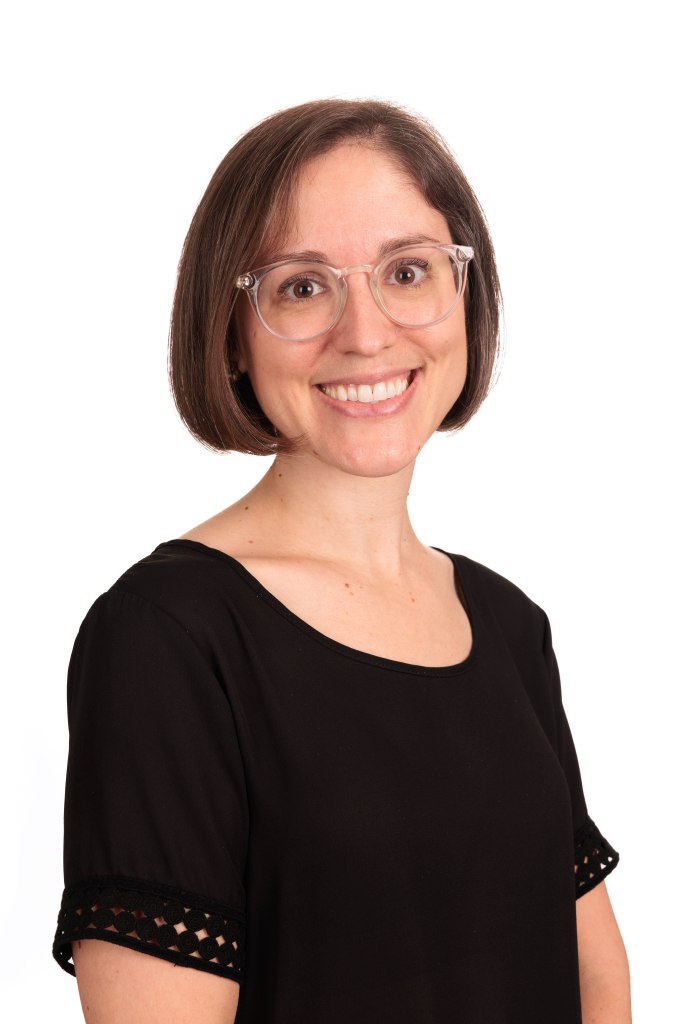
During this episode, I talk with Dr. Mackenzie Fama about applying for a second faculty position. Dr. Fama shares her journey applying for a second faculty position in her second year of an assistant professor position. She discusses the similarities and differences in applying for a first vs. second faculty position. She also shares some tips about what to expect when starting a new position and negotiating a new start-up package. You can learn more about Dr. Fama and her research on her faculty page at The George Washington University or her lab website.
Transcript
NOTE: This podcast was transcribed by a free tool called Otter.ai. Please forgive any typos or errors.
Danika Pfeiffer
Hi Mackenzie, thanks so much for being here today with us.
Mackenzie Fama
Hi. Happy to be here.
Danika Pfeiffer
Let’s start with your story. Can you tell us a little bit about you growing up before you started your academic journey?
Mackenzie Fama
Sure, I’d be happy to. I was a nerdy kid. I loved school. It doesn’t surprise me that I stayed in school a really long time. I was always a rule follower and very outcomes oriented person, for better or worse. So you know, lots of quintessential personality traits that lead to someone who’s willing to put in long, long years of school and training. I mentioned I was a rule follower and I have always been a stickler for making sure people are doing things the right way and a story that I was thinking about when I saw this question was that my mom always teases me when I was like, four years old, maybe I would always make her play board games with me and she would try to move it along quickly, like faster so she could be done playing these games for me and I would say like, No, No, Mom, I don’t get to move four spaces, I only get to move to spaces from from a very, very young age. Very, very close attention to details and definitely a rule follower.
Danika Pfeiffer
And how did you find the field of speech language pathology and communication sciences and disorders?
Mackenzie Fama
I was in. In my undergrad program at William and Mary. This field did not exist. So we didn’t have any classes in speech pathology or communication sciences and disorders at William and Mary, but I was a linguistics major and as I was getting towards the end of my time there, I started to think about, of course, what I was going to do next. And one of the things that another recent graduate had done was go on to a degree in speech pathology, and he came back and visited our class and said, You all should be thinking about this. Like no one here really told us anything about speech pathology because they are not really in this field, but it’s a really great option. You can get a job you know, you don’t have to go you know, you’re not doing a PhD so you’re not in five more years of school only two more years of school to become a speech pathologist. I was interested in it, because as a socio linguist, that was my main area of interest in undergrad. I worked with a mentor on research on kids who speak African American English in like school aged kids and so I had observed the speech therapy therapist at a local elementary school and was interested in these ideas of kids who speak dialects getting referred for services that they didn’t really need and so when I entered the field of speech pathology that’s where I thought I was gonna focus was on pediatrics like you know, kids speaking non standard dialects and the debate about differences between disorders and, and language differences and all of that. That’s not where I ended up. Like, that’s what got me into it.
Danika Pfeiffer
Okay. And was there anything in particular that made you really interested in doing a PhD?
Mackenzie Fama
So I mean, as I mentioned, I I always really liked school, I felt like I was successful at school. So I got a lot of positive feedback as a student. So, you know, in that way, I was really lucky to be encouraged and supported to consider more school to consider graduate school. I thought about a PhD while I was an undergrad studying linguistics, because that’s a natural next step for someone who wants to stay in that field is a research PhD. But as we’ve said, I went on to a master’s in speech pathology instead. And while I was there, I didn’t do a thesis, but I did do a little bit of research. And I talked with that mentor, and you know, the graduate advisor about liking research and wanting to stay involved, and they said, Oh, well, you should do a PhD and I continuously said, Well, I’d like to be a speech therapist first. Like I you know, I want to get this I want to get this degree and do what I came here to do, which is to be a speech language pathologist, and I’d like to get some clinical experience and see a whether that’s enough for me and whether I’m happy to just just to be a clinician, so to speak, or to get the clinical experience that I could then use and apply and inform what I did in my future research. So I always had an interest in it in research and so it was always on my radar to consider that level of research training, but I put it off for as long as I could. Before I went back to do it.
Danika Pfeiffer
What kind of clinical work did you do before going back?
Mackenzie Fama
My main area of interest my main population in the field is aphasia mostly post stroke aphasia. So my my clinical fellowship year and then three additional years were all in inpatient rehab, acute rehab, and that was in the Washington DC area. And so I worked on a stroke unit with people with aphasia, but also apraxia dysarthria, swallowing disorders, cognitive communication disorders, all sorts of acquired neurogenic.
Danika Pfeiffer
Great, and then you ended up doing a PhD outside of CSD. So how did that all come together?
Mackenzie Fama
Yeah, I did know I think this is one of the benefits that I see in my own path to a PhD of having taken that time to do some clinical work is it probably wouldn’t have occurred to me that I could do a PhD in a different field, but still study aphasia, but, you know, having gotten my master’s started working in the field. I was at a hospital, the inpatient rehab facility, had lots of research going on there and there was a neurologist who had recently joined the medical team whose main area was aphasia research, and he was looking for some speech therapists to be involved in planning and implementing a treatment research study. So my boss who knew I liked research offered to be up as a potential research SLP for him part time and so I got involved in his work and right around that time, I decided, you know, I really do want to do a PhD. So I applied to some CSD programs. And I was admitted to one that I really strongly considered attending. But I had started this research that was happening in DC which would mean I didn’t need to move and I could kind of keep my life the other parts of my life the same as they were. And so I decided to wait a year and apply to Georgetown’s Neuroscience Program, which is where this research mentor had a faculty appointment. So I sort of decided on the program based on the mentor that I wanted to work with. And I think that’s, it’s not uncommon for people at the PhD level to think at least as much, if not a little bit more about the individual mentor that they’d like to work with. Rather than focusing just on the title or the name of the program. So I think, you know, I’ve I’ve talked to other potential PhD students about this and really recommend, you know, just do a search of who’s doing research in the area that you’re interested in rather than searching like PhD in speech pathology, you know, find find individual people who are doing that work, and that opens the horizon a little bit for more options.
Danika Pfeiffer
Yeah, that’s great advice. I think that’s good for people to know that might be thinking about a PhD program that it is a little bit different than looking for a master’s program and that you’ll have the support and the expertise to study what you’re interested in studying.
Mackenzie Fama
Yeah, absolutely. And, you know, it’s not without its challenges to be in a program that’s in a different field because I was with students who were already neuroscientists. So I, you know, some of my my cohort of students have either come straight from undergrad or even a master’s degree in neuroscience. And I, you know, having had a couple years of my masters and a couple of years of clinical work was like, you know, nine or 10 years away from having taken any biology classes by that point. So, you know, it’s not I should also say you want to think about whether the classes you’ll have to take and the content that you’ll be exposed to is something you’re okay with and feel capable of and interested in. So I wouldn’t choose a field that’s so far away from your interest that it takes away from what you want to do, but definitely expanding the breadth of, of what you’re studying a little bit can be a good thing.
Danika Pfeiffer
Yes, definitely. I’m sure you were able to bring a really fresh perspective to them as well, which I bet they really appreciated in that program.
Mackenzie Fama
Yeah, I hope so. I think you know, some of the things that stuck out to me from my first couple of years in the program, when I was around, you know, taking classes with with lots of students from different fields is I got a lot of feedback about my research presentations. You know, like we all had to give a little research talk each year about what we were doing, and I always got really positive feedback about how clear of a communicator I was. I would always just kind of laugh like, Yeah, well, that’s good. I really should be. So it was, you know, there’s some nice things about being in a program where your strengths are not necessarily everyone else’s strengths. So I got to I was definitely behind in some areas, but I got to stand out in some areas, too. That’s great.
Danika Pfeiffer
And how did you decide what to do once you were wrapping up your Ph. D program and thinking about your next steps?
Mackenzie Fama
It’s a great question. I will say for anyone listening, I did not have a clear plan and I did not feel 100% confident about what I wanted to do after I finished my PhD. So it’s okay, that’s where you’re at. You’ll find something and you know, my best advice to people and what I would have said to myself is to try to just pick like the next right thing or the next good thing, rather than feeling like you need to know what you want to do for the rest of your career. As soon as you finish your PhD. I genuinely drew out like this web of options where I said to myself, like okay, I’m gonna finish my PhD. I could stay in academia, or I could go outside of academia. If I stay in academia, I could do a postdoc or try going straight to faculty. I leave academia I could do XYZ you know, I really like mapped out. This goes back to my attention to detail and need to plan. But I mapped out all of the options and really started to think through, you know which paths would close off other doors versus which paths would leave doors open. And so my main goal was to try something that wouldn’t cut off some of the other options. So, for example, I thought about, like working at ASHA, which is right in the area that’s in rockville right down the street from where I was doing my PhD. And they are known to be a great place to work and there are opportunities to work with researchers and clinicians. And, you know, I felt like I could use my strengths there, but I felt like going to that type of job would make it really hard to go back to academia. Whereas if I started in you know, a postdoc or a faculty position and wasn’t happy there, shifting from there to something like Asha felt more realistic. So I decided on sticking it out in academia, at least giving it a shot and so then I was at the point of deciding postdoc versus trying to go straight into a faculty position. And in the CSD field, it’s possible to do either, whereas in a lot of fields, you know, you’re kind of set on a postdoc, if you are going towards the faculty path. It’s it’s not very feasible to go straight. But in CSD, it can be an especially if you are interested in like a teaching intensive position versus a research intensive position. So I still kind of had all those options out on the table I explored a few postdoc options including staying with my PhD mentor going to another university to work with someone well known in my general area to get additional training. And I thought about going straight into faculty positions. I wasn’t 100% confident about my decision that I made which was to go straight into a faculty position at what was a tenure track position, but at a very teaching heavy University relative to other tenure track positions. So you know, I got mixed feedback from my not my primary mentor who was supportive but from my whole team of mentors, I got some mixed feedback about the decision to go into a role that was going to require a lot of teaching, and they caution about the potential of my research program not really moving forward and if I decided I didn’t love the teaching part, I might not have so many options of where to move so it was a little bit of a risk, but they did it anyways. I ended up at Towson University, which was, you know, not too big of a move like geographically I was moving about an hour away and it’s worth saying that that’s a thing that’s that matters. You know, when you’re deciding what to do if you have either just for yourself as an individual or if you have a partner or family to think about. It’s okay to choose something that is easy for the rest of your life. So I you know, I wasn’t this type of person who was saying like, I want to be at the best possible University and I’ll live wherever I need to live to be there.
Danika Pfeiffer
That’s really hard to do for most people.
Mackenzie Fama
I wanted to I wanted to be in a place that I wanted to live. That was easy. For my husband to get a job and right, the Baltimore area worked well for that. So I ended up at Towson, which I know we’re probably heading into talking about the fact that I left there, but I did really, really love it while I was there.
Danika Pfeiffer
Great. Thank you. That’s really helpful and you mentioned how you got mixed feedback from your community of mentors. And I remember having mixed feedback from my committee about doing a postdoc and not going straight into a faculty position. So I know that that can be really tough when you’re trying to navigate these next steps and getting mixed feedback when there’s not really consensus from those that are mentoring you on what to do. So. I’ve also been there and I think it’s good for people to know that that can happen and you really just have to figure out what’s important to you and what you’re hoping to get out of your next steps and at some point, just go with your gut.
Mackenzie Fama
Yeah, I think that’s a good way to think about it. And you know, one of the things that’s really been true at every decision point in my career in my academic journey, is that there has been at least one person who I really liked who I really respected and I learned a ton from who told me not to do the thing I was about to do and I always did it anyways and it’s always you know, I always ended up not just making the most of it, but it always ended up being perfectly fine decision, you know, like, not the only right decision but when I was an undergrad senior heading into a speech pathology program, a couple of the faculty that I worked with, said things like, well, that’s a professional degree, like that’s not an academic degree, like why aren’t you doing a PhD? Like why are you going to that type of grad school? To which I said, because I want to have a job after make make money to live. So yeah, I think your point is right, that you it can feel hard to just listen to yourself and go with your gut. I don’t know how you felt at the end of your PhD, but I was I was burnout and you know, it’s it’s hard to get through those last few months of writing your dissertation and defending and at the same time be making like big life decisions was was really tough. So I think sometimes that’s easier said than done to like just listen to yourself and your priorities. So you know, some of the colleagues that I’ve had, over the years have done, have made decisions that are like, you know, biding their time a little bit like I’ll do a one year postdoc with my PhD mentor or, you know, that sort of thing so that you don’t have to make that really seemingly weighty decision in the middle of that really hard time.
Danika Pfeiffer
Yeah, that’s great advice. I and everyone’s path looks different. And that’s okay, so, I did a longer postdoc and ended up being three years but I went straight through so getting that extra time for experience was really helpful. But that’s not what everyone’s gonna want out of the postdoc. They were gonna want to get in and get out so yeah, everyone’s path is different in whatever time you need to figure those things out. It’s good to remember that doesn’t have to be a forever decision.
Mackenzie Fama
Yeah, absolutely. That’s hard in the moment, but I think pays off. If you can tell yourself that.
Danika Pfeiffer
Yes. And when did you start thinking that you wanted to make a change and make a switch to a new position?
Mackenzie Fama
i It’s a little tricky for me to answer that. I was thinking about this in advance and, you know, I have to say there wasn’t anything about my position, my first faculty position that made me think, oh, I need to leave and look for other positions. But the same questioning the thought process I had before I accepted that position in the first place was sort of still lingering in my mind. And the main debate in my head was, how much teaching do I want to do versus how much research do I want to do? And do I want to be at a university where I’m teaching and supervising in the clinic and doing a little bit of research, or do I want to be at a place where I’m doing more research, and a smaller teaching load and not the clinical piece? And that question had never really gone away in my mind. So and I was only at Towson for two years, which means I applied for the job I took, like just over a year into my time at Towson. So you know, I hadn’t even had enough time there to really see if it was a good fit. So my, my second job search was not oh, I want to leave, I need to change. I’m going to look for a job that fits what I want. It was GW is in DC, where I’ve lived for over 10 years and I would love to go back to and I can’t miss this opportunity to apply to this specific job. So my my second job search wasn’t like a wide search. It was can I get this position? So very targeted? Yeah, yeah. So I, I think I would have felt okay, if I had not gotten the GW position and had had another year or two to test the waters at Towson in this, if it’s this teaching heavy position, and kind of see what that looks like for the long term. I would have been happy to have that extra time. But that’s just not what happened in terms of the timeline. That position at GW was available when it was available. So I had to jump on it and it worked out and I got it. So I still think about you know what it would have looked like if I had stayed in my first position a little bit longer and things in academic departments are often shifting pretty quickly. So like, a few people leave and some things change and the department can look totally different. So I do I do sometimes feel like I missed out on the chance to kind of see how things would shift over time, but I am hopeful and feel like GW is gonna be a good fit, too.
Danika Pfeiffer
That’s great. That’s great. You brought up a lot of really good points here to dive into. So one that I think people can relate to is just when the positions are posted at different universities. You never know when that’s gonna happen. And it’s not every year that they have these openings. It could be several years before there’s another opening and an institution. So for those that aren’t familiar with academia, that’s why it’s such a big deal when something opens at a place that you really want to be. So that makes a lot of sense. And the other thing I wanted to ask about was when you were applying again, how was this process is similar or different from when you were applying straight out of your PhD program?
Mackenzie Fama
Yeah, there’s definitely some similarities in the sense of part of the job application process. For a faculty position is that department asking you to say what you see your next three to five years looking like in terms of your research program and your teaching agenda, and, you know, what do you bring to the department but also what do you want to contribute to the field and so it’s sort of similar to writing a grant where you get to think about like, ideally, what are you going to do over the next three years or five years? So I had to do that at both time points. And I don’t know if this is true for everybody. But that was very daunting to me to have to go from being a PhD student who just said okay, here’s my project that I’m doing and I do this project versus here’s like my big plan, my master plan of what I want to study and where I want to go with my work. So that part of the process looked the same, but was equally intimidating to me at both time points, but a lot of it was different. And so the things that were different, one was trust. For my first search when I was a PhD student, everyone knew that I was defending and needed a new position. So like my student colleagues, my mentor my primary mentor, my other thesis committee members, everyone knew, you finish your PhD and you move on. So lots of people were asking me like, Oh, where are you thinking of applying and I had lots of people I could bounce ideas off of and like talk through pros and cons, whereas for the second job search I couldn’t really talk to the people around me at Towson about my my potential plans to leave I did have, you know, one or two close colleagues that I spoke with confidentially, but you know, I didn’t feel like I could widely advertised by my by job search which is tough because you know, they were the people who knew my current situation best so to not be able to say like, well, here’s the here’s the potential other choice. You know, what do you think? That that’s definitely different. I also felt a little less nervous. The second time around, because I already had a job that I really liked. So sort of the same thing. As I mentioned before, when you finish your PhD, unless you’re staying to do a postdoc, you have to leave like you have to go somewhere you need. You need some next step. It’s sort of like applying to grad school in the first place like as soon as you get your first acceptance letter, you’re like, Okay, great. I can go somewhere, someone will take. And so sort of the same thing. You know, coming out of my PhD, I felt like well, I have to get a job somewhere. It felt like a lot of pressure whereas, because I was in a faculty position that I really liked, and I was only applying to this one job, I felt like it was kind of a long shot and I didn’t have super high hopes. So the pressure wasn’t as great because if I hadn’t gotten the job that I would have just stayed in the place. I already was happy, you know. So the feel of it was very different. The second time around, I think that is unique to my situation where the move was not prompted by anything that I was unsatisfied with in my current position, but more like the what ifs of this other position were like drawing me towards it versus anything like chasing the out of my mind.
Danika Pfeiffer
Yeah, that makes a lot of sense. Did you face any challenges with I know some people have heard and people say that it’s harder to leave a position that is more teaching intensive and switch to a position that is more research intensive. Did you encounter that at all?
Mackenzie Fama
I thought I would. I was worried that I would. But I think I was lucky in that my dissertation work led to a few papers. So I was able to publish a couple of papers in my short time at Towson. That showed my ability to be productive, even with a lot of teaching responsibility. I was really tempted to say to look productive, but I was productive. I was just look productive. I was productive. I had stuff coming from my PhD that I was able to continue and, you know, to put out there at conferences and to publish. And so I was able to say in my state my personal statement, you know, even at this place where I’m teaching six courses a year I was able to do this and this and this imagine at your department when I’m only teaching three or four courses a year what I’ll be able to do. So, you know my advice to someone who starts out in a teaching heavy place with the possibility of wanting to switch later you know, either because that’s all that was available at the time or because you want to try out the teaching place because you think you’ll like it but you’re not 100% Sure is to do whatever you can to keep your CV full, you know, during your first couple years to try to make sure that you don’t completely neglect your research so that you can make the case to a future department that you’re applying to that you know you really prioritized your scholarship even under like hard circumstances to do that. You know, you weren’t given a lot of time to do it but you still did. So you’re definitely right, that there is definitely this belief. And I think, you know, because there’s good evidence that it is harder to move in that direction from less research to more research, but I think if you’re only there for a couple years and you still are productive then especially in our field, you should be able to move.
Danika Pfeiffer
Perfect, that’s really helpful. I also I’m sure that people are wondering about what the negotiation process would look like if you have already started working towards tenure and then you’re leaving for a different tenure track position. In terms of how many years do you have to wait to go up for tenure in the new place? And are there certain things that you can ask for in a second position? Do you feel comfortable talking about those kinds of things?
Mackenzie Fama
Yeah, I’m happy to talk about that. So it it depends on the University I’m sure and then it depends on yours yourself and your own goals. So I was advised by pretty much everyone I talked to about this not to take any years towards my tenure clock in my new position. So you can ask for that. You can say I’ve spent two years on the tenure clock. Can I apply those two years and go up in three or four instead of five or six? But every single person I talked to about this said you were teaching six classes, and you’re going to a place where you’re going to teach two to four classes. So they’re going to have expected your first two years to look like something very different from what they looked like. And so you’d be kind of setting yourself up for a struggle to to make those two years at a different university apply to tenure at your new university. And for the same reason you brought up in the last question about this move from more teaching to more research. If I had been at a place that was similar in structure with similar research, support and time and emphasis, and I had tons of papers and a grant and you know, like all this stuff, than I probably would have considered asking for some time towards my tenure clock meaning like I wanted to take those two years with me. And you absolutely do that during the negotiation process. You would say I want my tenure clock to be you know, pushed up or whatever. But I took the advice that I got it just started back at zero and I’m happy. Perfectly fine saying I’ve even pushed it back a year since I started. They offered a year because of COVID. I started in fall 2020. So I was virtual virtual my whole first year at GW. And anyone who had started in that year was offered just like an extra year extension. That’s great. So I took that so rather than shortening my tenure time flying, I quickly extended it right after I started.
Danika Pfeiffer
That sounds really smart. How about things like startup fees or research fees to get your lab going in the new institution? Is that something that you’re able to ask for if you’re coming in for a second faculty position?
Mackenzie Fama
Yeah, I think I mean, I, I might be wrong, but in my experience, I didn’t change anything about what I asked. For for startup funding. Based on the fact that it was my second position, I just tailored my requests to what I needed to do my research and what I knew to be feasible at GW so I, my advice is to ask the chair if they can give you a range of what’s typical in terms of like, overall budget for startup, there’s no reason not to ask that. They might say it varies. So I can’t tell you but they might also say no one ever gets above this amount or everyone gets at least this much and then you know kind of where to situate yourself. When I left my first faculty position. Nothing came with me. So I had bought some equipment and some tests and that all stayed at my old university because even though I purchased it with my startup funds, it’s University property. So I didn’t bring any computers or audio recorders. You know, I bought nothing so even though it was a second position, I was starting from scratch in terms of equipment. So I wrote my, my startup list and in all my requests to meet what I would need to do, you know, starting from scratch, so that’s what I mean when I say I didn’t really think about in terms of being a second position because on the face of it, it was it was brand new, I would did start from scratch.
Danika Pfeiffer
Yeah, I hadn’t thought about how you might not be allowed to take anything with you so that
Mackenzie Fama
I think I like accidentally brought one thing that I realized when I was unpacking buy boxes and like I still feel nervous that they’re gonna like realize it was like, I don’t even remember what it was. That was like very inexpensive and I was like, Oh, I’m pretty sure I bought this with when they listen to this, maybe they’ll come but yeah, and you know, it was interesting because I bought some like standardized batteries and stuff that I don’t really know that anybody else wants. So, you know, it’s sort of it’s sort of tricky. I felt a little guilty in some ways that I had bought this stuff only like a year before I left and then I wasn’t going to make use of that. I hope someone there well. But
Danika Pfeiffer
Yeah, I guess that’s just part of the process of these jobs in academia. Yeah, definitely. How did you navigate finding mentors or some support in your new department as you’re making this transition and making sure that you had some people in place that we’re going to support you in starting this new position?
Mackenzie Fama
That’s a good question. I I was assigned a formal faculty mentor so the department has a policy that everyone new coming in gets paired up with someone more senior That for me is someone who’s sort of closely aligned with my research area, so they can give like general GW advice, but also like somewhat more content specific advice on like grant proposals and things like that. So that was that was built in. And then something that I’ve done really at every step of the way is I pretty quickly could tell kind of who I connected with, like on a personal level and I just sort of glommed on to the informal mentee and sort of, you know, found the people that I felt comfortable asking certain questions to, you know, which isn’t to say anything negative at all about my assigned mentor, but I think sometimes it’s really helpful to have different perspectives and also kind of not put all your eggs in one basket, right? So one mentor might be really good at questions and like logistical questions, but someone else might be better at like work life balance advice. Someone else might be better at the 10 year advice and so you know, I will say it was hard in my first year because I was all it was all virtual, so I didn’t meet any of my colleagues in person. Until my second year I saw them all. My interview, which was the last week of February 20. I took the Metro into DC thinking like, I wonder if anybody has that virus that we’re talking about and then all hell broke loose. So, but I met them all in person during the interview and didn’t see a single person in in person until August of the following year. So it was hard to connect with people in that first year. So really, most of what I’m describing in terms of latching on to people happen in my second year, this past academic year, which was my first time being on campus, because you know when you have meetings on Zoom like you don’t get the chit chat before and after. And I didn’t like walk by people’s offices and just stop by and like force them to answer my questions. It feels more intrusive to like send a whole email asking someone a question versus like stopping by quickly so that was a little tricky, but, you know, in my second year, I started to see who the people were who like seemed knowledgeable in certain areas and also like people that I could connect with and trust and so I’ve just asked, ask them the questions that I thought matched best with who they are in the department and who they are to me. But the other thing to say and this isn’t exactly what you asked, but I haven’t really left behind really any mentor I’ve ever had. So, of course, your exact role has shifted over time, but I’m still I’m still really close with lots of previous mentors. In a way that’s that’s been really beneficial to help have like some continuity with who I have supported me and who I bounce ideas off of and all that.
Danika Pfeiffer
Yeah, I think that’s great for people to know that once your PhD ends, those mentors you had in your program, they don’t have to go away you still keep in contact with them. And I think for the most part, they’re happy to do that and and continue to help guide you as needed. And I think it’s really smart, like you mentioned to just have a variety of mentors who you can go to for many different reasons and you just talked about how this transition has been going. Is there anything that you weren’t expecting or anything that you think people should be prepared for in particular, maybe that you hadn’t thought about before making this transition?
Mackenzie Fama
I mean, one of the things that I think would be true for most people, probably not everyone but for most people is there is another like ramping up period where everything you know, you’re learning new systems and new IRB processes and you have to just kind of start from scratch. And so any sense of feeling like oh, well, I’ve already been a faculty member for 234 years, like I should be in a better place to hit the ground running in a second job. I mean, that might be true for some people, but that was not true for me. I also you know I have to sort of remind myself and remind the listeners, I guess that I started this job in August 2020 which was literally an insane time for everyone. You know, I talked about how I didn’t go on campus for the whole first year. All my classes were virtual. So even though I was teaching only one class and it was a class I had, in theory taught before, I had never taught it virtually so it was essentially a brand new prep that I was doing. I was meeting brand new colleagues but not in person and and learning systems. Just was really challenging because of the logistics of it all. So I think it would have been that way no matter what but the added challenge of COVID in terms of the impact on my job stuff was really big and plus just the impact of COVID on us all personally I mean that was that was like pre vaccines free being able to see your family it was it was a rough time and I had a baby in October 2020. So I my first my first semester in my new job was maternity leave. So
I had things happening all at once. Yeah, so I had a I had a really crazy first year so there were a lot of things that I wish I had known but I’m not sure I could have predicted really any of them.
Danika Pfeiffer
Last question for you here. What advice do you have for others that decide to go back on the market and apply for another academic position?
Mackenzie Fama
I don’t know that I have any like super special advice but I think one of the key takeaways that I try to keep in mind as I reflect on my own journey is something that I think we’ve already said a little bit earlier in the conversation which is just not to put pressure on yourself to find the perfect forever job. At any any point in the process. So you know even if you’re thinking of leaving a job for a second one, I can imagine in in some situations that that might feel even more daunting than the first one because you’re like well I already tried out why and that wasn’t a good fit. I really better get it right this time. But you know, especially in CSD there aren’t enough PhD level faculty, you know, there there aren’t enough of us who are looking for these jobs. So that’s not great for the field. But for you as an individual applicant, you’ve got a pretty good shot of being able to find what you want through trial and error over time. That’s the hardest thing for me to wrap my head around because as I mentioned earlier, you know I I’m the type of person who likes to like fully think something through and I have it in my head that if I’m able to do that, I’ll get it right. But sometimes, you know, in something like a faculty position, job search, there are so many unknowns that you can’t possibly think through. You don’t know who else is applying. You can’t really know a department until you visit even when you visit you don’t have a full sense of it. So there’s just so much that you don’t have control over that sort of letting go of that pressure on yourself to be able to get it right and stick it out. If it’s not a good fit, just you know, to prove something to yourself. I think if you can let go of that pressure, you’ll do yourself a really great service. I feel like coming from a neuroscience PhD program. A lot of my student colleagues, were so impressed that I got a faculty position straight out of a Ph. D program because in neuroscience that’s like unheard of that just doesn’t happen. You have to do a postdoc and so I think I have felt pressure on myself to like really make it work you know, like I want I can be in academia if I want to so I better make sure I can stick it out. But I am working really hard at giving myself space to really see if it’s a good fit and be honest with myself if it’s not. I don’t think these past two years are the right two years to make a decision whether to stay but you know, over time, I think kind of constantly reevaluating where I am and not being afraid to make the move if it doesn’t feel right kind of going with your gut the same advice you gave earlier in the chat. That’s a good way to do it.
Danika Pfeiffer
Yeah. I love that. Just being able to give yourself some grace and to recognize when things are are not a good fit and not staying in it just to try to prove something whether that’s to you or to somebody else.
Mackenzie Fama
Yeah, and I could probably keep going forever. But another one is, you know, I think along with what I said earlier about how at every step of the process, people have sort of questioned my decisions and said like, is that really the right next thing and, you know, there are a lot of ways to do impactful work in our field, and even to do impactful research in our field that aren’t being at an r1 institution. So I think there’s a lot of messages that if you want to be a clinical researcher, and you’re capable of getting that job, that’s what you should be striving for. And I just don’t think that that’s true. I think that there are so many different ways to contribute in our field. And I wish and hope that we will move away from sort of this hierarchy of seeing certain paths as more prestigious that others are more valuable than others makes it hard for people to feel comfortable really going with what is a good match for them. And instead makes them kind of put pressure on themselves to want something just for the sake of it. And so I wish I had heard those messages earlier too. Again, going back to the first faculty position I took I loved it there I probably could have been happy there forever. And I wonder if part of the reason that I wasn’t is because I had these messages in my head of like, but you could try this harder day, you know, Great, that sounds good. Yeah. I should try that harder. So yeah, that’s that’s another another takeaway message that I keep trying to learn myself even is to listen to the voice in my own head versus the chorus from everything I’ve heard over the last couple of decades doing this.
Danika Pfeiffer
Yes, that is so true. It can be so hard to tune out some of those things and to know because especially when you’re coming out of your PhD and which is usually at an r1 institution, the mentors and the people that you’re advised by are in an r1 institution. So it can be hard to think about anything else because that’s just what you’re used to and what you’re being told that you should be doing. So none of these jobs, none of these equity positions in different universities are easy. They all have their challenges. It’s just figuring out what you find fulfilling and what you want to spend your time doing.
Mackenzie Fama
Yeah, absolutely.
Danika Pfeiffer
All right. I have a few rapid fire questions that I asked all my guests at the end of the episode,
Mackenzie Fama
So I should have practiced beforehand.
Danika Pfeiffer
The first one is what is one resource that you couldn’t live without?
Mackenzie Fama
I think probably my colleagues being a new faculty member it’s got to be like being able to email someone who has done it before and ask them how to how to do something.
Danika Pfeiffer
What has been a defining moment in your academic journey?
Mackenzie Fama
I think really making the decision to go to a speech pathology program. You know, you didn’t really see this at the beginning but I that visit from a an alum coming back to say hey, you guys should look into SLP that was October of my senior year. So I like quickly took the GRE and applied kind of blind so wow, that’s probably Yeah, that’s probably the most like pivotal thing that happened was that that really quick change.
Danika Pfeiffer
What is one thing on your professional bucket list?
Mackenzie Fama
I don’t know that this is like a super long term goal, but I would really love to be involved in mentoring a PhD student. We don’t have PhD students at GW. So either in the future we hope to build a program or to be able to like be on someone’s committee at another at another university. I think for me, you know, the PhD was really hard period where I learned probably the most of my whole academic journey so being able to feel ready enough to serve in that role to someone else. I think that appeals to me a lot.
Danika Pfeiffer
Yeah, I think that would be really rewarding. What has been your favorite part about your job as a professor?
Mackenzie Fama
The students for sure. So I, at my first position, taught courses advise students supervised in the clinics, I was working with student clinicians. And then in my current position, I’m not in the clinic, but I have obviously students in my classes and students in my lab, and that’s always my favorite part. And that’s what made me want to stay in academia even more than the research piece was getting to teach and mentor future SLPs. I do hope that now that things are normalizing and I hope to be able to do more like in person, clinical research, to get back to working directly with people with aphasia, which I just honestly haven’t gotten to do in a couple of years now. But for now, still the students
Danika Pfeiffer
And last question how can people connect with you or learn more about you and your research?
Mackenzie Fama
I would love for them to check out my faculty webpage at GW and my lab will have a website in the next month or two which is going to have information about all of our current research projects, both for potential students who are interested in participating as members of the lab as well as for stroke survivors and caregivers who are interested in learning about participating in our research.
Danika Pfeiffer
Awesome, great. I will put the link to that in the show notes so people can find it. Great. Thank you so much for being here and sharing your journey with me today.
Mackenzie Fama
Thanks for having me.
 About, From, & With