Jessica Salley Riccardi is starting as an Assistant Professor in the Department of Communication Sciences and Disorders at the University of Maine this fall. She is a clinically-trained speech-language pathologists whose research investigates long-term outcomes after childhood brain injury. She is particularly interested in cognitive-communication and high-risk populations.
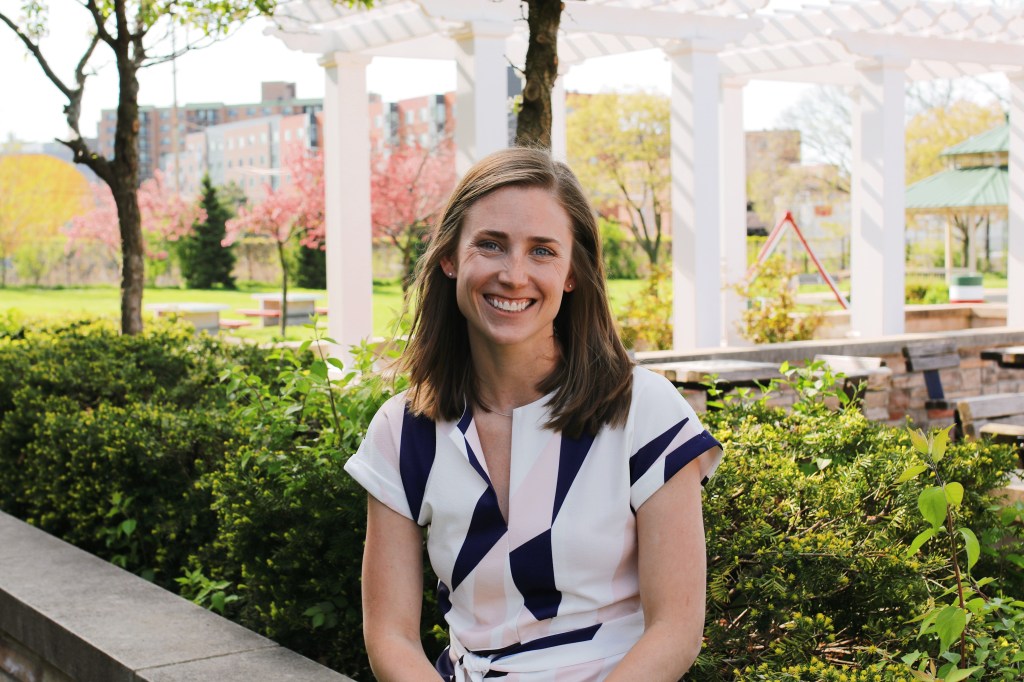
This episode features a conversation with Dr. Jessica Salley Riccardi about her experience applying for both postdoc and faculty positions at the same time. As PhD candidates wrap up their dissertations, the question of NOW WHAT?! can seem overwhelming. Jess shares why she decided to apply for both types of positions and how the interview process led her to accepting an offer for a tenure track faculty position. We also discuss: similarities/differences between postdoc and faculty applications and interviews; application timelines of both types of positions; and tips for deciding where to apply. You can follow Dr. Riccardi on Twitter @jsriccardi_slp or Instagram @jsriccardi_slp and learn more about her work on her professional website: https://jxs1654.wixsite.com/jsriccardi
Transcript
NOTE: This podcast was transcribed by a free tool called Otter.ai. Please forgive any typos or errors.
Danika Pfeiffer
Yeah, absolutely. Let’s start out with you telling us a little bit about you and your background before you started your journey in academia.
Jessica Salley Riccardi
Sure. I grew up just north of Boston and a town called Andover, Massachusetts. And I had lived in New England almost all my life until I moved on to my master’s program. I’m one of two kids. I have a younger sister and just enjoy New England life and enjoyed getting to grow up near Boston, and then moved to UNH University of New Hampshire for my undergrad and that’s where my academic career began. Awesome. And how did you decide where to do your masters? After working through my cosine undergrad, I got some advice from an advisor to apply to programs that I felt really fit what I wanted to get out of a master’s program and for me, that was a combination of being really brain injury focused or at least neuro focus with opportunities to do research. And she reminded me that anywhere you go for grad schools two years long for us, and you could really be miserable for two years and you’d survive. So she really kind of evoked this competence in me to really look across the US and to really pro professors and potential advisors that I could see myself working with and ask tough questions and really be in the grad hunt for myself. And so I ended up applying to a variety of programs and I settled at the University of Nebraska Lincoln when their programs changed a little bit or quite a bit since I’ve been out of there, but at the time, they were really neuro focused and had some great brain injury connections. And I felt had a good combination of teaching me how to be a really good clinician while also having a focus on research and preparing master’s level clinicians to get their PhD whether that was at the university or not. Gotcha. Okay, so you mentioned this interest kind of popping up about brain injury. Where did that start? So I originally went into undergrad having experience with sign language and pretty convinced I was going to work with kids who are deaf or hard of hearing and I took my undergrad neuro course or it’s called Organic pathologies at the University of New Hampshire, that talked about adult brain injury and stroke and all those neighboring interests. And I had asked a question of What about kids, right? Kids get brain injuries, kids have strokes. And my professor at the time said, we just don’t know a lot about them. So we can’t teach about it because there’s not enough research out there. And of course, they make up a small population of who you might see in the medical and educational settings. But that struck my interest of like, well, if there’s no research then why don’t I just do it? I like working with those groups. And that following summer, I worked at a camp for kids with social emotional difficulties and met my first real life kiddo with a brain injury. And at that point forward, I was hooked and really enjoyed both the child interaction side and family interaction side. I thought that was really unique for the populations you work with. And then I did a research project with that same faculty member and finished out my undergrad. With that kind of in my back pocket moving forward.
Danika Pfeiffer
Gotcha. Okay, so after doing all this research about master’s programs, did you get to continue to do research while you were doing your masters?
Jessica Salley Riccardi
Yeah, so the University of Nebraska Lincoln has some interesting options for your research component you can do a traditional thesis, or a more traditional option of like an evidence based practice course that most clinically directed students took, or you could do what’s called directed research where you work with a faculty member who has a research project going on, and you help them with a portion of that project and then you’re able to if they’re moving towards the publication or presentation contribute to that to Ben, so my advisor in my master’s program, I was intending to stay at the University of Nebraska Lincoln and continue my PhD there but unfortunately, she left the university and is now in private research, which is a great move for her but it wasn’t a great move for me at the time. And so I found this out when I was doing my CF back at home in New England then was sent on a search for PhD advisors at that point.
Danika Pfeiffer
Okay, so it sounds like you’re kind of thinking about a PhD throughout this whole process, then.
Jessica Salley Riccardi
Yeah, my undergrad advisor definitely put that bug in my ear. And so I certainly went into my master’s program planning to do my PhD, while recognizing the value of my CS and what that means for my own research. I definitely had that that in the back of my mind and helped move me forward.
Danika Pfeiffer
Okay. So then how did you land in your Ph. D. program from there?
Jessica Salley Riccardi
Sure. So the world of brain injury is small in the world of childhood brain injury is even smaller. So there aren’t many options for people who are looking for research advisors and PhD programs. And a lot of times our researchers are not in institutions that have PhD programs. And so I was in contact with my advisor at the University of Nebraska, who gave my name connected me with other faculty at other institutions that she thought would be a good fit and then I happened upon my advisor, Dr. Angela Teesha. Case Western and emailed her and we connected pretty quickly and I was able to go out and visit and just felt like it was a really nice match in terms of, I could see myself in her position and her career or work life balance, as well as the type of research that she engages in years down the line, while also appreciating how she’s able to mentor people and just the general setup of the program at Case Western.
Danika Pfeiffer
Okay, so you figured out that was kind of a good fit for you, and that’s where you wanted to be.
Jessica Salley Riccardi
Yeah.
Danika Pfeiffer
And how long was your PhD program?
Jessica Salley Riccardi
I was four years, four years.
Danika Pfeiffer
Okay. And within that process, did you start thinking about your next steps and going on the job market?
Jessica Salley Riccardi
Well, I think everyone starts thinking about their next steps pretty early on, and I think most advisors are looking to push you out into the world efficiently. And so Dr. Cheech and I certainly had many conversations, at least fairly early on in terms of picking courses and picking my areas of focus to set me up for the positions that I would be interested in. I at the start of my PhD program knew I wanted a position that balanced both research and teaching, but I didn’t quite have a specific vision in my head and that certainly didn’t change significantly as I moved through. But my confidence in myself as a researcher and my experience researching certainly shifted my focus to saying I could certainly pursue a research intensive position if I wanted to, and then definitely during my early part of my third year was really when like, the job search became much more serious in terms of preparing materials, thinking more about the structure of physicians and the opportunities that were out there.
Danika Pfeiffer
Did you feel prepared Did you have some, any kind of preparation for that in your program? I certainly think it takes things it takes a village to prepare for these things. And so I had one other cohort mate we have a very small program at Case Western for PhDs him and I started just picking the brains of faculty in our department, we are combined with psychology at Case Western and so we talked to our psychology and our CO Psy faculty who clearly have all been on the job market before if they’re at the university now, and just started kind of cultivating resources. Whether that was looking at cover letters or research statements or even just hearing questions that were asked during the interview process. That process was really helpful and demystifying, like what is the job search and what do people expect then then from there, certainly using my peers who are going through the same process, talking about common challenges, crowdsourcing feedback on different documents, that all was really helpful during the during the search?
Danika Pfeiffer
Yeah, definitely. How were those applications similar or different from each other applying for a postdoc or a tenure track faculty position?
Jessica Salley Riccardi
So I certainly think that the postdoc application process is much more casual or laid back although it’s certainly not a casual process. And I think that also speaks to how young childhood brain injury research is not only in speech language pathology, but across the health sciences because I certainly know postdoc applications are incredibly competitive and other areas. For me, my postdoc application process was more about me interviewing other potential mentors to make sure that they were going to give me the experience I wanted and I was looking for, so I felt like the ball was a little bit more in my court. I was also looking at postdocs that were not housed in speech pathology departments or communication sciences department. So I was looking in neuro psych ICU long term pediatric care more hospital based systems and having a speech pathologist with their PhD come in a certain way, certainly novel for them and something that they can be interested in. So I felt like that process was a little bit more me talking about what I wanted and could that faculty mentor or postdoc program meet those needs. For me, the faculty search felt a little bit more daunting and intensive. Not only are you producing a lot more written materials and PowerPoints, presentations, and things like that for universities, but I certainly felt a little bit of the imposter syndrome of Do I really have what it takes to be a faculty member or should I have to post doc before and working through those things. And of course, as interviews go on, you feel a little bit better about it.
Danika Pfeiffer
And from what I know about your story, you were looking at multiple different kinds of positions. So you were thinking maybe a postdoc, maybe a faculty position How did you approach figuring out what you were going to apply? For?
Jessica Salley Riccardi
Sure. So certainly cast it a pretty large net during my job search. I was not jaded to the fact that it’s hard to get a faculty position without a postdoc, but I certainly felt like I was capable of putting my feet on the ground and getting started as a faculty member. But I also was, again interested in having research being one of my main components of my faculty position, so I didn’t want to only be in a teaching college and was realizing the reality of those dreams led to needing to cast a larger net so I was looking at postdoc positions, not necessarily as an alternative but or a backup but as if I found a great potential mentor who aligned with where I’m hoping to go in my career that I certainly would be open to that but my eyes were definitely set on a tenure track faculty position and by going through the dot job interview process, it definitely made it more helpful on how to make decisions regarding what types of job responsibilities I was looking for, and my make or break so what I wanted in my career. More data, it was more daunting process for me.
Danika Pfeiffer
Yeah. How did you kind of get through that process and build confidence in yourself along the way? Do you have any tips for that?
Jessica Salley Riccardi
You do get through it. You get through it no matter what. I think that it’s really helpful to interview at a variety of types of schools. So even if you’re set out to go to only an r1 faculty position, there’s so much variation within our ones. And so for me being able to interview at a variety of different places definitely showed me the things that I valued as I started talking to people and even getting that kind of informal feedback during your meetings with faculty just saying like, this is what matters to me. This isn’t matters, my research or this matters, am I teaching and recognizing that that’s not going to be a match for every school and taking that more as it’s not a match as opposed to you’re not good enough or you’re not worthy of that position. Whereas some things that I value in my work and research are certainly not things that other people value and that’s what makes the research world go round.
Danika Pfeiffer
Yes. Well said well said yes. I think that’s you just just figuring out when it’s just not a good match and that doesn’t mean that you’re not good enough. Are there any timeline differences between applying for a postdoc position and a faculty position?
Jessica Salley Riccardi
So I will say my postdoc opportunities moved very quickly. And I think that again, that’s there’s not many postdocs in our area. And so when one comes around, people want to snatch you up pretty quickly. And so I started applying to postdocs towards the end of the fall semester or probably early December into January, and I had heard back and had all my offers, but for the middle of February, postdocs, yeah, for postdocs and postdocs certainly move quickly into the interview stage and want to get their offers out. I think before faculty positions are really moving forward. They recognize that these candidates are competitive for both for my faculty positions. I submitted my first written application in the middle of August, and I accepted my position in the middle of February so certainly a longer timeline. My first interviews were in December and then moved through a very busy first part of the spring semester.
Danika Pfeiffer
Okay, so you were kind of juggling these interviews. You were doing postdoc interviews and going out and doing in person interviews while you were doing the faculty interviews as well as that.
Jessica Salley Riccardi
Yes, yeah, they were happening kind of at the same time, which is really it makes for a very chaotic few weeks, but for me, it felt really nice to be comparing experiences and interviews and conversations back to back to really say, What do I want and does this match what I want and is this better than the other option? I don’t know if a perfect position exists, but there’s certainly ones that have more pros than cons and so being able to compare them so time efficiently, was really helpful for me to make a decision.
Danika Pfeiffer
And I think I remember when you’re going through this process that I remember you saying something like with the postdoc position, you have to kind of show that you have areas to grow and that you need to keep developing. And then the faculty interviews you kind of have to switch it and now you have to talk about how you’re so independent and you’re ready to start your own research line. How did you do that? Do you have any advice for people that are also going through this and trying to switch it and switch your tune a little bit?
Jessica Salley Riccardi
Well, I certainly think like internally keeping that mode of faculty interviews in the back of your mind, it’s helpful for both right, you’re prepared to go do something and whether that’s be a faculty, on faculty somewhere or to be a postdoc, you’re prepared to do that you can be a good researcher. For me, I applied to postdocs that again, were outside of my area outside of speech pathology. And so it was fairly easy for me to find things that I had no idea about one of those being genetics. I’m not a geneticist, and obviously genetics play a huge role in child’s development and recovery for brain injury. And so I kind of found that low hanging fruit across my postdoc interviews of like, I’m interested in this and I know I’m not going to be an absolute expert at the end of my postdoc in this area, but here’s how what I mastered and what I know, could grow into that space. Of course, it’s hard to talk about those things because I have no background in genetics, and so you do have to do some research going into it. So you can talk the talk and be able to really make a cohesive statement about your line of research. And some of that too, is talking to whoever your potential adviser is and seeing where their lab is going and where their needs are and how that might be a good next step for you.
Danika Pfeiffer
Great, let’s talk about the applications and how they were different for each of the position. So what did the postdoc application look like compared to the faculty position?
Jessica Salley Riccardi
So for the most part, my postdoc applications were really just a cover letter combined with a research statement. Plus my CV much less time intensive than your faculty applications. And I think like a lot of people I had a rolling document that I was using to pull statements from to apply for research statements and teaching statements and things like that. So I was able to craft my cover letter towards institutions I was looking at towards my potential advisors, and then from there, most of my postdoc apps worked by the adviser reviewing that and contacting me to talk via phone or zoom for a little bit of very informal, like 30 minute conversation. And then for the ones that I moved forward with, I was invited for a full day interview, and there were a mix of whether it was zoom or in person slash on campus. And those were interviews with originally people across the structured postdoc program. So if I wanted to take courses this would be the person I would talk to as well as other postdocs who are currently in the program. Faculty who had graduated quote unquote, graduated from that postdoc program and just a way for me to get to know what other research is going on and what the expectations are for postdocs.
Danika Pfeiffer
Did you do a job talk for those?
Jessica Salley Riccardi
No, I did not. No job talk for my postdocs. Okay.
Danika Pfeiffer
All right. And then how about the faculty position for applications for those?
Jessica Salley Riccardi
So I will say my applications range significantly, but for the most part, my applications required a cover letter, a research statement and a teaching statement, as well as a list of recommenders and your CV. So those were certainly things that I spent more time tailoring for this specific position based on what that institution was looking for. Were they looking for someone to teach more heavily, do more research externally funded. Of course, I overlap areas that I could teach in I’m largely a neuro person and more focused on the brain injury side but I could certainly teach some aspects of child language. And so being able to modify those to the schools was really helpful.
Danika Pfeiffer
Perfect. And from there, how did that process unfold? After you submitted your application? It sounds like it took a little bit more time. But what did that look like?
Jessica Salley Riccardi
It always takes time. So for my faculty positions, almost all of them had either like a 30 minute phone call or a 30 minute zoom with their search committee or a group of like four to five faculty member, maybe not they’re not their committee and that range from being contacted within like a week of the due dates posted to I would say like two months after the due dates were posted. And then from there, again, a range of hearing back after that first round of interviews. Some I heard back within a week. I think my longest was probably a month that I heard back and going into in person or full day interviews via zoom which I again had a mix up for my faculty positions. The ones that were via zoom were largely like a full day cumulatively some schools broke them in half for me, so I’d have the afternoon of one day and the morning of the next and then all of the in person were two consecutive days.
Danika Pfeiffer
Okay. That’s helpful. Did you face any challenges going through this job search process and having so many things to balance while also doing your dissertation?
Jessica Salley Riccardi
For me, I felt like I did a great I could foresee a challenge being not being able to balance both of those things. And I had gotten advice from a lot of people is to prepare those generic job materials as early as you can and that summer before you go on the search. That allowed me to spend more thinking time around my job applications when I wasn’t worried about writing my dissertation, so I was able to spend a little bit more time crafting those statements again. They’re generic, but at least putting thought into it and then feeling really prepared to then talk about those things specifically on my phone interview, but also going in person. So I certainly think that that helped me not feel incredibly overwhelmed. I think the biggest challenge for me was deciding what I wanted. Of course like I is not in a bubble, I’m married and I have family and I have my own desires of where I want to live and what I want to do and I think everyone struggles with that, but I certainly had options across the job market and the biggest challenge was saying to myself, like what are my absolute one to my absolute don’t want and how does that fit into my family and my aspirations and what my husband does and doesn’t want? We don’t live in a bubble. So I think that balance was surprisingly hard especially for I think that people are field attracts in the PhD programs are used to feeling really lucky to have at least one option, at least one offer. And so when you work so hard, and you’re able to have multiple options that sometimes can feel really overwhelming.
Danika Pfeiffer
Yes, yes, absolutely. I think that’s great advice. It’s so important to think about, what are those things that are most important to you and that you value and what’s going to make you feel fulfilled in this next phase and how does that fit in with your personal life as well? Which are things that I feel like they don’t really prepare us for in our PhD programs like that conversation doesn’t happen very often, if at all. So I also felt like that was a huge thing to navigate. When did you really make yourself figure that out? Was it before you started applying or did it happen during the process of applying for me
Jessica Salley Riccardi
it was definitely going through multiple faculty position interviews. I had a faculty position interview late in the fall semester, and then I had four or five in the early part of the spring semester, and my postdocs were kind of smushed in between those and so I was feeling a little defeated going into the spring semester of just not feeling like I had a great idea of where I was headed and for five, six months, and there’s a lot of decisions to be made. But by having those interviews back to back that helped me really evaluate what I wanted, as well as saying like sure it’s worth waiting for something else. I we’ve been talking as if you get all your offers within a week and have plenty of time to decide. But of course that’s not how the real world works. And so it’s hard to say no to something when you don’t have a backup but I felt pretty confident in myself and in my advisors connections that if I went through the whole job application process and was quote unquote, jobless, we could make something work. I could find a postdoc there would be an option. And so being picky is hard. But that definitely pushed me to evaluate what I thought was important. And what was I was willing to wait for.
Danika Pfeiffer
And just to give people an idea of how this could unfold because it really is different for everyone. But you said you started interviewing for faculty positions in the fall as well as the postdocs in the fall. And then how did it play out in terms of the timeline from there for you of kind of when these offers came in, and when you were trying to make decisions?
Jessica Salley Riccardi
I think you hear back on the no’s pretty quickly universities that no you’re not a good fit and none of those noes were particularly surprising to me. I think that we all have a pretty good idea of what our strengths and weaknesses are in the speech path world is small so you have an idea of what other departments are looking for. So for me, the noes weren’t surprising. I ended up actually doing three in person interviews in one week at the beginning. One of those was in person so the other two were remote, which obviously let me do that. They ended up doing three in that week on one the following week and I had a postdoc interview two weeks before that so this is all between the middle of January until middle early February and I ended up hearing back from that postdoc almost immediately after my in person interview and they wanted my decision before I would have finished interviewing in the in that one week with those three schools. And so I just, I you make a good decision and for a variety of reasons. It wasn’t going to be a match. But of course that postdoc position was one that actually matched my husband’s job and his career a little bit better than any of the faculty positions I was looking for but with some some good conversation decided that wasn’t it? I heard back from one of those in person interviews as a no which again, wasn’t surprising. I heard back before the end of that week. So it was a two day turnaround for them. And then of this places the three places I had left I felt like the University of Maine was a really good match for me and my husband and personal reasons for a variety of kinds of checklists, pros and cons. And so I pushed them to make an offer efficiently so I could encourage other schools and of course that’s based on the read that I had of the faculty there and I felt like I was a good match. They were indicating I appeared like a good match. And so I did reach out the following week to see when they would be making a decision. So I got my offer, like five days after I finished interviewing and I actually accepted that offer without reaching out to any of the other the two other schools I was I was waiting on and I ended up hearing back from them actually that same week, the week after so I was able to turn them down with with happiness because I position but I certainly think like the moral of that story is you can reach out and if it’s a no it would always be a no, of course don’t haggle people but if it’s a place that you’re interested in, and you feel like you could be a good match to them, and they’re a good match to you then reach out and if they want you they want you and they’ll make it work.
Danika Pfeiffer
That’s great. Wow. So it was a little bit of a waiting game to get to the spring semester. But then when spring came it kind of just all happened at once.
Jessica Salley Riccardi
Yeah, it always moves quickly. And you’re also finishing your dissertation just enjoying everything else that the PhD program has to offer.
Danika Pfeiffer
Wow. Do you have advice for reaching out and knowing kind of one is it appropriate if I reach out or not? And to what do I say to them because I think a lot of people might struggle with that and what’s appropriate to do and what’s not.
Jessica Salley Riccardi
I certainly think after in person interviews, assuming that you’re following kind of like a normal time in the academic calendar, right? Everyone has weekends off and everyone has winter break off, which really gets in the way I think for faculty positions. But assuming you’re kind of in a normal academic time period. I think following up a week or so after your in person interview is totally fair game. Again. It’s not it’s not the heart and set rule for me. The places I was interviewing at were actually fairly transparent on what their turnaround time was going to be. The University of Maine was the only one that wasn’t which is why I felt like I could reach out as another follow up a little bit earlier than I’d recommend for other people to do but I think just being being transparent in your response of like, Hi University. I really appreciated the interview I had I’m certainly interested but I have other opportunities. that are pending, and we’d like to know your timeline. And then institution might say, Nope, we don’t have a timeline and that’ll kind of push you to make another decision. Where if you feel strongly about waiting, then you can wait it out. But it’s certainly it’s certainly a balancing act. There’s no tried or true response. There.
Danika Pfeiffer
Yes, definitely. It’s so hard because you just want to be able to read their minds and you can’t. You definitely can’t. How did you keep yourself organized throughout this process? Did you have a system of organizing all these different applications and due dates? And timelines?
Jessica Salley Riccardi
I use good old Google Drive. And I had a Google sheet that had the school, the search chair listed on it. And then I had a bunch of columns for kind of the generic or most common materials that you might be requested to provide. So cover letter research statement teaching statement. Course Val’s recommendations. I’m trying to think of the other things that can go into it. Oh, example pods? Yep. Diversity. Yeah, diversity and inclusion statement and then basically just marked those is like yes, no, do I need to provide and then the deadline of applications. Of course, some schools don’t post deadlines. And so I kind of gave myself from the time it was posted anywhere from like two weeks to a month to get my application and depending on what time of year it was, and how quickly I could assume the university wanted to move forward. And then from there, I just as they appeared, I tried to make time a couple times a week to just submit applications to places that I thought could be a good fit.
Danika Pfeiffer
Now that’s good advice. Yeah, those posts that don’t have deadlines, it’s so hard to know but you can really miss the boat if you don’t get those applications in and they’ll just start interviewing without you. So yeah, I think it’s good to just do it as soon as you can.
Jessica Salley Riccardi
Yeah. And I mean, everyone says like you make time for writing daily writing time is a good writing practice. And so I tried to make time, not daily because I didn’t have that many job applications to submit but at least two or three times a week to just hold in my calendar that if something did come up, I knew I would be able to work on that within a week.
Danika Pfeiffer
You talked a little bit about this already how it was kind of a gut decision on what was the right position for you. But what else factored into that final decision of which offer you were going to take?
Jessica Salley Riccardi
I think something that came up often in my interviews across a variety of types of physicians, I was looking at very research intensive R1 institutions down to more lower intensive R2 positions. I wouldn’t say many words true teaching colleges, but something that came across in all of my interviews is how much community engagement I wanted for my research and how different universities and different institutions valued that or did not value that and for me, I really feel strongly whether that’s engaging with communities who are those experiencing brain injury or their families, or speech language pathologist who are working in those settings? It really mattered to me that that could be a space I could grow in as I became an independent researcher. And so that was one of the on the professional side of things. And on the research side of things. One of my maker breaks as I was looking at my options, and again, what did I value and what did I want? Additionally, like location is a big factor for people. And we don’t want to say it because during our PhD programs are willing to go anywhere to have a great advising experience and some people have the luxury to move anywhere and some don’t. And I was someone who didn’t want to move anywhere. I wanted to be back closer to home. I spent a lot of my adult life being in the Midwest and really wanted to get back closer to our families and just feel a feel at home in New England certainly feels home for us. So that was another deciding factor of it was one of the closest schools that I had applied to, to my to our families.
Danika Pfeiffer
That makes a lot of sense. Yeah, I think that it’s easy to just kind of fall into the trap of Well, I gotta go where the job is, but there’s so much more to life than just work. So absolutely. Yeah, I love hearing that. And I think it’s it’s easy to kind of forget about those other things when you’re deep in the process of applying for all of these positions. So that’s a good reminder.
Do you have any advice for PhD students that are finishing up in their third or fourth year and they’re trying to decide if they should apply for a postdoc position? Or go ahead and just apply for faculty positions or do what you did and apply for both at the same time? What advice do you have?
Jessica Salley Riccardi
I mean, I think my advice is apply to both really any interview is a good interview. And if you are applying to positions that you think are viable options for you, not just positions that you’re applying to to apply that and you think they could be a good fit any interview is going to help you either make a decision or help you get ready for the next interview. postdocs and faculty interviews were not so incredibly different in terms of content that I was being asked. And it can be a very helpful practice to talk about your research over and over again with other researchers who don’t know your research, right? They’re researchers so they can contribute in some ways but they don’t know you, and they don’t know your area likely. And so being able to talk about it and have those more natural elevator pitches kind of rehearsed in the back of your mind, just makes every interview go better. And for me, had I not interviewed at so many spots, I wouldn’t have felt as confident in making a decision of not only postdoc work versus faculty, but what institution I wanted to end up at.
Danika Pfeiffer
Great. All right, well, I’m just gonna wrap up here with a few questions and I asked all my guests our rapid fire questions, and the first one is what is one resource that you couldn’t live without?
Jessica Salley Riccardi
Oh, Google Calendar.
Danika Pfeiffer
That’s a good one. Very good. Nobody said that so far was surprising.
Jessica Salley Riccardi
Oh, my life would fall apart.
Danika Pfeiffer
What has been a defining moment in your academic journey?
Jessica Salley Riccardi
I think my PhD graduation and as cheesy as that sounds, it was one of those moments that you wait for for a really long time, especially if you’ve been interested in research for me since undergrad, and I was lucky enough to have our families there as well as my research advisor. And so it was just a nice culmination of a lot of years of work that really felt like I was being very symbolically launched into my next phase of my career.
Danika Pfeiffer
Oh, that’s so great. Does really feel like it’s never gonna come but it does. What is one thing on your professional bucket list?
Jessica Salley Riccardi
I’m really excited to mentor my first students and research. I think that it’s so exciting and time to give back I mean, does not have a PhD program, although that could potentially be in the works in the future, but I’m excited to mentor whether it’s a master’s student or an undergrad in their own research project.
Danika Pfeiffer
I’m excited for that too. What has been your favorite part about your PhD journey?
Jessica Salley Riccardi
I think getting to know everyone in the speech therapy and audiology communities. I mean, it’s one degree of separation as we know and it gets smaller and smaller the longer you’ve been in it or the more you go into your academic career, and getting to know people and meeting people outside of my area of research, whether that’s research purposes, or just talking about speech pathology in general and students. I feel like my network has really grown and clearly it’s only the start of that with a career ahead of me and so that’s been an awesome part of being able to grow as a student and that’s a future researcher.
Danika Pfeiffer
And lastly, how can people connect with you or learn more about you and your research?
Jessica Salley Riccardi
I have a website and a Twitter and an Instagram and Danica I’m sure you’re gonna link to those Yes.
Danika Pfeiffer
In the show notes, yes, perfect.
Jessica Salley Riccardi
And I am happy to talk about anything from childhood brain injury to the job search to PhD programs, searches, or even undergrad and master’s research. I’m just thrilled to kind of finally be in this more mentorship position, and excited to connect with anyone who’s interested.
Danika Pfeiffer
Awesome. Well, yes, that’s great because you are a wealth of information from all of your experiences, so people should definitely reach out to you. All right, thank you so much. Congratulations on your PhD and your new faculty position. And I wish you all the best.
Jessica Salley Riccardi
Thanks. Thanks for having me.
 About, From, & With