Jacqueline Towson is an Associate Professor, Interim Associate School Director and Graduate Program Director in the School of Communication Sciences and Disorders with a joint appointment in the School of Teacher Education at University of Central Florida. She completed her doctorate in 2015 at Georgia State University in the Education of Students with Exceptionalities with a focus in Early Childhood Special Education following 14 years of work in public schools. Her research broadly concerns building the capacity of individuals who work with young children experiencing language impairments and those considered at-risk. She is a wife, mom of two teenager daughters and avid lover of all things ocean and yarn related.
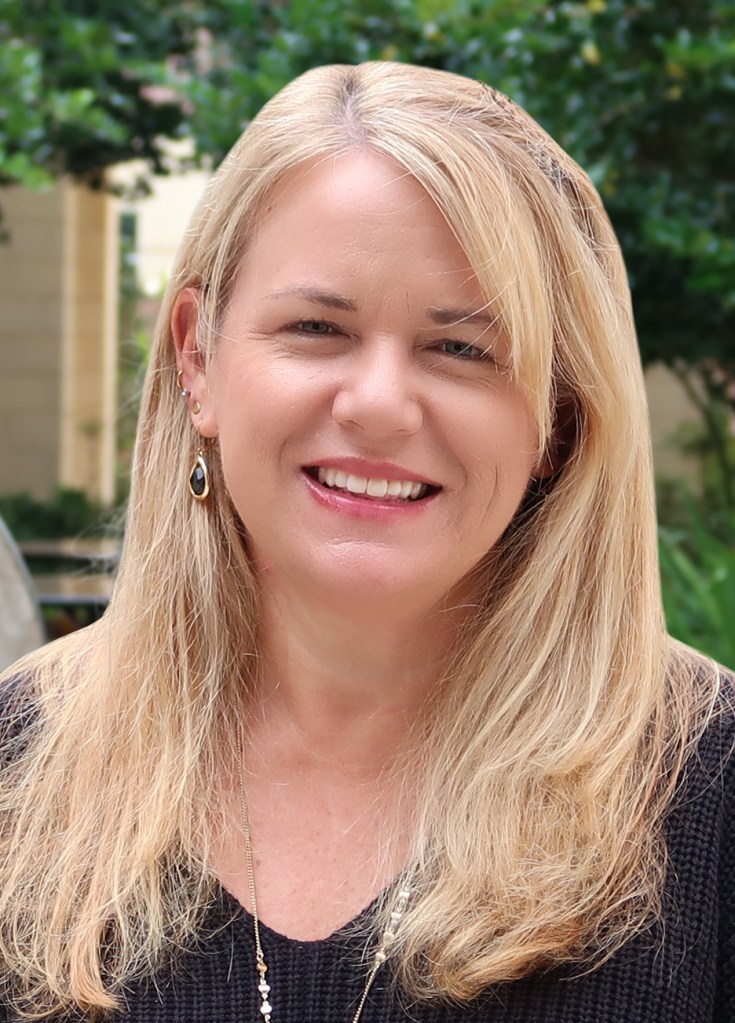
In this episode, I talk with Dr. Towson about what applicants can expect when they go on the academic job market. Dr. Towson shares her behind-the-scenes insights from her experiences as a search committee member and chair of several searches. Topics of our conversation include: advice for preparing job application materials, what search committees are looking for during the interview process, and tips for approaching negotiations. You can learn more about Dr. Towson and her research by visiting her faculty profile: https://healthprofessions.ucf.edu/person/jacqueline-towson/#biography and you can follow her on Instagram @ellie__lab or Twitter @jacktowsonphd.
Transcript
NOTE: This podcast was transcribed by a free tool called Otter.ai. Please forgive any typos or errors.
Danika Pfeiffer
I think that having your insights into the job market will be really helpful for people that are about to go on the market this year. So I’m really glad you could be here. Let’s start with you telling us a little bit about yourself when you were growing up and before you started your academic journey.
Jacqueline Towson
Yeah, I’ll try not to go on too long. Everyone loves talking about themselves, I guess. But um, I think, you know, pretty normal. I’m from Florida originally, and I’m actually back in Florida, which is sort of funny, but I’m pretty, you know, typical. I think I knew what I wanted to be when I grew up from about the age of eight. I always wanted to be a teacher. And I used to really just think about it all the time and play school and do all those things. And funny that when I got to college, I thought, well, this is kind of horrible to say, but sometimes teachers aren’t the most respected or highly paid. And so that can’t be what I want to do for my life, but I loved school. And so I knew I needed to find a way to be involved in teaching in some way and always be in an educational setting. So I always kind of say like that speech language pathology found me i terrified my mom, I’ve been undeclared. My first two years in college. She kept saying you’ve got four years you got to get a degree and I took a survey course in speech language pathology and thought, This is amazing. It’s everything I love about like understanding our development and but it’s still like teaching in a way and they get paid better than the teacher. So I think this is my path. Yeah, so I just kind of kind of went on from there. And you know, in so it got my Master’s in speech language pathology and actually, in the public schools. I think life has a funny way of putting you right back where you’re supposed to be so even though I thought I wanted to work with adults, and I thought I wanted to work in a hospital setting. I ended up in the schools and loved it and actually ended up getting my teaching certificate ironically. So I’m dually certified as a speech language pathologist and an early childhood special education teacher and ended up working in the educational sector for 14 years in all kinds of roles before I went back to get my PhD.
Danika Pfeiffer
Wow, great. So having that clinical experience and being out there in the field, what made you want to go back and get a PhD?
Jacqueline Towson
Well, I think going back to that I wanted to stay in school forever, which is another thing that kind of made my mom a little nervous when I was in college. So I I just I love learning. I love teaching and it was always a goal of mine personally, to earn a PhD. I’m a first generation college student. And so it was really important to me so I kind of hit this point in my career, where it was either go into upper administration, like in the school system because I was kind of on that trajectory, okay, or go back and do what you always said you were gonna do so maybe call it a midlife crisis, you know, maybe. So I did. I went back and somebody ended up going to Georgia State and talking to who ended up being my advisor and just seemed like a really nice fit. It was the scariest thing I think I’ve ever done in my life. I quit my job. I walked away from like, you know, health insurance and job security and went back and did my PhD and it’s probably the best decision I ever made.
Danika Pfeiffer
So glad to hear that. What were you thinking at that time? Was your goal for going back and doing the PhD? Did you picture yourself going into academia as kind of the goal there and becoming a professor?
Jacqueline Towson
Well, it’s kind of funny and I sometimes I wonder what I should actually say out loud, but you know, partly I just wanted the degree, and I think I went in a little blind knowing what that really met. There was a local university, a four year university in the town I was living in in Georgia at the time, and I really just wanted to add jump there and they would not hire me and I didn’t have a PhD so so really, that was sort of like the straw that broke the camel’s back, so to speak, and I thought, I just I just want to teach like I just want to teach in higher ed, I just want to have a bigger influence on the profession. But the further I got into the PhD program, I realized, Hey, this is different than maybe what I thought it was going to be and not in a bad way. But in the expectation of, you know, really, you should be going somewhere else and you know, and that was a big keep bringing my mom up. She’s such a, a huge piece of my life. But I remember when she said, You’re gonna leave, aren’t you? Because we lived about five minutes apart? And I was like, yeah, they kind of tell me that I can’t work in the same institution where I get my degree. So looks like I’m going to be going on the job market. So it was really organic. And it really kind of happened over time. But again, I think everything happens the way it’s supposed to. So
Danika Pfeiffer
yes, yes. And we’re gonna spend a lot of time talking about really the process of going on the job market, but how was that initial process for you going through it after you got your PhD?
Jacqueline Towson
I think I had a pretty positive experience. I had an excellent advisor. I definitely took my hat off to her. She was a very seasoned professor. And she prepared me incredibly well for what to expect and I think I was also I was older, so at the time, I think I was almost pretty so I was I think that served me very well in knowing that there were certain things I knew I wanted, and there were certain things I knew I didn’t want and I think I’m running joke between my advisor and me was she would send me a job posting and I would say, oh, it snows there. I want to fly. Like that was Yeah, but but I don’t do snow. And I knew that again. My mom was aging and I needed to be close to her. So you know, I think that helped me put some bounds on my job search. I had a husband and two kids. And so this wasn’t just a me decision. This was a family decision. And I see that now on the other side, too. You know, interviewing people that it is it’s a it’s a you’re not just interviewing that person. You’re interviewing them and they’re like, kind of concentric circles that they go with.
Danika Pfeiffer
Yes, that’s a great thing to bring up. I think with the people that I’ve been talking with on this season. A lot of people have talked about those personal reasons that also factor into this decision. And when you initially go on the job market, I think it’s it’s just important to remember that that you’re a whole person and there’s a lot of factors to consider and that’s okay. Yeah. And I
Jacqueline Towson
think being true to yourself. You know, I think that in sometimes in PhD programs, and I didn’t do a postdoc but possibly there there’s expectations that are going to be put upon you. And you really kind of have to do some soul searching and figure out like what your actual goals in, in professional and personal life are because, you know, you want it to be a good match. Oftentimes, you’re moving you’re sometimes living a family with you. You know, it’s you want to be true to yourself. And not get kind of caught up in expectations. Absolutely. Can you kind of talk about the different roles and positions that you’ve had in your career in academia since then? Absolutely. I have been at the University of Central Florida since I left my Ph. D. program. So I’ve been here for seven years. I just finished my seventh year so I get I didn’t do a postdoc for me. That wasn’t really an option. I didn’t want to lose my family choice. I went straight into an assistant professor position. It is primarily or mostly it’s a research focus position. But I also teach classes or have taught classes I kind of I’ve had a really weird path and I don’t think it’s one that I don’t know if I would advise or not if two people by my third year I was in an administrative role, which is pretty uncommon. And I again, don’t think publicly super advisable. But again, I was older, and I’d already been in administrative roles in the schools. And so I felt very comfortable moving into those roles and felt like maybe I needed to advance my trajectory a little bit more because my time isn’t quite as long on the other side, because this is sort of like a second career. So I was the undergraduate program director. co director with another person for two years, I should notice I don’t have my CV in front of me. And then I moved into being the graduate program director. And now I also serve as the Associate school director here, which is an interim position. But you know, it’s been interesting navigating I’ve kind of gotten away from teaching, which I have all the feelings about, because that’s, I remember the theme. The whole reason I did this to begin with, yes, but it feels right for right. Okay. Okay. And I think it’s nice because when you go into academia, there’s kind of these different at least it seems to me, there’s these different phases that your career is gonna go through where there’s priorities might change over time and things that you’re dedicating yourself more to at different points of time and your career. Absolutely. And I think the nice thing about academia too, is you can kind of choose one thing and then choose something else. So like some people go into administration and then and then go out back to where they started and seemed quite happy. So and another role that you’ve had is being on search committees, which we’re going to dive into today and what has your role been on search committees? Yeah, I’ve been on a lot of search committees. So I have served on them as a member that I most recently chaired many search committees for your earning professors, but also been on search committees to just hire the school director. So I’ve served on those clinical positions. I’ve kind of done the gamut instructor lectures, okay, not everything. And for those that are not familiar, or aren’t in academia, can you describe a little bit about what a search committee is and what they’re tasked with? Yeah, great question. It is totally different. I feel like there’s any other job application you might do in life. So the search committee and academia is is really you know, obviously there’s a there’s a membership that any institution would determine. I’m sure that it’s regulated, but usually, you know, four or five people with a chair kind of leading and organizing things. And really, they’re tasked with quite a few things, at least in my experience. They’re tasked with coming up with what the need is certainly the faculty input for the unit there. They have to put together the job posting the screen all the applicants as they come in, whether that’s, you know, just visual screening, phone interviews, how zero they conduct on the campus interviews and are here at our institution, we make recommendations whoever is doing who’s after the hiring official, so we don’t pick the person which I think some people are confused by, but we really just put together a list of strengths and weaknesses in you know, what we think would be a good fit for the program. Okay. Okay, great, and who is usually on that committee? Are they all tenure track faculty or their clinical faculty? What does that make up usually? So here at our institution, it depends. So we have some guidance as far from our bylaws as far as you know, if we’re searching for a tenure, or tech tenured or tenure earning person then there’s a certain makeup that we have to have usually the majority with the tenure tenure people. It’s a clinical search. It’s the majority of it. So I think kind of whatever we’re searching for, it’s usually the majority of that type of faculty. The only exception I would say is if we’re searching for an academic instructor or lecturer. That’s usually kind of mixed. So it really depends on the search.
Okay, that’s helpful. And what were your responsibilities as the search committee chair? I always say it’s like a little part time job. It’s kind of fun. So helping select and appoint the committee members. In conjunction with the hiring official, scheduling the meetings, making sure everybody understands the regulations of the institution and kind of what we have to abide by. We have to kind of agree on voting rules and you know, in and what we’re going to evaluate candidates on before we ever see an application because we don’t want to be biased in any way. So we have what we call round criteria. And I don’t know if this is a pretty common term, but you know, what’s the first round of criteria like a kind of a screening like do you need the degree requirements? Do you have the same area of interest that were posted for like very basic things and then you know, helping establish the second round and the third round, making sure that people are doing their reviews of and being prepared before they come to meetings, helping generate the list of questions that are going to be asked at different stages of the interview. And then here I’m also responsible for making the itinerary so you know, getting their appointments scheduled with the teams or associate Dean’s and different people tours and even helping a little bit with like hotel accommodations and things like that. So kind of the whole gamut. And you’re kind of the point person for the applicants as well during that process is yes, yeah. So usually the chair is listed as the contact person. So, you know, sometimes doing some pre meetings where you know, is this going to be a good fit or responding to an email like,
Danika Pfeiffer
you know, should I apply what we need to know, that type of thing? Okay, got it. And what does the process look like behind the scenes when you’re deciding if a position is even going to be posted? I was that process figured out of when a position will be posted.
Jacqueline Towson
So a little above my paygrade, but I’m learning so I and again, I think institutions vary. So I used to think, and I think this is maybe a little bit how things used to be, at least here at our institution was, if somebody resigned, there’s going to be a position open. Well, that’s no longer a guarantee in our new budget models. We really have to argue establish a need. So a lot of times that’s putting together a presentation, we have a Dean’s Advisory Council here in our college. So that’s made up of all the upper administration people in our college. I’m not a part of that, but I get privy to some of that information, being the associate director and basically it’s putting in that request for approval. So sometimes if you search in the in that you have to put a failed search you know, we don’t fill the position, there’s not always a guarantee that position will will be there next year. Okay, because it depends on the entire needs of the college and, you know, again, kind of establishing, I mean, sometimes it is but it’s sometimes like if you know, somebody’s left the institution you might think okay, of course they’re gonna have a position and oftentimes that’s true. Sometimes we get new allocations because, you know, maybe our program has grown or we have different needs. We’re always looking at it from kind of couple of different angles, first of all clinical supervision and do we have adequate supervision because we’re a clinical preparation program? That’s one piece. So do we need a political line? Do we have teaching needs, you know, our adjunct rates getting a little too high and we’re not feeling like we’re, we’re using faculty to cover our curriculum. So maybe we need an instructor lecture because a primary teaching position. And then the other piece, of course, is the research portfolio. So do we feel like we’re representing ashes pick nine for speech language pathology, you know, do we feel like we’re hiring people in the areas where we feel like funding is prominent, so it’s it’s multifaceted I, you want to think it’s a lot simpler than it is?
Danika Pfeiffer
Yeah, and again, above my paygrade very complex. Yeah, I think it’s just good for applicants to know that there’s a lot going on behind the scenes. That’s nothing that has nothing to do with them. And so that’s really good to know. Yeah, that’s really true. It’s a good way to put it. Can you give us an overview of the process? of applying for tenure track positions and what applicants can expect from the point where they’re submitting their application until either they hear back or they don’t?
Jacqueline Towson
Yeah, so try I’ll try not to get derailed in this. So you know, I think the first thing obviously is doing a thorough you know, search of, again, kind of who’s hiring who’s not hiring, which positions you fit. I think that one of the mistakes I see a lot on the hiring side is people applying for positions where they really don’t fit to begin with, and I think that maybe applicants might be wasting some of their time trying to fit like kind of a square peg in a round hole. So I think it’s always great. Like once you identify the institutions where you want to, you know, apply and I have a spreadsheet, spreadsheet kind of girl, you know, then reaching out to that search chair or whoever the point person is for that job and saying, you know, hey, here’s my CV, you know, do you think this would be a good fit? Now, I will say on the other side, we’re not going to ever say don’t apply because illegal, but you know, you want to make sure that you’re a good fit for them. They’re a good fit for you, at least initially, because I think that helps. So once you sort of figured out like, okay, these are the absolute places I want to apply to then of course, following the application guidelines. I think, I know you didn’t exactly ask this but one of the things we look for a lot is are you really affecting our institution? Are you applying to 10 institutions and not really thinking about how you fit here? So I think, you know, obviously, everybody writes one cover letter, but then really going back and taking that extra step and catering it to that institution. So doing some time on their website, you know, really digging into what makes so we kind of tell this to grad students to when they apply, like what makes that institution a good fit for you and why would you why would you vote for them? So kind of really starting that selling process really early on. So once you submit your application materials also make sure because people cannot review packets unless they’re complete in some institutions will say it’s not completely some wall. So you want to make sure that you’re doing your due diligence on that end, and then from our side than we do we go through those rounds. I mean, it’s pretty formulaic. So if we do round one we just get for us mostly, it’s just part of the job. You know, do you have the degree that it’s needed for this particular position? And then you know, we get a little more nitty gritty and start looking at you know, are you a good fit for the different aspects of whatever that position is, you know, teaching research, clinical supervision, things like that. And then once people meet the first round, and we invite them for a phone or Zoom interview, depending on the season these days, that’s sort of a screening interview, usually pretty brief. 15 minutes max, you know, we have a set of questions so that they would go through those, then everybody rates the applicants on their rounds sheet. Again, we’re still going by exactly what we established at the beginning. But usually, now we’re getting a numeric score. And then we have a cut point, and then we kind of rank everybody in the top however many usually three, get invited for an on campus interview. You’ve already said a lot of
Danika Pfeiffer
great things. So I want to know this is great. I want to ask a little bit more about your advice to make sure that you’re applying to positions that are a good fit and how it’s kind of obvious to the search committee if this person is not a good fit for people that are applying. What are some of the ways they could figure out if if this position is something that they would be competitive for or not by just looking at the position description, or should they dive into the website a little bit more what what should they be doing to figure out if they should apply or not?
Jacqueline Towson
I think both of the things you said I mean, I think that in this sounds really basic and I don’t mean to be disrespectful to people who apply but we get a lot of people who don’t have the degree even you know so let’s let’s just say and that’s and I’m not a degree person. I don’t think that’s better because I have a certain degree but but if we say you need to have a research doctorate, and you have a Master’s, you probably shouldn’t apply. Now, I know that sounds really basic, but you would be surprised at how many applicants we have that don’t even meet minimum qualifications. I always feel bad for that because here you put all this effort into applying for this position and you don’t meet basic qualifications. So that’s that’s very, I mean, that might seem obvious, but it doesn’t seem to be obvious. And then I think again, like if it’s a research like if it’s a tenure tenure track position at a research intensive institution like we are, and you’ve not done research, or you really just want to teach and I don’t mean just in a negative way, but that’s your primary goal, then that’s a mismatch. Right? So yeah, like, understanding that and I think, you know, it’s so interesting, I talk to a lot of people who want to go get their doctorate before they apply. And I always try to talk them through the different types of institutions because these are things that nobody told me, right. Like, there’s research intensive institutions, there’s comprehensive institutions, there’s teaching focused institutions, and these are all very different types of positions. Yes. And if you don’t understand so maybe having a conversation with somebody who understands you know, I had a great advisor and a great advisor, but finding somebody who can walk you through. These are the different types of institutions and if you say, these are the places I want to apply, having somebody help you vet that. So you know if I know I want to be in a teaching focus position, I probably shouldn’t apply to a research intensive university for a research intensive position. So I don’t know if that’s really answering your questions, but I think it’s some of it seems now to me, so basic, but I didn’t know any of these things, right.
Danika Pfeiffer
No, no, I think these are great things to point out and for people to really sit through and think through and I think it goes back to what you mentioned earlier about knowing what you are looking for when you start and as much as you can put that down on paper or no it It thinks that will help guide you on what is appropriate for you to apply for and what’s not a good fit.
Jacqueline Towson
Yeah, yeah, I agree. Because part of the process is, you know, hopefully getting to some of those interviews and realizing, Oh, this, this is a this is a really good fit for me and it even surprises me that it would be a good fit. So I don’t think you have to limit yourself to only one type of position I just think that when you’re applying, you should cater your materials in a way that makes you look like a good fit.
Danika Pfeiffer
Yes, definitely. Definitely. I think you can learn a lot about that fit piece during the process. Absolutely. Yeah. And another thing you mentioned was personalizing your application materials for that position. So is there are there certain documents that you think are particularly good for doing this with?
Jacqueline Towson
I think when you’re when you’re applying for a regular faculty position, just being familiar with the program, does it have a graduate program and undergraduate program are they have a clinical focus if they have a clinical focus? What are they known for? You know, I think that we when we’re on the receiving end, we really would like to believe that you’ve looked at our website, that you have no idea what we stand for. So I’m obviously at UCF, so we stand highly for diversity for first generation access. That’s different than some other implementing that everybody does. But you know, I’m saying like, and, you know, we’re a clinical preparation program. We’re known for aphasia. We’re known for assistive technology. Those are pretty easy things to figure out if you look at our website, so we would hope that you would have at least looked at those things because I think you want to respond again, when I’m asking an interviewee a question. I want them to talk about how they’re going to fit with us and how they’re going to bring value to what we already have. So I think just understanding that is helpful because again, it’s it’s a big matching process.
Danika Pfeiffer
Yes, yes. Absolutely. And we’ve been talking a little bit about how important is personalization is do you have any other advice for applicants as they’re preparing their application documents and things that they should be doing?
Jacqueline Towson
Yeah, so I think this is one of the things I hate doing having other people look at it. I I’m one of those people who I don’t like to send my grades to other people, my publications to other people. I don’t want anyone to see what I’m doing, which is the worst thing you can do. So having other people read it, and I even think people outside of your field because you don’t know who’s on that. Search Committee. Sometimes we’ll borrow people from other programs because we need just to fill out a search committee and so you want to make sure that your application materials are understandable to a broad audience. And then the other thing that my my advisor who was really great did for me, she did a mock interview. So she got together her bridge club, who was a bunch of emeritus professors, and they did a mock phone interview with me and it was very real. It really diffused. Yeah, it was very intimidating. But he was so helpful when I got to the real phone interview piece because I had some level of expectations. So if you can find somebody to do those things for you, you know, to read your materials to do some mock interview and like really mock it up, not just like, Oh, we’re going to play you know, but it really diffuses some of those nerves later on.
Danika Pfeiffer
Absolutely. I think that’s great advice. I’m sure whether you’re just coming out of your PC or coming out of a postdoc people in your lab, I’m sure it would be willing to help you with some of that. So I think that’s great advice. Can you talk a little bit you talked about an overview of the process. So you mentioned kind of these several different rounds that the committee has made their lists and they have criteria that they’re looking for? What are the committee’s typically looking for during those first round interviews?
Jacqueline Towson
I think, honestly, I feel like I’m saying the same thing over and over again, but knowing that you know who you’re applying to, not just answering questions that you have answered like if you’re if let’s say you have five phone interviews, those those five phone interviews should not look the same. Obviously, you’re the same person, yes. But you want to again, take who you are and show how you would bring value added to the institution you’re going to because, you know we we as a unit like in academia you know, it’s a big gamble when you hire somebody, I think because you know, especially in tenure type positions, because if that person gets tenure, they’re there until they decide they don’t want to be
I know the same things. But if you have a lot more opportunity to show those things to the committee, right. So competent, basic competency, you know, again, fit for the for the area, and for the for the type of institution, we kind of have a running joke here, we always want to hire nice people, because again, culture is huge. And in academia, if you’ve never worked in an academic setting, it is very different than any other work setting. In my opinion, because everybody’s kind of a sole proprietor, but yet you’re working towards a collective mission. So it is a it is a unique space, and you want to make sure that the people you’re bringing into that space work, you know for what you’re looking for. So I feel like I’m just saying the same things over fit, competency, enthusiasm. That they really want to be at your institution, and maybe they don’t because, you know, we had an interviewee once that I thought, I pretty sure this person doesn’t want to be here, the way they’re interviewing and maybe that’s what they were trying to exude because maybe once they got here, they realized wow, this is this is either not a good fit for me. Or maybe they had a job offer for some prize. Yes, but But you know, and that helps us too, because then we’re like, oh, this is this is not a match. You know, it really happens pretty organically. I think that’s okay, really not helpful.
Danika Pfeiffer
No, no, no, that’s it’s good to know. How important that fit pieces and really personalizing yourself for this institution, making sure you’re doing your research and you’re conveying that and showing your enthusiasm for your area of research and what you could bring to this department. And I think a lot of especially new applicants that are going on the market for the first time or wondering, okay, what happens when I leave this interview? Can you share anything about that?
Jacqueline Towson
It’s not glamorous. Usually the search committee convenes after all the applicants have been on campus and we discuss each applicants and nobody likes to think about people talking about you behind closed doors, but that’s exactly what happens. And again, they’re still criteria. So I think the really important thing is we’re still looking at, you know, the same criteria. We’re grading candidates again, but really for us here at our institution. What we’re asked to do is take each applicant and list what we perceive their strengths, their value added, or maybe areas where they would need growth, or maybe they wouldn’t weren’t quite the right fit, and we don’t rank them. I know some institutions, they do rank their applicants but we don’t. And we really just try to be as objective as possible. It’s an interesting experience because if you have a good committee, different people see different values that that you know, maybe I see one thing and somebody else sees something else. The other thing we do here is we send Qualtrics, surveys, surveys, to all everybody who have any interaction with the applicant. So that goes from like the dean’s office all the way down. to students. And we take both quantitative and qualitative data, and we summarize that as well. So it’s not just the search committee that’s making these decisions. It’s every person that you might have, you know, staff, we ask everyone, because again, this person is going to be interfacing across the board. They’re not just going to they’re not gonna be working with the search committee. They’re going to be working with the dean’s office, the faculty, the staff, students, so we try to get a broad sample and really try to put that data together in a way that makes sense to whoever the final hiring person is which you know, is either like usually department chairs,
Danika Pfeiffer
okay, and what are what is that feedback getting at? What are the kinds of things that you’re asking others that have come in contact with the applicant?
Jacqueline Towson
You probably won’t be surprised. Do you think this person will be a good fit for our program? Okay. That is one of the things we look at the most honestly because again, you know, and I think most or we have a large faculty. So I think that that’s going to vary, you know, different people fit with different people, but we’re looking at kind of the average their look, we ask them again, what do they think the candidate strengths are? What did they think their candidates weaknesses or areas of need might be? Depending on the position ask specific feedback for do you think you know, what teaching strings do you think this person has? What research strengths? Do you think they would be a good citizen? We actually asked that question. Okay, because we want again, nice people. Yeah, I think we probably asked the students a little bit different questions, but kind of the same thing. Like can you see yourself being taught by this person? So it kind of depends on who we’re asking. They might ask the answer a little bit different.
Danika Pfeiffer
So that’s helpful just to get an idea of the kinds of things to be thinking about and preparing for. And you said from there, all this data is combined and put together and then a final decision is not made by the search committee. So can you talk about that? Because I’m sure that most people think that’s how it works.
Jacqueline Towson
Yeah, well, again, we make recommendations. And I think that even though we’re not allowed to rank, you probably could figure out by our feedback who we like, but we think there’s like it’s not, I would have to say it’s not usually one person. In my experience. Usually there’s multiple people that would be a good fit, which is good, right? Because, you know, from the other side, that if you’re also I think the applicant holds those cards, right? Because they’re applying to multiple places they might have multiple offers and so we never want to narrow down to just one person because if we put all of our eggs in one basket then we may miss that person because they may have found a better match and already had an offer somewhere else. So we really tried to keep it where we have maybe out of the three maybe our you can probably tell who our top two are because it maybe one person gets the offer first but you know, one of the things I think you probably never know, although I did ask eventually is was your first choice because you’re not always right. And I don’t think any there’s no shame in that. Because it is a match process. It is you know, again, the applicant holds all the cards because they know who they have offers from and they know how they can, you know, they get to make that final decision and we lose a lot of people in the process. Oh, I ended up deciding to do a postdoc, you know, so I didn’t want a faculty position or this was a better fit. Personally for me because it’s closer to my family or it just matches my you. I don’t like the side of it because I feel like we’re just doing the best we can to get the person we think we want but then we don’t know if they want us to
Danika Pfeiffer
Right, right. Yeah, it really is such a match process. And you really yeah, there’s a lot of things on both sides that you don’t know about what’s going on behind the scene. Right, right. Yeah. And as you mentioned, applicants are often applying to many positions at one time. What advice do you have for applicants on the other side of figuring out when they come in for these full day interviews if this position is really a good fit or not for them?
Jacqueline Towson
So I don’t think this is a big secret, but I think triangulating your data is the best thing you can do. So I and I think I see applicants do this a lot. Right? So I still have my little book that I carried around when I interviewed many moons ago and I had a list of questions and I asked everybody I met the same question. Maybe I have three questions that I’m going to ask the deans, you know, people, the research people, the department chair, the faculty, the students, I’m going to ask everybody the same question and I’m going to triangulate my data because I’m looking for some consistency right within the program. At least I was. So I think that’s one thing you can do because if you get wildly different answers that might be a red flag by interfacing with as many people as you can. And is it as wide of a variety. So you might think as an applicant, I’m here to allow the search committee in the department chair like those are my maybe the dean, maybe those are my people that I know I would say talk to you if you ask to talk to students, ask to talk to staff. Ask to talk to you know different support offices depending on what type of position you’re going for because an ask for what resources are available for you is, especially if you’re a new assistant professor because again, it’s sort of like sole proprietorship, which is quite surprising when you arrive. You want to know like, how am I going to be supported here? So I think talking to as many people in as many different types of people and having a few questions to ask everyone is a great way and really try to you know, again, just because somebody said Oh, you’ll be great at such and such institution, because it’s blank, doesn’t mean you will be so I think really being open to Can I see myself here for however many years I mean, nothing’s lifelong, right, but, but certainly it’s at least a year.
Danika Pfeiffer
Yeah. So I love that advice. I think that’s a great tip in preparing, just thinking through those questions before you go and what are those things that you really want to find in that position and being sure that you get the answers that you need while you’re there?
Jacqueline Towson
Yeah, asking lots of questions I love questions.
Danika Pfeiffer
And from there, so say you get the offer and what what does the process look like once that offer comes from the applicant side?
Jacqueline Towson
I mean, usually we make again, I can always speak to the institution. I’d make what we call a soft offer. So usually it’s a phone call. Sometimes it’s an email, depending on where you are, and you get that miracle call, right that you’ve been waiting for. And they might say, you know, we’re interested in offering you a position here. We’ve gotten to, to where when applicants are here interviewing, we kind of asked them what, what they what they might like. In other words, make us an offer. And some people think that’s a little intimidating, like, Oh, if I ask for too much, they’re not going to select me. That is not true. We just do it so we can move faster on the other side because logistically, things go slow. So yeah, so every again every institution is probably can do that different. But usually there’s a soft offer in you know, you know, basically again, trying to like, Okay, do we think this person is going to be interested if we offer them a position, you know, or not, and then usually the negotiations start ensuing. Right? So we’re going to send you a letter, this is what we’re offering you, you know, if it’s a research position for startup, you know, or for teaching load, or all salary, moving expenses, all those types of things, and then usually it starts to go back and forth a little bit. Again, I think the applicant holds a lot of cards there, because you have to remember the institution has now chosen you to move forward with which means they haven’t told anybody else anything, because we never let go of the other people, right. And so now it’s your not our match. We’ve waited a long time to move to the next person. So when you get an offer, that’s a big deal. I think that’s something to realize because they’re putting they’re putting a lot of their eggs in your basket. Not all of them. They probably still have some people that they think they could hire, but they’re very interested in you. I think respectfully, if you know you’re not interested in them, it’s probably a nice thing to let them know yes and bow out. I mean, if you can, you know again, you kind of hold all the cards and you know, if you are interested in them, you know mean respond to and be engaged in the negotiation process. So from there when you finally get to terms then you know, the HR process will start. I’m sure that looks different at different places.
Danika Pfeiffer
I’m sure it does. I’m sure it does. Yes. Okay, that’s helpful. So, do you have any advice for the applicant, besides just being transparent and letting the department know if you’re interested or not, as far as knowing what’s appropriate to ask for knowing what’s not appropriate to ask for or how to navigate the back and forth process?
Jacqueline Towson
Yeah, so I think maybe that’s basically premature, but you know, when you go on the job market, you might already have a file of what you think you want. Because I don’t think you should be waiting until they asked you which is what I did. I just did not get prepared for negotiating. I am not a good negotiator. I don’t think females are as good at negotiating his nails unfortunately. And you know, I just had no idea so I think what I wish I had done is started a file in advance of this is what I think I would need to be successful. And then depending on the institution, you know, that you end up trying to match with maybe you taper that or cater that list to them. But I think having a starting point is really helpful. If you don’t ask you’ll never get it. Right. So the worst they can say is no. And if you’ve Yeah, and like I said, if it’s not on your wrist and you don’t have it when you get there, that’s you kinda only have yourself to blame at that point. So I think this is where mentorship is critical. Because I think when you’re especially if you’re going to a job for the first time, you don’t know sometimes what you even need. So, you know, again, my eyes are helped me with that. I had actually my department chair at the institution where I was getting my doctorate look at my list too, because obviously she has done a lot of hiring. I look back and I wish I’d done better. I think just having people advise you, in multiple people advise you because again, you don’t even know what you need.
Danika Pfeiffer
Great. Yeah, I think those were the people I went to the department chair where I did my PhD and my mentors because there were things that weren’t on my list that I hadn’t thought of like you said, and it’s so helpful to get their insight on that because like you said, once you’re there, you can’t ask for them
Jacqueline Towson
No, you don’t really, they don’t usually just hand out prizes once you arrive I’ve noticed.
Danika Pfeiffer
No and they’re not going to point this out that you forgot, you know there Yeah. When you buy a car and you’re like Oh, I really wish I’d gotten the satellite radio. Any final thoughts on advice for applicants that are getting ready to go on the job market about things that they should be prepared for or any last advice for them?
Jacqueline Towson
I you know, I think the older I get the more I think Just be true to yourself, you know, and don’t try to be who they want you to be. Because when you get there, you’re just going to be you. Yes, you know, and that’s if you if you kind of put on obviously put your best foot forward and be professional and respectful and all the things your mother taught. But or whoever taught you, but you know, be you because you again that match is so important. You really want to get there and feel like you made the right decision. And I think the other piece is if you didn’t, it’s okay to you can always make another move. Nothing is forever that I’ve noticed so, you know, make sure that you’re again, kind of just true to yourself on the whole journey and talk to a lot of people it’s overwhelming. If you’re an introvert. You know, maybe don’t talk to anybody for a few days before you go because like it’s exhausting. Yes. Interviewing is absolutely exhausting. There’s no way around it. You know, figure out how you’re going to recharge and be your best. Don’t take anything too seriously.
Danika Pfeiffer
Yes. And just be true to yourself. Because this is this is a serious decision. You know, this might be one of the biggest decisions that you’ve made up to this point. And so I think it’s really smart to just think carefully about who you are and who you want to be and try to find a place that will allow you to do that. So, yeah, okay, well, now I just have my final questions that I asked everyone my last rapid fire questions here for you. What is one resource that you couldn’t live without?
Jacqueline Towson
As a faculty member?
Danika Pfeiffer
it could be as a faculty member or a man or a person.
Jacqueline Towson
Oh my gosh, that is such a good question. And resource I could not live without my calendar and reminders. Yeah. That kind of goes across the board. Yeah.
Danika Pfeiffer
Perfect. What has got a really good answer, though. I don’t like it, but I’ll go with okay. Calendars are very important. Yes. What has been a defining moment in your academic journey?
Jacqueline Towson
I think I know exactly what it was having my mentor acknowledge that there are many, many paths to success and that I could find my own. Oh, that’s
Danika Pfeiffer
wonderful. I think not everyone gets that from their mentor. So I’m glad you did. Yeah. What is one thing on your professional bucket list?
Jacqueline Towson
Right now it’s it’s doing more forward facing things like this, but you know, social media and maybe a website and things like that expanding beyond my identity here.
Danika Pfeiffer
Great, very exciting. What has been your favorite part about your job as a professor
Jacqueline Towson
people is I just love people and making making somebody else’s life better. And that goes from teaching. I love teaching mentoring students, but even just interactions with with colleagues and if I feel like First colleagues and if I feel like the that that interaction made their day better than that is good.
Danika Pfeiffer
And last question, how can people connect with you or learn more about you and your research?
Jacqueline Towson
So I have an Instagram that I have a couple of Instagram accounts I have like my, my just personal public facing forward one and I have my lab research and then I have a lab webpage. And I have a personal website. That’s really not very good. But it’s a work in progress. Yes,
Danika Pfeiffer
yes, exactly. Okay, well, I will put links to whatever you want. To share it from there in the show notes and that way people can find you. They’re awesome. All right. Well, thank you so much for sharing your time with us today. I really learned a lot and I think others will too. So thank you.
Jacqueline Towson
Well, thank you so much. It was really fun.
Danika Pfeiffer
Thanks so much for tuning in to listen to this episode. I know I really learned a lot from Dr. Towson and hopefully it helped to demystify the job search process a little bit. I encourage you to follow the podcast so you’ll be notified of new episodes as they come out and please consider leaving a review. You can find the show notes and transcripts about from and with.com and connect with me on Instagram at danikapfeiffer.slp Until next time, stay humble and kind.
 About, From, & With