Teresa Girolamo (she/her) is a postdoctoral fellow in the Cognitive Neuroscience of Communication at the University of Connecticut and an incoming faculty member at San Diego State University School of Speech, Language, and Hearing Sciences. Her research involves language impairment in individuals who are autistic and those with developmental language disorder/specific language impairment, as well as equity in research and higher education. Teresa also serves on CAPCSD’s DEI Committee, the Asian/Pacific Islander Speech-Language-Hearing Caucus executive board, and the Universitas 21 Global Autism Research Network, which aims to advance diversity and equity in autism research.
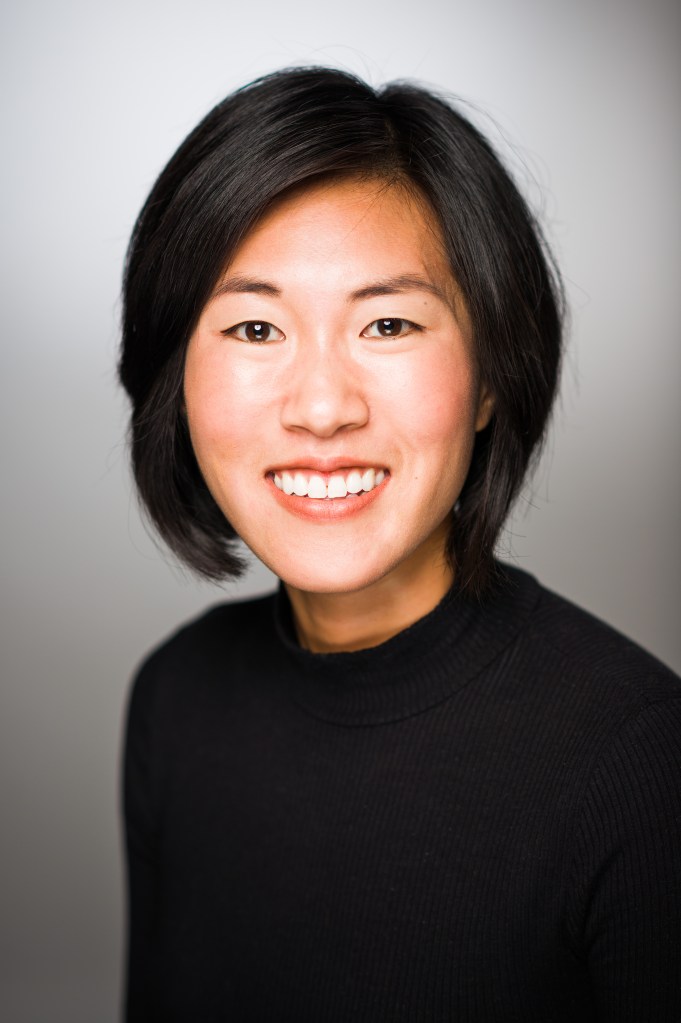
In this episode, I talk with Dr. Teresa Girolamo about her recent journey on the academic job market. Dr. Girolamo shares her experiences applying to CSD faculty positions at research-intensive universities. She shares how she chose positions to apply to, stayed organized during the interview process, crafted her job talk, and prepared for interviews. Dr. Girolamo also discusses many resources that she has uploaded onto her website (teresamgirolamo.com) for others to use as a guide during their own job search including her own application documents.
During our conversation, we also discuss ASHA’s Academic and Research Mentoring Network (ARM), the Mentoring Academic Research Careers (MARC) program and Pathways.
Transcript
NOTE: This podcast was transcribed by a free tool called Otter.ai. Please forgive any typos or errors.
Danika Pfeiffer
Teresa, thanks so much for joining us today to talk about your job search.
Teresa Girolamo
Thank you for having me.
Danika Pfeiffer
Absolutely. Let’s start with you kind of telling us a little bit about you growing up before you started your academic journey.
Teresa Girolamo
Sure. So when I grew up, I was definitely not in an academic family at all. My father dropped out of college because he got what I realize now was a fairly low paying salaried position. But in his family like that was great. So when I went to college I loved it. And it was also definitely a new experience for me between one thing and many others. I ended up becoming a special education teacher for high school age students who are all autistic and who ranged from being minimally verbal to having language impairment and using things like phrasal speech. And along the way, I kept on finding myself asking about how I could better characterize their language abilities, with the aim of translating that knowledge into supports that they and their families told me they wanted for themselves. And that led me into pursuing a doctoral degree at the University of Kansas in child language, where I worked with Dr. Mabel rice and Dr. Steven Moore.
Danika Pfeiffer
Awesome, very cool. That’s great that you had that kind of hands on experience in the classroom to bring into CSD. I’m sure that was really helpful. How did you decide what to do after getting your PhD?
Teresa Girolamo
I knew that for the research goals I had and the questions that I had the most probable thing for me to do that would make sense was to pursue a postdoctoral fellowship. And because I had been on a t 32 postdoctoral fellowship, as well as on an r1 grant as a graduate research assistant, I prioritize finding postdoctoral fellowships that would give me the greatest amount of independence. So for me that meant looking for a T 32 fellowships since I knew I wouldn’t have a publication record to support me being successful in obtaining an F 32. So I ended up applying to a couple of different postdoctoral fellowships one was with a researcher doing longitudinal modeling of outcomes in autistic individuals who are older meaning adolescents and young adults. And I also ended up applying to the postdoctoral fellowship brand now, which is a T 32 in the cognitive neuroscience of Communication at the University of Connecticut.
Danika Pfeiffer
Perfect and for those that are listening that are not familiar with academia, can you kind of explain what a t 32 is and why it’s attractive and why people like to do them?
Teresa Girolamo
Sure. Okay. So the T 32 is not the most inclusive postdoctoral fellowship because only US citizens, I believe, and residents, and folks who have a green card are eligible for this mechanism. If you’re a postdoctoral fellow on an r1 grant, you don’t have that same requirement if I have that, right. However, the T 32 gives you the most amount of independence because quite literally, it is a training grant. So it’s meant to develop you as an independent investigator versus one that is trying to one where you have responsibilities right to a PI’s lab. So in my case, I have a dedicated pool of research funding, and I think I have actually access to several pools of research funding for my own stuff. So I can continue building out my own line of research and I’m not obligated to work on anybody else’s feel to science, if you will.
Danika Pfeiffer
And that’s really important as you’re just getting established after you finish your PhD and it’s a nice opportunity to really get yourself off the ground and get yourself running before starting a faculty position. So that’s great that you’ve had that opportunity. When did you decide during this postdoctoral fellowship that you wanted to go on the job market? I think a lot of people wonder when is the right time?
Teresa Girolamo
For me, the right time was as soon as they said jobs popping up on websites from CAPCSD to Indeed to ASHA website that interested me. I thought, why not apply? I applied I think just like months after starting my postdoctoral fellowship and as with many other candidates who graduated during the COVID, 19 pandemic, we all know that many universities pull jobs so there was relatively little available as they were trying to figure out their budgets and how to deal with like, an ongoing crisis. So when I saw jobs pop up that interested me, I thought, well, let me apply. And since it was my first time applying, I applied rather widely. At the same time, I didn’t apply to any place where I would not have accepted an offer if the offer was right.
Danika Pfeiffer
Yeah, I think that’s great advice. Sometimes it’s tempting when you see all those posts, and you there, I feel like you can get sucked into this hole of just oh, I need a job. So let me just apply because it’s better than nothing. But I think it’s really smart to try to narrow your options down. But you knew you wanted to find a position at an r1 institution. So can you explain a little bit about what r1 institutions are?
Teresa Girolamo
r1 institutions are some designation I think from like Carnegie Mellon that are awarded a certain level of research funding, and it’s supposed to be indicative. Of a certain level of research activity. And in full disclosure, I actually didn’t end up applying only to r1 institutions. I applied to schools where I thought, hey, this is a teaching school, but I know this person here that has an r1 grant. So I thought about for my own research goals, which institutions would likely have the research infrastructure to support researchers who do want to apply for larger scale grants. As for the school I ended up accepting an offer at it is not in our one institution. It’s in our two institutions, San Diego State University. But as far as I can tell, the college or the school Speech, Language and Hearing Sciences has a fairly high level research activity, including a joint T 32 with UCSD with their doc program and communication sciences and disorders.
Danika Pfeiffer
Oh great. Oh great. So that’s important. I think the highlight is that you can if you’re looking for a research intensive place, it doesn’t just have to be at an r1 institution. And you can find that and other kinds of institutions as well. So I’m glad you highlighted that. How did you figure out how much research time would be dedicated to your position? Because I think that’s something when you first go on the job market. It’s hard to figure out sometimes from each school, how much time you’ll be able to dedicate to research.
Teresa Girolamo
So in my case, I was probably not the most diligent about trying to suss this out at each of my interviews. At some institutions, it was very clear that their priority was on research. And frankly, that was a little off putting because then I wonder what happens to things about quality training and teaching but that’s another story for another day. At San Diego State University. Many of these expectations are extremely transparent because it is a unionized institution. So for example, they have to post their promotion and tenure guidelines publicly. And it is very clear what the expectations are for promotion and tenure. Because of that. So in some ways, I think probably my experience will be a little bit atypical since I know that oftentimes, the expectations are not always transparent.
Danika Pfeiffer
Right? Yeah. Sometimes you might not know until you’re in that last round of interviews and you have the opportunity to ask and get more details and sometimes maybe not even then. So. That’s something I think each institution like you highlighted, it’s a little bit different, and they are not all very transparent about that. Unfortunately, as you were looking for positions to apply to this year for going on the job market, what things were you looking for in the job ad?
Teresa Girolamo
So when I was looking at job ads, this past cycle, I found that they were all pretty standard and opaque. So if I happen to know somebody at the institution I would actually reach out to them first and say, What is it your department is looking for? Because no one is upfront about that. And it was really, really helpful to be able to talk to people directly to know like, there is no way you’re going to be a good fit. For this position. For example, I know like if people were looking for a speech scientists, I could not pretend to be a speech scientist if I try or if another institution was looking for not an assistant professor right in an open rank search for for someone who studies like whatever at not the assistant professor level in a different research area. I thought, okay, that’s probably not the best use of my time because there is no way I’m not going to be. There’s no way I am going to be anything other than assistant professor if I applied to jobs.
Danika Pfeiffer
Right. You’re just starting out that makes a lot of sense. That’s nice advice there. If you know someone in that department, try to ask them. If you don’t know someone in the department. I think something that I found helpful was asking around asking mentors asking people that might know somebody in that department and seeing if they have any idea of what the search committee is looking for. Because I think for a lot of people that are just going on the job market, we don’t know a lot of people at a lot of different universities. So that can be another thing that I think can be helpful as well. Tell us about the process and how it unfolded. Once you started submitting your applications.
Teresa Girolamo
The process vary quite a bit from place to place in terms of how fast institutions moved. One resource that I found to be helpful was The Professor Is In I ended up purchasing her book some time ago, and I found it to be useful. And my postdoc institution ended up buying me another book that I can’t remember the name of I can send it to you later also about academic interviews in the job market. And between those two things and then talking to friends that was helpful. So the timeline vary quite a bit I would apply and maybe not hear back at all or months later. Obviously, in those cases, I didn’t move on to like screening or Zoom interviews. Other places would respond pretty quickly, like within a couple to a few weeks. And after those interviews I would typically hear back maybe like a few weeks to like a little over a month later about on campus interviews.
Danika Pfeiffer
Okay, that’s helpful. Yeah, I wish there was more standardization across programs because that waiting period is really hard and sometimes just waiting and waiting. Can you talk a little bit about your first round interviews, your screening interviews, and what those looked like?
Teresa Girolamo
So firsthand, screening interviews for on Zoom, and they were quick ranging from 15 minutes to maybe like 30 minutes maximum. Okay. And I found that the questions were fairly standard and a mix of behavioral questions as well as when specific to Speech Language Hearing, like how does your program or research, you know, speak to, you know, like clinical training or whatever, and they vary quite a bit in terms of how formal they were. There were some interviews where people very clearly had a standardized structure they were following. I think in terms of equity, that can be really good. And there were other interviews that were much more informal. And maybe that’s how they’re those departments are and that is what works for them. They almost gave me pause with frankly, how informal some of the interviews were because they thinking this is whatever you want it to be. I know you have to get questions approved by HR, right? View is being run is I’m sitting here listening to you know, explain to me what an r1 grant is.
Danika Pfeiffer
Yes, I had the same experience that there. They were really different from school to school. And I know a lot of preparation goes into getting ready to go on the job market getting ready for these interviews. How did you prepare for those screening interviews?
Teresa Girolamo
I would actually go through and make like a one pager. And it wasn’t because I was going to sit there during an interview and read my one page summary. But because it forced me to sit down and spend time on each department’s website and you know, Google and whatever, just to try and understand what they were working on what the culture was, like as much as they could and what questions I had, and I’m actually developing that into a template to stick on my website to show like, here are some typical interview questions that maybe you should think about beforehand. Here is how I prepared by trying to learn a little bit more about each department’s mission and values and strategic planning and the faculty members and that is what helped me by No, there is no one right way to prepare for interviews. Many of my friends who are now like tenured faculty elsewhere, said oh, yeah, when I prepare for interviews, you know, you did a lot more work than I did. But with the way my brain works, this is what helped me I think feel prepared going into each job interview knowing that such a short period of time.
Danika Pfeiffer
Oh, you had a lot of great advice in that going on the website and really trying to understand the department and what is important to them is really important to do before having these interviews. I think that’s huge. And having some notes is great because especially with all of these screening interviews happening on Zoom, it’s it’s fine to have notes up you know, have post it notes, whatever system works for you to refer to and I know for me having some post it’s next to my computer made me feel a little bit more calm to if I just needed to glance over at something. So I think that’s really smart. As you’re kind of reflecting back on this. Were there questions that you feel like came up pretty often in these first screener interviews that you started to prepare for?
Teresa Girolamo
So many schools asked about how my programmatic research related to speech language pathology or just Speech Language Hearing. A common one of course is tell us about your research and right. I found that fewer schools asked about like teaching style and teaching philosophy, even though I have many thoughts and opinions on that. And something they found was interesting is also not many of them. Maybe like 10 Zoom interviews, I had asked about dei even though they all wanted a diversity statement. I think it’s like the new trendy thing is to ask for one. And so I found that to be interesting.
Danika Pfeiffer
That is interesting. Yeah, I don’t think that I had many screening interview questions about that either, but it did come up for me in some universities in the next round interviews. Did you find that Yeah,
Teresa Girolamo
I think like the one place I can remember that asked me about DEI was San Diego State University and I think part of those coming from the university strategic planning for building inclusive excellence, but I found it to be interesting because when I’m not white, two, most of the faculty interviewing me are white. And three I could tell like no offense, like most of them had thought dei all the way through. So I don’t know what they would have had to say about it. But it also makes me wonder like, is this another way of just kind of being performative and saying, Oh, listen, we care about diversity. So we’re going to make you write the statement, or we’re not going to talk about it. We’re not going to send home the message that we care about this in screening our applicants. So it was interesting.
Danika Pfeiffer
Yeah, that is really interesting, because we do spend a lot of time I’m sure you did. I know I did, sitting down and writing those statements. And it does feel like there should be some weight given to that, especially if they’re saying it’s a priority. Yeah, that is really interesting. I know that’s an that’s something that’s very important to you and your research as well and your teaching. So I think those are the kinds of things you when you go into this I think it’s easy to think oh, I just need a job. But really, all these universities are not the same and you will start to see things like that. Where they value different things or they’re not they’re either really committed to certain issues, and they’re actually practicing what they preach or not. And I think through these interviews, you can start to really gauge that.
Teresa Girolamo
Yeah, and I think the latter right where if if departments are not practicing what they preach. A term I heard for that though that I love is called diversity dishonesty. Right, which is where you publicly affirm like Black Lives Matter. I stand in solidarity, stop Asian hate, but then you ask about like, what are you doing in day to day life and right it’s like crickets chirping.
Danika Pfeiffer
Right. Right. I know for as we’re on this topic, I spoke to a few people that are going on the job market this fall recently, and they were asking me a lot about diversity statements and where to even start. Do you have advice for those that are trying to put their thoughts together and write their diversity seat and and how to even just begin to put their thoughts on paper?
Teresa Girolamo
I feel like this is probably not specific advice to diversity statements, but just to academic writing in general. Yeah. Is just right. And I think just like to get your basic thoughts out, because otherwise it’s easy to just kind of put it off and feel totally overwhelmed. One suggestion I would have is to think about being succinct. I’ve edited a good number of people’s job application documents, everything from assistant tenure track positions, postdoc fellowship applications to like administrator positions. And when I see very long, kind of rambley woowoo diversity statements, I’m like, No, cut that out. I know you’ve done more than this. Say a little bit more succinctly. And then if anyone wants to see an example, like I’ve posted my diversity statement on my website.
Danika Pfeiffer
Yep. I will share that in the show notes for people that want to take a look. I think that’s excellent. And it’s so nice to have examples to go from and just see because I think when you first start writing all of these documents, it’s hard to know what it should look like. And especially if you haven’t spent much time talking about that in your doc programs. So it’s really nice that you’ve decided to share your documents. I’m sure that’s going to be really helpful for others. How about making it to the next round of interviews? So from the screening interview, you said for you, it was typically somewhere around a month ish later that you heard about moving on to the next round of interviews. And so how did you prepare for those interviews?
Teresa Girolamo
So after each of my Zoom interviews, of course, not knowing what would come next, I quickly took down notes to kind of debrief with myself with talking points or things that had stuck out to me so I would update kind of that one pager with other notes right. And then I ended up chatting to mentors in various people I knew who had recently been on the job market, some of whom were also cheering or serving on search committees for the cycle in which I applied to ask about what are the things you’re looking for for an on campus interview? And the icky thing, I think, is that so much of it is about these subjective criteria where we talk about fit for a department and I wonder how much of it is actually just kind of subject to bias right. So what I heard from my mentors and friends seem odd to see someone they could see themselves working with someone they like someone who is quote, unquote, a good fit, which I think is a problematic criteria.
Danika Pfeiffer
But what does that mean?
Teresa Girolamo
I know I know it’s so bad. And so I would just prepare my job talk. Think about things that stuck out to me from the Zoom interview, and I would revisit each department’s website to see if there was anything else that I missed, right presume Interviewer If there was anything else that was new, like someone getting an award or you know, Nissley, getting an award or some type of activity that I wouldn’t want to bring up and then once I got the interview scheduled for each institution, I would go through and more closely look at each individual that I was going to meet with or at each group of individuals I was going to meet with and prepare talking points.
Danika Pfeiffer
So kind of going through their bios on the website.
Teresa Girolamo
Yes, okay. That’s or just like program websites, or even sometimes they think like Program Handbooks just to learn more for example, about like unique joint PhD programs between universities.
Danika Pfeiffer
Yeah, that’s great advice. The website these days, they are so they have so much information about these programs. It’s a nice way to learn, like you said, kind of what programs they have, because not all programs have the same masters PhD programs. So that’s a nice thing and all the bios are there. The strategic plan for the department is there I found that really helpful to see what kinds of things they emphasize in their strategic plan to see if those match things that I really value. And also like you said the the news a lot of times there’s kind of a news section or highlights of the department section where you can see what the students are doing what the faculty are doing. And I think that speaks a lot to the department and what again, what they value, what they’re excited about what they’re celebrating, and are they supporting their faculty are they highlighting their successes and I think that really can help you learn a lot about the department. And you mentioned a big part of this is also preparing your job talk. So as you were preparing your job, talk for some of these more research intensive universities, what kinds of things were you really trying to be sure to highlight in your job talk?
Teresa Girolamo
In my job talk I wanted to highlight and I’m sure everyone else says this to the narrative of who you are as an early career researcher and be very clear about where you are going right to show that on day one. When you show up. You will have ideas of what it is you’re going to do. And you won’t just kind of be sitting around like in your office trying to figure out what you’re going to do next in terms of research, tree, research, teaching and service. So in my job talk, I highlighted different research areas and this is also on my website. And then I started giving this job talk to a group of people after group of people to after group of people I must have practice my job talk upwards of like a dozen times and probably even more than that and what was great is I was able to talk to folks from different backgrounds. So for example, people who first focus on statistical learning and neuro imaging and applications of fMRI with infants, which is totally not something I do, right to people who work on developing diagnostic assessments for autism, talking to people from developmental and clinical psychology, as well as linguistics was able to really get a lot of feedback from people who differed in backgrounds, as well as in positions again, including some who focused on running their own job searches at their own departments. And I found having participated in some of that Asha programming to be really helpful, because those were the people who I think helped save my job talk the most in that it was awful when I started. One of them actually got a babysitter for her kid who was home from school because of COVID. Like he didn’t have COVID but I think they were worried about health issues, and listened to me for two hours and gave me feedback. Got the set from participating and ashes MARC program, mentoring academic research careers and Pathways.
Danika Pfeiffer
Okay, great. I also participated in both of those and I think they were excellent, especially during the job search process to get some advice from people that are not your main mentor. I think it’s really nice to have that outsider perspective and to hear their experiences and get their advice. I totally agree with that. So as you were piecing it together, and it sounds like it was kind of revised over time, something you highlighted was really telling your story throughout and so how did you do that with that with balancing the research that you had done previously and what you were doing now? I think, for me, I had a hard time at first figuring out how to balance everything. Do you have advice about that?
Teresa Girolamo
So first is if you can get your hands on other people’s job talk slides that makes a world of difference because it will show you there is no one right way to make a job talk. I’ve seen many different formats that have all worked for people who have you know, great jobs. And the second piece of advice would be just make a job talk. It can be bad. Mine was awful. I had people very politely tell me it was awful and then told me how to fix it. And that’s because it’s easier to have a starting point right? If you have nothing then what are people going to give you feedback on from a self what I found to be helpful was one taking people’s feedback not personally if that makes sense because my job talk was so bad. In the beginning, I think I tried to make it chronological and it obviously didn’t make sense and multiple people told me this. And then I had an aha moment when actually my Asha pathways mentor said okay, so what I’m hearing your talk a lot about is this and that was like a theme which is kind of like this equity and language piece. And she said, Why don’t you make that run throughout when you talk about your different areas of research and how that’s going to bring you forward to where you’re going next. And that was great, but it took me a long time to decouple my head that like my job talk did not have to look like other people’s job talks. And then second of all, the feedback was not a personal criticism. It was more like constructive feedback because obviously people are sitting around for two hours with you on Zoom. They think you have something to offer and they’re giving you feedback for a helpful
Danika Pfeiffer
reason. Yes, absolutely. I think that’s good advice for being in academia across the board. There’s constant feedback and constructive criticism and not taking it personally I think is a huge lesson. To learn as early as you can. Yeah. So a big part of that interview on campus is the job talk. What other kinds of things can people expect for that on campus or that second round, which might be virtual in in the COVID? World? What can people expect for that interview?
Teresa Girolamo
I had many self this is, I think well known. But on campus interviews, whether on Zoom or in person are typically all day long. So for myself this meant when they were in zoom finding dog care for like my two dogs because they don’t necessarily enjoy having mom on zoom all day and they let know what their voices and I think folks can also expect to meet with a wide range of groups and with a wide range of individuals. So typically students sometimes places with separate undergraduate from graduate students, or masters from PhD students, faculty. Typically I would meet with like clinical faculty members with the search committee with tenure line faculty members with different types of administrators whether it was like the Dean of the College Associate Dean’s depending on how the infrastructure was at each institution, and sometimes I would meet with peers or with smaller groups of faculty members depending on their areas of interest. It varied from institution to institution. I will put a plug out there though, and maybe for I’m probably biased so the school I accepted a position at was actually the best at structuring the all day interview because they purposefully built in breaks.
Danika Pfeiffer
Yes, that’s so important.
Teresa Girolamo
And then we sent me dinner.
Danika Pfeiffer
Oh, wonderful. That’s even better. Those things do really make a difference though, because it’s a long day. Yes, a really long day. And I like how you highlighted all the different groups that you meet with my experience was I would receive an agenda of the day and that could have been a week in advance, sometimes two days in advance it really varied. Is that your experience as well?
Teresa Girolamo
Yeah. So I would typically get the interview schedules in about that same timeframe, which sent me into like a mild state of panic for like interview prep. And I guess there’s not much you can do about preparing to meet with each group other than having maybe a more generic set of talking points and adding on whatever is specific to that institution. Once you get it. Yeah, yeah.
Danika Pfeiffer
Great advice. Did you face any challenges with going through the job search process? I know it’s a marathon really? What challenges did you face if to me?
Teresa Girolamo
The broadest challenge which I think is not specific to myself, but to everyone on the job market is being patient, because you have to accept that you don’t know what’s going to happen. And I found that to be anxiety inducing. And I imagined this is the case for many like individuals who like to have a lot of control over the work that they’re going to do the work they’re going to put out how they’re going to manage their time. And that just doesn’t happen on the job market. My friend who is the department chair at the University of Washington was chatting with me once and said, you know, Teresa, just have fun on the job. Market. And I was thinking Are you are you might think when you’re a full professor and a department chair at a top institution, who has not been on the job market, right? Facing entry into the profession or not. It’s easier said than done by it. On the other side of it. I’m like, Oh, I understand why he said that. Now, I should have had more fun on the job market, but I did it. As for specific challenges, I actually encountered racism on an on campus. Interview visit and it was so interesting, because I would not have heard about it had a faculty member from the Department not called me and told me the things they said about me on, you know, in private and these were things that the faculty said behind closed doors. And I won’t go into those specifics, but when I was talking about this incident afterward with faculty from a wide range of universities, the provost at UConn, the executive vice chancellor for health affairs at the University of Missouri and elsewhere, they were all appalled and as one of them pointed out to me, the said, you know, and these are the filtered thoughts that they had. This wasn’t even like the worst of what they were thinking and this came from a very good researcher, who was white, you know, at like a top CSP. institution. But what I found, I guess, to also be not hurting because it ultimately still harmed me as an early career scientists because if you don’t get a job offer, that’s bad. And if you don’t get a job offer because of racism, that’s also bad. What I found to be heartening was the provost at UConn actually said, you know, I’m going to talk with higher reps at the school to let them know they have a problem in this department. Because this is a you know, someone I’ve known for years and who I’ve worked with on dei issues so they know exactly where I stand and how I work with others and when I spoke to the executive vice chancellor for health affairs at the University of Missouri, he actually got together with the dean of class and with an executive director to see if they can make me a customized tenure line position. And this again is like another senior White man who’s like retired Air Force, right and was just like, Okay, I’ve known you for years. And I know how you work with others. And you know what, we want to make a position to try and hire you. And I didn’t end up pursuing that because I had an offer from San Diego State University, but I did find those two things to kind of be like, good validation that what happened was not me.
Danika Pfeiffer
Absolutely, absolutely. I’m so sorry that you experienced that. But thank you for sharing it because I think it’s important for people to know that we have a really long way to go in our field and other fields to and I think bias racism, these are things that come out in the job search process, unfortunately, and you should not feel and I’m glad that you don’t feel that it’s anything to do with you. And that you are unworthy of a position and it’s really unfortunate that these are things we still have to be talking about in 2022. But thank you for sharing that.
Teresa Girolamo
Yeah, no problem. I have no qualms in talking about this stuff because I think a lot of people feel silenced and it can be very easy to pretend like we don’t have these issues otherwise. And in my case, I personally don’t feel tied to academia. I like it so far. But if there were ever a time where it became apparent that the only way I could stay in CSE as a faculty member, is if I was quiet then I would say goodbye and go do something else with my life.
Danika Pfeiffer
Absolutely. Good for you. Just a few more questions here. Before we wrap up. You talked a lot about all of these different documents in your preparation for interviews and that you applied for many different positions. How did you keep yourself organized with all these different applications and all their expectations and deadlines? What worked for you?
Teresa Girolamo
So this is a document I’m actually going to turn into a template and stick on my website because no one should have to reinvent the wheel. I made an Excel spreadsheet and I also use this to communicate with my letter of recommendation writers and references where I would lay out by institution the documents I had to turn in a link to the posting and any specific details deadlines, what the status was and things like that. And I found that to be a really helpful and also extremely transparent way to stay in touch with everyone writing my letters.
Danika Pfeiffer
Perfect. Well, your website is gonna have all these great resources for people so I will definitely put that in the show notes and I’m sure people will be really grateful for all that insight because I know it takes a lot of time to just figure out what does work and how to keep all of these things straight. My last question for you is what advice do you have for others that are preparing to go on the job market and looking at a research intensive institution.
Teresa Girolamo
So for anyone else looking at a research intensive institution, I would encourage them to actually reframe it to thinking about what are my research goals, including maybe what are some of the mechanisms I think I need to support my research goals. And then think about which institutions have that infrastructure? Because I know several faculty teaching schools are at liberal arts schools who have our Owens so clearly those schools have the infrastructure needed to support that level of research activity. Another thing I would suggest doing is looking beyond the department’s website and looking at things like the Research Foundation or institutes or whatever office is tasked with handling, research grants and research funding to get an idea of what programming is available at say the college or the university level to support faculty who want to apply for grants or to prepare and submit grants and things like that. And then the third thing is, I would suggest that applicants think about how their line of research is going to be feasible, benchmarked against the expectations of the job and this is something I did very poorly at at an interview, I think at a teaching school where that’s petitions are very clearly on teaching and clinical preparation. And so on one hand I wasn’t in the area they were looking for, and they told me this and I was like Okay, fair enough. And then on the other. I did not address any of my interview like answers or responses to like departmental expectations. So like to nobody’s surprise, I did move past the Zoom interview. Yeah,
Danika Pfeiffer
that’s so important, figuring out what’s important to them. And that strategic plan, I think can come into play there on their website and figuring out some of those things and just reading the website talking to people that are either in that department or know people that are in the department to help figure those things out. Is there anything else that you would say to try to figure out what’s important to the department some
Teresa Girolamo
departments and some schools will post this more transparently than others? So again, thinking back to like research dollars and what you need money for, you can try to get a gauge of how much research funding they’re getting. And for me that was helpful because so for example, I’m going to purchase a very expensive piece of neuro imaging equipment. Obviously, when I go to an institution focused on teaching, they’re probably not going to have like based on their like fiscal expenditure, the funding to give me like, a ton of money, like six figures to go buy a piece of neuro imaging equipment, so I don’t know what I was thinking.
Danika Pfeiffer
Those things are hard to know when you first started out though, so I’m glad that you shared that.
Teresa Girolamo
Yeah, no, I think it was like very obvious and just pragmatically like I missed it completely.
Danika Pfeiffer
I’m sure you are not the only one. All right, I just have some rapid fire questions for you here that I asked all my guests to wrap up the podcast. The first one is what is one resource you couldn’t live without?
Teresa Girolamo
Actually something I found to be really helpful is ashes arm it’s like the research and mentoring network where they lay out all the programs because those have really been the ones I’ve interfaced with. And as someone who totally doesn’t know anything about research or academia participate in those programs was a
Danika Pfeiffer
lifeline. Awesome. I’ll put that in the show notes for others as well. What has been a defining moment in your academic journey?
Teresa Girolamo
Getting a tenure track offer when I totally didn’t expect to
Danika Pfeiffer
what is one thing on your professional bucket list?
Teresa Girolamo
I would like to open up a center, a community center to provide integrated supports and this could be working with a community center that already exists that provide supports to specifically bipoc autistic adults.
Danika Pfeiffer
That sounds amazing. I I totally believe in you. What has been your favorite part about your job as a postdoc
Teresa Girolamo
Independence I get to sit and work on my own stuff. And I found it to be a really great time for me in terms of productivity and to build out exciting new lines of research
Danika Pfeiffer
and how can people connect with you or learn more about you and your research?
Teresa Girolamo
I don’t use social media for work because I can’t figure it out. I really look forward to having a very smart student to maybe help with like social media and whatever else people use Twitter for. People can email me or they can look at my website.
Danika Pfeiffer
Yes. And what is your website?
Teresa Girolamo
It is my name. It’s www that Theresa M drama.com. I put in the en which I don’t typically use because I think a lawyer in the New York City area is also named Teresa drama and she has that domain so don’t don’t email her.
Danika Pfeiffer
All right, I will put that in the show notes as well for people to find you and all of the amazing resources that you’re sharing on your website. Thank you so much for being here with us and sharing your academic job search journey.
Teresa Girolamo
Thank you for having me.
 About, From, & With