In this episode, I talk to Ileana Perez, a SLP that recently made the switch from working in a pediatric private practice to a skilled nursing facility. Ileana’s positivity and passion for helping others is truly inspiring. She describes why she made this change in her career, how she prepared for it, and the highs/lows of making this big transition in her clinical practice. Ileana also shares some advice for others that are thinking about switching settings and client populations.
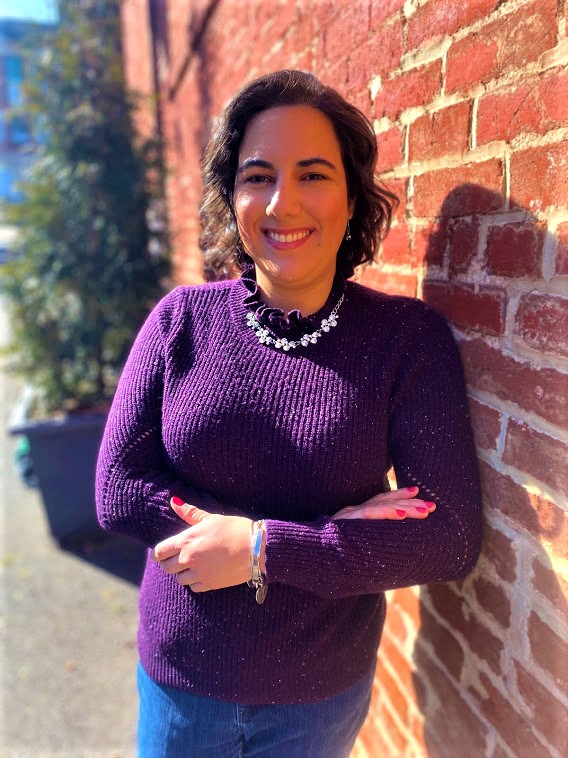
Ileana has been working as a Speech and Language Pathologist for 3 years. After graduating from James Madison University with a Masters of Science, she did her clinical fellowship and worked with children for 3 years at a small private clinic. Now she has moved on to work with adult clients, focusing on treatment of cognitive communication disorders and issues with swallowing. As a native Spanish speaker, Ileana can easily communicate with Spanish-speaking patients and also promote communication between those patients and other professionals, lessening the potential impact of language barriers in treatment.
Episode Transcript
NOTE: This podcast was transcribed by a free tool called Otter.ai. Please forgive any typos or errors.
Danika Pfeiffer
Hello and welcome to another episode of about from and width. On this episode I speak with Ileana Perez, a speech language pathologist that recently made the switch from working clinically with pediatric clients to adults. Ileana was actually one of my roommates during graduate school and I’m excited to have her here on the podcast. She shares some really great insights into what it’s like to make this change from working with children to adults in our clinical practice. And I think these are really helpful for others to consider that are thinking about making this switch someday. After graduating from James Madison University with a Master’s of Science, Ileana completed her clinical fellowship and worked with children for three years and a small private clinic. Now she has moved on to work with adult clients focusing on treatment of cognitive communication disorders and issues with swallowing. Eliana is a native Spanish speaker who can easily communicate with Spanish speaking patients and also promote communication between those patients and other professionals, lessening the potential impact of language barriers and treatment. Alright, let’s dive in. I hope you all enjoy this conversation. Hi Ileana, thank you so much for joining me today to share your story.
Ileana Perez
Thank you, Danika. It’s an honor to be here. I’m excited because I heard your podcast and you asked me to come in. I was like, Yes, that sounds awesome. So I’m excited. Ready to go.
Danika Pfeiffer
Well, that is great. I can’t wait to hear more about your journey. I know a little bit already, but I’m excited to learn some more. Let’s start off with you. Just telling us a little bit about you growing up before you began your SLP journey.
Ileana Perez
Sure. So I grew up in Puerto Rico born and raised. We do learn to speak English since elementary school. So I did grow up speaking English, but my primary language in which I was raised is Spanish, and it’s the official language. So I speak Puerto Rican Spanish as my native tongue. And American television influenced me so I know the lingo and I and again with the English in school, I was able to know both languages. Definitely stronger in Spanish up to the age of 14 when I moved to Virginia specifically. And so I the other part of my growing up happened here, locally in Virginia, and there I really submerge myself into more English and so my growing up consisted of speaking, and I still do speak mainly in Spanish at home. But I do get influenced from media and just my everyday conversations with people in English. I grew up in a small family household, just one sibling, I love to learn and so I wanted to be a teacher for a little bit and then for like a hot second a fashion designer but then I’ve reverted back into more of a teacher.
And then I learned about speech pathology going into senior year because I myself had speech pathology for about six years. And that really influenced my journey. So I grew up having speech therapy myself. When did you have speech therapy? So I have speech therapy, if my memory serves me correctly, because I feel I learned something different every time I’ve talked to my parents about what my journey was from about the age of three until almost eight. So I had a language disorder so I I don’t know technically what happened to me. It’s kind of a convoluted thing. Not because it’s a mystery is just it was the 90s the No but seriously, the things have improved vastly since then. I had a fever and I developed what’s called a acquired disorder. And so I regressed in my language. And so I have to have speech therapy intensely, I think three times a week so that I could be where I am today. I was told I wouldn’t talk that I wouldn’t learn how to read normally I that I wouldn’t grow up normally and by the grace of God, here I am. I’m really grateful for that speech therapist. Wow, she did a lot of hard work. Yep. And that was in Puerto Rico, then yes, she was actually from what my mom tells me she was studying to be a master student. So I was one of her first students. I want to get in contact with her but I haven’t found her Yeah, I really want to thank her for everything. Yeah, sounds like she did a great job from telling you that you would never speak and now look at you. You’re a speech language pathologist. Right? My parents joke that there is no off button for me now. So she says they they say I overdid it. So she did too. Well, a little too.
Danika Pfeiffer
And you said that you became interested in speech language pathology, when you were finishing up high school. Is that right?
Ileana Perez
I’m trying to think so my junior year I went to a small private school in Virginia and I had an opportunity to do a career day. And at that point, I still thought I wanted to be a teacher. So I talked to one of my friends who I knew her mom was a teacher and I went to shadow her and while there she said, Why don’t you shadow the speech pathologist? Because I actually had mentioned her my mom suggested to me that I should look into speech therapy because of me going through speech therapy when I was younger and that it’s similar to teaching and so I said, Okay, I don’t know too much about it. I went to search for what this was, and it looked interesting. I mentioned it to her before going on this career day and she said, Oh, why don’t you shadow her? And on that day, junior year I shadowed her because she was a special education teacher. And I and I have a passion for people with disabilities. I enjoy that kind of work. So I thought more specifically that I wanted to be a special education teacher. So that’s my shadow my friend’s mom. She had me accompany a student that was going to speech therapy to speech therapy. And it was in literally a closet. And I said, this is your office and she said yes. And apparently, even where I work now. I literally have a closet.
And she had a one of those circular, non circular What is it those halfmoon tables and three students that she had this pyramid and this poster and she was multitasking. And I said, Wow, you’re like a wizard. How do you do that? It’s amazing. How do you keep three kids separate things that they need to do? Whoa, and so I fell in love with it right in there. And that was my beginning of my rabbit hole into being a speech pathologist. Started with that small seed. Yeah, that’s great. That you got to shadow I think that’s really helpful in understanding what exactly a speech therapist does and what their everyday life looks like as a speech language pathologist, and you attended Mary Washington University and you majored in psychology. So how did that help prepare you to become a speech language pathologist? That’s a great question because I love psychology. Psychology is one of those degrees that can help out with speech pathology, because you have some of the similar prerequisites that you have to take the science and the humanities type of class.
But I just love the insight of what makes a person function in a way so you have that piece of the anatomy but you have the mental health and what I guess is not normal, but also what is normal. So I love getting to know people in that way. I went into choosing psychology with a minor in linguistics because I panicked, because I chose Mary Washington to go to school and they did not have a speech pathology undergraduate, and I said, I messed up. What did I do? Oh, no, what was me but I, the great thing is you can talk to people they answer your question, they said no worries. People do this. And usually people that go into this track major in psychology or in linguistics, and I said, Why not both? not major in linguistics. Linguistics was not a major at that time. I’m not currently sure if it is, but with psychology and just knowing the theory of people, I guess, and the different mindsets and the different things that go into society, and I took with linguistics, phonology, taking phonology exposed me to transcribing which I thought was my worst nightmare, but I got better at it in grad school, because I was already exposed to it.
Danika Pfeiffer
Yeah, that sounds like that was really nice in preparing you to go into an SLP program. And as you started grad school, did you find yourself gravitating towards any certain population that you wanted to work with or any certain setting that you thought you might want to work in?
Ileana Perez
So in grad school, I had my head on kids, full on full disclosure had my head on children, but I was tinkering with the idea with adults to work with adults. Because in undergraduate of my senior year, I shadowed a speech pathologists Freston piece, she was lovely. Fortunately, she has passed. She was awesome and she made me love work with adults. I did that for three months, I observed her and I thought that was awesome. So I have my heart with kids, but I also have thought to the adults and it started shifting more to adults as I was working. Not because I don’t look I love kids. I you give me a baby, my weakness. I love babies like I love them, but the relationship that you build with adults, especially towards the end of my graduate school career where I had an acute placement setting made me really okay, I think I really want to work with adults in the ideal world universe. That would be great. Oh God, they had really good class. I love the cog the cognition class. I love that language. So those classes, I’ll swallowing those really also geared my decision towards wanting to work with adults.
Danika Pfeiffer
Okay, that makes sense. So it sounds like both the coursework and your clinical experiences you just started really gravitating towards that content area.
Ileana Perez
Right. And I mean, I Not that again, not that I don’t love working with kids. So it just made me gravitate a little more just from my personality. And so
Danika Pfeiffer
yeah, were there any other experiences that you had during graduate school that you feel like really shaped who you are as the clinician that you are today?
Ileana Perez
My, really my teachers, my professors, they really helped out those connections that networking my advisor or class advisor, the clinical supervisor, just little conversations that really does it for me, I’m a person that builds relationships. So those relationship my peers really helped out just that my core group and my the class above me were really influential.
Danika Pfeiffer
That’s great. Awesome. And as you finished up grad school, you said you started feeling like you were getting pulled towards working with adults. But then how did you go about finding your clinical fellowship? Did you start off by looking for somewhere that you could work with adults?
Ileana Perez
Yes. So during the last semester of grad school, we’re encouraged to start looking for jobs because we’re finishing up we just have our last clinical experience where we don’t go to the actual school building itself to take classes. We’re out there doing five days a week, so I was applying, and I applied to a lot of places. The thing was working with adults, it’s very competitive. You really have to, in my experience, have connections and be willing to perhaps relocate or you know, not really be so bound by your idea of the perfect working place. And so that was just very tough because I applied to a lot of inpatient, outpatient, acute you name it, I applied it was tough, because even with my clinical experience, most of my clinical experience was still with children. I said, Well, I’m going to apply here, and I got the job and I said, Well, I guess I’m called to do this. Now. I’m going to go do it and it was a great choice where I ended up working because it was a very supportive environment for a new young clinician who, you know, has experience but you still need a little bit of that hand holding because you’re still a young clinician. That hasn’t been paid for this job before. So I ended up getting my CF and staying at that workplace for three years.
Danika Pfeiffer
And that was actually with kids, right?
Ileana Perez
Yes, yes. Yes, it was with kids. And it was a good learning opportunity, and a growing opportunity for sure as a person and as a clinician.
Danika Pfeiffer
Good, good. And so you were working at pediatric outpatient center through your clinical fellowship in your early years of your career. What did a typical week look like for you in that work environment?
Ileana Perez
I learned to be flexible, so I have to be flexible on the job for sure. But I would see, depending on the day, I would have 30 minute blocks with kids. Most of the time treating the child some of the time talking with the parent or transition them out whatnot.
Danika Pfeiffer
And were those mainly individual sessions.
Ileana Perez
Yes, I did not have group sessions just because of the nature of the office itself, but I did have co treatments so that was nice to be able to do work on the same child with with different different disciplines. So that was mainly occupational therapy, but Okay, that’s great. And then tap some paperwork planning time throughout the week wants to three evaluations a week depending on the weekend, the need between eight and 14 kids a day. And it was a collaborative environment. So there were other clinicians I could talk to about a patient especially if we shared them because we were absent or because they have to reschedule. So sometimes some of those sessions weren’t just my people on my caseload. They were other clinicians children, because they had to reschedule because they made it late to their appointment. They are going on vacation next week and they want to make sure they get their therapy and so just doing that, and then revaluations,
Danika Pfeiffer
okay, so it sounds like you had a nice variety then different kinds of things and also different patients and getting to work with other professionals to what made you after those three years start to think about potentially changing your workplace.
Ileana Perez
I still had that dream was working with adults that that fire had never died fizzled out since grad school I was wanting to challenge myself in that because working with adults is very different than working with children working with children is more educational, at least in an outpatient or a school tends to be more an educational approach. You tend to be more like a teacher you come teach them and try to help their development. If you will, but with adults is a lot more restorative. It tends to be some teaching but especially in the medical world, you get to help them recover, post something that happens to them. And I enjoy that medical aspect. Like I loved my anatomy class and he just again thinking about those relationships that adults have that are very different with relations with get i Miss, I miss the frankness that children the things that they say you’re just like, oh, man, because it had been three years I was thinking, I think it’s time because I am slowly departing from grad school more and more. And so I want to make sure like if I wanted to work with adults, I could be able to still be teachable. Not that I wouldn’t be teachable in the future, but that I’m closer to grad school at this point than say maybe in like seven more years. And then I hadn’t had experience working with adults and it’s a little tougher, especially as I’ve mentioned, it’s competitive. To work with adults. And so I wanted to make sure that if I could get a chance to get my feet wet in that world again to really make sure I love then now was the time especially with COVID and all of this last year was not not an option to try that. I thought this year was the year to do that growth in adults. I thought I was ready and thankfully I applied and they said come on board. Okay, so I feel like I’m starting over because again I have not worked with adults, it’s three years ago. I was not getting paid for it when I was a second year student and now I have to do more responsibility myself and I still have peers, and I still consoled and I still take the continuing education classes just to continue on the learning but very different than when a student so I wanted to take that on in my younger years, if you will.
Danika Pfeiffer
Yeah. And I imagine that it could feel a little bit overwhelming to decide to leave a job and work in a whole new setting. Did you have any hesitations about doing that are any uncertainties?
Ileana Perez
Absolutely. I was terrified because I was comfortable. Very much. So it takes I here about seven months to get used to a job. So I’m having to restart all over. Again. Right. And I was comfortable. Like I knew my place. I have my office like, great. I knew where the tools were. And just routine and things were getting easier. And that’s not a bad thing that really showed I think that I you know I was learning and that I was growing and adapting well enough to do it. I guess I have a fear of having to do that. But it was also terrifying because I change population and setting. I went from pediatric outpatient to adult nursing home so very, drastically different.
Danika Pfeiffer
Yes, definitely. Lots of new things.
Ileana Perez
Yes. So I was very, you know, nervous, confident because you know, they have the confidence in me to to do it and I’m learning and I’m growing within that. But hesitant in going into it because it’s just, you know, so new and again, it’s more medical, which I like but it also has its challenges, right because you’re caring for people who are not at their peak of health. A lot of them and so restoring them and figuring out where they were before. So just thinking about all that stuff and just thinking I was like oh I’m gonna leave the not the working knowledge that I have working with kids like that was what I was exposed to all the time and think is like Oh, I’m I don’t know what it looks like to be involved working with adults I’d also created hesitancy but people were cheering me on tell me you got it and I said well do your god I’m gonna take this leap of faith now and I lot I did you know i i Miss in some parts working with kids but I don’t miss carrying heavy stuff. I will say that with kids. You gotta carry stuff around with adults. You just go in their room. You do the treatment. Step on it, like all right,
Danika Pfeiffer
so yeah, you don’t have all the bags of toys and art supplies.
Ileana Perez
Yeah, yeah. It saves some money. I do have to say so. Because I was a fiend going to target at that dollar section. I was dangerous.
Danika Pfeiffer
Oh, that is so dangerous. Yes, absolutely. What was the interview process like for you as you were applying for these jobs? Did it feel intimidating? Or did you feel more prepared this time going through an interview process?
Ileana Perez
Well, I hadn’t interviewed in about three years so I don’t know. prepared. I feel that for every interview of anything because I interviewed long, long time ago for another kind of job that didn’t have to do with speech therapy. I felt nervous about that. I just think that’s me as a person, but yeah,
Danika Pfeiffer
it’s stressful.
Ileana Perez
It’s stressful because they ask you these questions that you want to be personable but professional at the same time you want to be vulnerable, yet confident your abilities. And I really have you know, sell it, I say, and I tried to be honest, as far as that goes, like look, I have not worked with adults in three years like the my last experience. My reference still was my experience for three years ago. So I got my people can vouch for me for my work skills now. So I was, you know, confident in my work, professional area work skills, but the adult part was more of the part I wasn’t prepared for. So they would ask me questions like, Are you familiar with this kind of thing or this kind of thing? Or where do you see yourself in five years? And that part? I feel I’ve refined every time I interviewed interviewed in quite a few places. I just said if this was the time with what I would say with my honesty, someone was gonna take me and that’s what happened. I don’t you know, honesty’s the best policy, but you got to refine your honesty. You don’t want to just sound defeatist. Yeah, the good guy, which I was trying to avoid, right, but you know, when they asked if I was familiar with certain things, or certain documentation programs, I was, I said, No, I’m familiar with this. But I always tried to say, you know, I’m willing to learn.
Danika Pfeiffer
I think that’s really important. I am trainable. I
Ileana Perez
learned these types of things over here. You know, I’m here. I would just love if you gave me an opportunity and you always follow up with thank you so much for interviewing, taking the time. appreciate this opportunity. Even if it doesn’t result in anything. Thank you.
Danika Pfeiffer
Yeah, I think that’s great advice. I think being upfront with the skill set you have and then telling them that you’re willing to learn the others is really important. And I think while it gets it worked out because you recently got a job in this new setting. What was the first couple of weeks like as you were navigating this new setting new population of clients?
Ileana Perez
I mean, I’m still not quite a ton of time into it. But how long has it been? Now? Yeah, it’s been a month and two weeks. Okay, so I haven’t been you know it I feel there could be a part two to this interview later. Yeah, call call me in about seven months. See what happens but the first week was really just learning where things are. That didn’t stop on week one. I was still learning where things were on week two and week three. So the first few weeks were learning where things were and doing like those mandatory trainings is the medical place you have the the policies and the HIPAA and the CFT like you Yeah, you got to do this not right all you don’t you sign a ton of paperwork. Well, you also have to do video trainings and stuff. And my first we just learning where my office was again, a closet. I don’t have to stay in said closet, but a closet where I at least because I mean it serves to keep the stuff that’s where I keep my stuff. Yeah, you have the space. Yes, I have a space for me. Mainly, like I said, learning learning names. Yeah. learning, learning where the room system, the room system, just how patients are put in rooms, because that was confusing. Just sometimes beds like which one was bed one and but two, just learning that making sure I knew and learning the documentation. So pretty much I was and I’m still getting out of being a slowpoke just in learning. What are my phrases that I should be using and that good documentation again, still learning then? And I am really grateful that my workplace is very much up front about that. This is a learning environment. You are okay. You know, I mean, I gotta improve things each week. I have a friend tells me what do you do this week that you were not able to do last week? And that’s kind of been my landmark of okay, what can I do this week that I wasn’t able to do last week and I feel there’s been at least two or three things every week that I’m not able to that I wasn’t able to do in the past. So
Danika Pfeiffer
I love that that’s a really nice way to reflect and also I’m sure it’s overwhelming at times. There’s so many new things to learn, but to be able to articulate all of the success that you’re having along the way and to be supported while you do that. That’s huge.
Ileana Perez
Yes. So the first set of weeks like I said, the documentation I got some help just asking like Hey, what are the tests that we give here? What are the procedures for this and along the way and I’m still learning along the way other procedures Oh, that Oh, okay. Got to do that. I just added and I learned to graciously see will do. So, it’s just learning the vocabulary. Actually. Asha came out in their leader with a sniff lingo thing, and I have it somewhere in my room. I read it when there’s articles that portrayed to my job, so that was a good way to prepare. Just looking through things and continuing ed classes, but just looking through, okay, how do you do documentation for Medicaid and how do you work on asking for fees or an MBs? And just, I get my first few weeks learning like, oh, you can ask for this. Oh, you can ask the kitchen to do that. Oh, you can do? Yeah, yeah, that’s great. Because in my particular setting, and I think in other types of settings that are company based, like big company base you have, there’s numbers and things that you have to keep up. So just learning like, oh, they want you to do this this way. Oh, so I also in the first few weeks and currently learning about all of that and being grateful that there is grace. Yes, in every day because we are human. We make mistakes. It is okay. You just as another friend tells me, you know, do you do the best with what you’re given?
Danika Pfeiffer
Exactly. Yep. And you celebrate the successes along the way.
Ileana Perez
You have to stay alert because you’re learning and you’re doing and then you also have to remember Hey, it’s okay, human human. Remember
Danika Pfeiffer
that? Is there anything that you’ve encountered so far that has surprised you about your new workplace or things that maybe you felt like you hadn’t prepared for?
Ileana Perez
So good question. I would just say I think I had an idea that there would be extra kind of administrative work, but just the pacing of it and the amount of it and how I keep learning. Oh, there’s this oh, there’s that. That I think that surprises me the most
Danika Pfeiffer
does it seem like things move a little bit quicker. In this setting? As far as the paperwork?
Ileana Perez
Absolutely. Yeah. In terms of paperwork in terms of I was used to having a week to write evaluations not have to do them like as soon as I finished with the patient or while with the patients I’m like, Oh, just writing, you know, and and you can edit and whatnot. But you have to finish in just the productivity really, because depending where you are, productivity can be pretty high. The amount of time you’re seeing someone something being billed that you’re charging for is measured constantly, daily. And I didn’t realize also how, as a new person, it’s difficult to get in that rhythm of making sure you hit okay making sure everything is billable.
Danika Pfeiffer
Yes, it’s a different mindset. Yes.
Ileana Perez
I guess I was expecting a different mindset, which I was nervous about. But being in it, I’m, I’m still basking in the whole there’s a lot so I’m changing. It’s a good change. It’s a good stress. I’m not saying it’s a bad stress. I really enjoy where I am and I’m learning a lot and definitely growing and there’s, believe me there’s plenty to grow in in everything. It’s a it’s a different stress. Yes, I am dreaming about work when I go home. But that is just my workaholic personality. What
Danika Pfeiffer
that happens, and I know that happens for me too, with big transitions or times where I’m really invested in something really passionate about something that carries over into my dream. So maybe that’s the same for you.
Ileana Perez
Yes, and I think once I get a little more into it, and I’m stressed about different things and not just about learning things, I think it’ll shift a little bit in my priority because right now, it just absorbs my world because I’m like, okay, making sure I did all these things right? And everyday, everyday is a victory. Honestly, when I finish my blog, I’m like yes, I did it. And I feel good about it. And I have and I have to tell that to myself. You did it. You were okay.
Danika Pfeiffer
I love that. That’s a great attitude to have. You alluded to this a little bit earlier, but you said that you feel like some of the skills that you use and you learned while you were working with kids really prepared you in some ways for working with adults. And there’s some similarities there. What are some of these things that you’ve noticed?
Ileana Perez
Well, one thing, no particular order, but just because I thought of this. Working with adults is working with big kids.
Danika Pfeiffer
We’re all big kids right?
Ileana Perez
Now. We’re all Well, I’m a big kid now. Like the commercial. It’s like working with big kids and with working with children. A lot of the times, kids come in, they do fine, right? Sometimes they didn’t have the best day. Sometimes they’re just challenging just because of their diagnosis. Sometimes. They just might push you but I don’t have that too. And sometimes I forget about that. And so just some of those behavioral strategies because I learned how to work with kids with autism, not that I work with adults with autism necessarily, but just thinking of those first then and trying to sell it. What you’re doing, especially when they’re having difficulties cognitively, you know, so. So those strategies of behavior management have served me well. That’s awesome. And you know, what’s it with kids? Sometimes it works. Sometimes it didn’t. But I just know from working with kids, working with adults, it’s not personal. It’s not you they had a day. They’re just like that. They just take it out on you. Happens. Can’t be offended by it. Yeah, absolutely. with adults, though, it’s sometimes called subtle little, sometimes stronger. Maybe not as like Tantra. Me, but perhaps a little stronger if you if you know what I mean, in terms of like things they choose to do or say,
Danika Pfeiffer
Yeah, I can see that coming in from an adult how that might come off as a little stronger.
Ileana Perez
Also, just my documentation, just making sure I’m like structuring it the same, but with that, I’ve also had to undo a little bit of what I’ve learned with working with kids because assessments are a little different. And just how you talk about how you interact with adults is different but just like the structure a flag up, patient received in room things like that, you know, like we worked on this, and we saw these percentages, and you give them this many trials and you gave them this scanner cueing, whatever did that not helped? Sure. There’s more. Those are just the big two that stick out the documentation and the interaction.
Danika Pfeiffer
Yeah, no, that’s perfect. What advice do you have for SLPs that are thinking about transitioning workplaces from working with children and switching over to working with adults?
Ileana Perez
So I would say network network network network earliest you can find connections, keep your friends from grad school if you can. If you remember Phyllis, who worked in an acute setting Mila Hey, how was it working in that acute what you learn seriously helps out having both older and younger cohort, sort of people on your side if you’re able to volunteer even in things that don’t have to do specifically with speech pathology in the name so like, church things that you can volunteer at working with adults and nursing homes or what not?
Danika Pfeiffer
Yeah, I think that’s a great suggestion just to work with that population of people and see if you can picture yourself working with them every day,
Ileana Perez
or shadow. You know, you don’t get paid for it but it gets gets you a foot in the door. My shadowing of Dalton, outpatient and undergraduate because of a connection and there’s places where you can work both with kids and adults. So if you happen to have a job somewhere that there’s adults and kids at the same time you have your foot working with kids and adults so you can set a goal.
Danika Pfeiffer
Yeah, that’s a nice idea to if you’re in a pediatric only setting and then switching to somewhere that has both populations might be a nice first step if you’re not really sure yet, and you want to test the waters a little bit before committing to adults. That sounds like that could be a nice idea.
Ileana Perez
Yeah, that usually tends to be outpatient because it’s a little easier, more easily manageable, if you will, sometimes people do the Home Health route. Sometimes it’s a little more flexible. Sometimes people do the sniff route gets a little more flexible but I would also say read articles not necessarily just research articles, but read articles like fashion leader. Anything else like if you follow any particular Facebook groups or anything just cannot keep what are your interests and just kind of follow up on those podcasts like swallow your pride or down the hatch?
Danika Pfeiffer
Yeah, podcasts are a great idea.
Ileana Perez
And I pulled out the old grad school notes because I found them in the trash. I’m like ah, I still pull up my slides. view them.
Danika Pfeiffer
They were expensive as well go back to them.
Ileana Perez
Right, right. Like I didn’t just pay for grad school to or take a loan for grad school you know to be sitting duck. No, no, you review those notes and even talk to people. Like I said that maybe even your professors just reach out to
Danika Pfeiffer
them. Yeah. Yeah, I love those ideas. That’s great. All right. So I just have a few rapid fire questions here for you at the end of our interview. The first one is what is one resource that you couldn’t live without
Ileana Perez
my network? Yeah, for sure. Mine that work while skipping a beat? I have a question. I phone a friend. Like how are you? Oh, Who Wants to Be a Millionaire I phone a friend
Danika Pfeiffer
are you including in that network because this network or is this family?
Ileana Perez
I I mean my network is for job things specifically. I have some grad school friends. I still reach out to and just people I’ve made connections throughout the years and previous co workers. That’s great. Our current coworker, you know, also my family’s a huge support. There’s moments it’s okay to feel overwhelmed. Especially when I change like this, especially like a year like the last year was. Yeah, got you. If you’re able, you know, call your family call the people you call family, your friends. You need your cheerleaders.
Danika Pfeiffer
Exactly. It’s nice to have people that are in the field and then people that are out to be part of that support network.
Ileana Perez
And you would they want people outside the network. But I you know, I get in on bias like hey, this sounds like this thing. I was like, oh, oh, that’s That’s called being human. Okay, that’s fine. Also networking like through Facebook groups. There’s like a bazillion pages and Facebook groups that I follow. But if you join groups, even if you’re not in that field. I joined the medical SLP Facebook group because I knew that was something I would be interested in. So I do see things pop up for that, like, Oh, they’re looking into that. That so those because I can ask questions and the answer back when I was doing things with children, I asked a few questions and I got some answers like Oh, okay. Yeah, that’s those are great resources. What has been a defining moment in your SLP journey? Ah, I feel there’s been many of us. It’s been a collection of moments if you’re definitely under graduate shadowing those three months I learned about the glycerine swabs, if you know all those early experiences and learning how to fax learning photocopies. That was one experience the whole internships in grad school. The blessing of having a job in the past and in the present is just valid those those validated for me is like okay, this is I’m still on the right track of what I’m supposed to do. I still am following my calling. This is I’m here. I’m making a really good feeling. Yes. Recently rewarding that in both senses. Working with kids and working with adults have their different rewards for sure.
Danika Pfeiffer
When is one thing on your professional bucket list?
Ileana Perez
Being on a podcast? I would love to go to ASHA. And I’ve never been and I hear the one in DC coming up this year. So maybe, yeah,
Danika Pfeiffer
yeah, you’re so close.
Ileana Perez
I’m so yes, for so close, but excited. I also want to get trained in big and loud that would be very, very awesome. That’s a program for working with Parkinson’s in which your we speech pathologists learned the loud part biggest PT but just learning that system. I think it’d be really cool to be trained in big and loud. I did share that in my interviews, like hey, I want to be treated in big law that would be awesome.
Danika Pfeiffer
And lastly, what is your favorite part of your job?
Ileana Perez
When I get out of the room, where I’m or wherever I’m treating the patient and feeling I did it, I made a difference. That sounds like a corny answer, but knowing that what you did, especially when you feel like you aced that therapy, so I know there’s moments where therapy’s not perfect in your head. But it’s perfectly fine. But like when it matches in your head to what you did, like Yeah.
Danika Pfeiffer
I think that’s great, because not everyone in any field could say that, that they have those experiences.
Ileana Perez
I mean, I mean, I want to stipulate it’s you know, it’s living for making a difference really, even if it’s perfect or, quote unquote, on perfect because it feels good that you did your job. That’s what I mean to say. Like the fact that when those two things match up, that’s really great. As long as you’re knowing that I did my job feel satisfactory. That is, that’s the best part.
Danika Pfeiffer
That’s great. I love your positivity and how you’re able to see all the little victories along the way and just acknowledge that you and all of us have a lot to learn and I think it’s great that you’re putting yourself out there and trying new settings. So thank you so much for sharing your story with us today.
Ileana Perez
Thank you so much for having me. I hope this has been informative and not just one big ramble on my part.
Danika Pfeiffer
No, it’s great. And I think it will be helpful for others that might be thinking about making a switch as well. Thank you so much for tuning in to listen to this episode. There’s so many things that we can do and pass that we can take as speech language pathologists, and I thought that was really neat to hear about early on his journey switching patient populations. I encourage you to follow the podcast so you’ll be notified of new episodes as they come out and please consider leaving a review of the podcast. You can find the show notes and transcripts at http://www.aboutfromandwith.com and connect with me on Instagram at @danikapfeiffer.slp until next time, stay humble and kind.
 About, From, & With