In this interview episode, Assistant Professor, Dr. Klaire Brumbaugh shares her SLP journey, highlighting her pursuit of a clinical doctorate in speech-language pathology. Dr. Brumbaugh received both her Bachelor of Science and Master of Science degrees from Kansas State University and her clinical doctorate from Rocky Mountain University of Health Professions. Currently she is enrolled in a Doctorate of Education program at Fontbonne University. Professionally, Dr. Brumbaugh practiced as an early intervention SLP for seven years prior to joining higher education. For the past three years, she was employed as an Assistant Professor and Director of Clinical Services for the University of Central Missouri. She recently transitioned to Fontbonne University where she is the Director of Clinical Education and an Assistant Professor for the Fontbonne University Kansas City location.
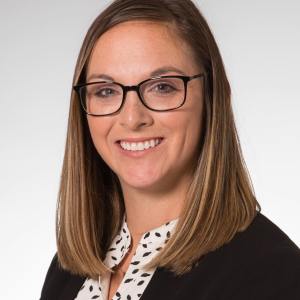
Dr. Brumbaugh describes what a clinical doctorate is, how her program was structured, her experiences working full-time during the program, and gives advice for SLPs to consider when deciding if a clinical doctorate is a good fit for them. She also describes how she transitioned from an early intervention clinician to a faculty member and her recent enrollment in an EdD program.
Connect with Dr. Brumbaugh on Instagram @slpwithdr.b
Podcast Transcript
NOTE: This podcast was transcribed by a free tool called Otter.ai. Please forgive any typos or errors.
Danika Pfeiffer 0:01
Hi everyone, today I am excited to share a conversation that I had with Dr. Klaire Brumbaugh about her experiences pursuing a clinical doctorate in speech language pathology. I learned a lot from Klaire during this conversation about what a clinical doctorate program looks like, how it’s typically structured, what the benefits are of pursuing the clinical doctorate and she shares some advice for others that are thinking about pursuing a clinical doctorate path clear received both her Bachelor of Science and Master of Science degrees from Kansas State University and her clinical doctorate from Rocky Mountain University of Health Professions. Currently she is enrolled in a Doctorate of Education program at Fontbonne University. Professionally, Klaire practiced as an early intervention SLP for seven years prior to joining higher education. For the past three years, she was employed as an Assistant Professor and Director of Clinical Services for the University of Central Missouri. She recently transitioned to Fontbonne University where she is the Director of Clinical Education and an assistant professor for the Fontbonne University Kansas City location. I hope you enjoy this conversation. Thank you so much for listening. I encourage you to follow the podcast if you haven’t already so you’ll be notified of new episodes as they come out. Also please consider leaving a review of the podcast, I’d love to hear what you think. Hi Klaire, thank you so much for being here today on the podcast.
Klaire Brumbaugh
Thank you. I’m excited about this opportunity.
Danika Pfeiffer
First I thought we could just start with a little bit about you growing up before you started your SLP journey.
Klaire Brumbaugh
So I grew up in a very small town in rural Western Kansas. It’s a town called Norton, and there was about 3000 people in my hometown growing up. So it’s a very small tight knit community. So it’s a fourth of four kids, and I grew up in a family of educators, which later in life really shaped my journey and how I got to be an SLP. Okay, great. And I’m curious What initially attracted you to becoming an fop. So, all along, I tried to be rebellious and tell my parents I weren’t, I wasn’t going to go into education, just because that’s what everyone in my family was doing, but I went to college, and I actually had to be kind of bribed and persuaded to go to college so being the fourth of four kids and from a really tight knit family. I was really close to my mom and dad and I did not want to leave home growing up in a small rural community there wasn’t a college in our town, or really, you know, within an hour and a half was probably the closest university so I decided my parents told me you know go your freshman year, try it out if you don’t like it you can move back home. And I had this grand plan, I was going to be a court stenographer a court reporter like I just wasn’t interested in higher education. And so I went to Kansas State University, that’s where my parents had both gone and my three siblings, one was currently there when I went, and that’s when I realized like, okay, I can fly the coop and I do want to do something different with my life and so at that point my parents said Just try it you know your freshman year if you don’t like it, then we can make a plan B. But after I got there I just knew that’s where I was supposed to be, and then related to speech pathology. Fast forward to the end of my sophomore year and I was still an open option. So I hadn’t declared a major I had just been taking all my prerequisites and so my academic advisor had, you know, kept encouraging different intros to different majors, and my mom went with me to, or was in town around an academic advising appointment and she said, why don’t you just take an intro in the speech pathology because she graduated from the same college that speech pathology is in at keysafe, and so I decided to do that, and if my mom is listening, she was right. It was exactly what I wanted to do. I remember very clearly the first day of class was taught by a graduate assistant, her name is Lauren, and I just remember being like, holy cow, this is exactly this is that, you know, going back to my roots as an educator and being in a family of educators, but doing something a little bit different and having that impact on an individual level. So from day one, I knew I wanted to be a communication sciences and disorders major, a little plot twist. The next semester, the first semester of my junior year when I was taking the phonetics anatomy. Intro to audiology, that core sequence I actually declared audiology as my major. And so, there’s been a couple twists and turns along the way. But here I am, as an SLP.
Danika Pfeiffer
How did you find your way back to speech after you declared audiology?
Klaire Brumbaugh 5:04
Yeah, so I had a really great experience at K State, and as one of those experiences, is I became familiar with the audiologists in town, and one of them was hiring an audiology assistant, and so I applied for that job because at that time I was pre audiology, And it was a really great experience working in his private practice with him, but I just at that same time as I was working in the private practice. I also was offered a position on campus with my, who is now my mentor, Dr. And Baza Smith to work on a randomized controlled trial with her as an undergrad research assistant, so I kind of had that junior year both of these experiences at the same time that working in research in providing services for the RCT with Dr. while also working with Dr. rogol on the audiology so I could really get a feel for being in both types of experiences at once. And unfortunately for Audiology, I guess, unfortunately for speech pathology, the randomized control trial was with preschoolers with speech sound disorder which I just absolutely fell in love with. And so fast forward a couple more years later when I graduated I decided to go pursue speech pathology.
Danika Pfeiffer 6:24
Oh that’s so interesting knowing now what you work on that that was one of your early experiences, that’s pretty cool.
Klaire Brumbaugh 6:31
Yeah, it was definitely the mentorship of that experience is really what got me interested. So I think about that experience a lot and wonder if I hadn’t had such a strong relationship with my mentor. What would have happened to that experience, or where I would be or even if my mentor had been researching something different. I really think it was the mentorship that I latched on to initially and then the love of the interests area followed versus vice versa.
Danika Pfeiffer 7:01
Well that’s really great. That’s awesome that you had the experience to see both sides so closely to the speech sign and audiology. I think a lot of people don’t necessarily get those opportunities while they’re in college and trying to figure things out, so that’s great. Yeah, it’s a really good experience. Were there any specific experiences that you had once you started grad school, that you feel like really shaped who you are as a clinician and researcher today.
Klaire Brumbaugh 7:28
Piggybacking off that randomized control trial that was a long process, the feasibility study and so I started that my junior year and senior years when data collection occurred and I was actually able to be one of the clinicians providing the intervention, and then that just followed to graduate school and so although it started my undergraduate program in graduate school I was again hired as Dr. Smith’s research assistant and we just were able to develop an even stronger relationship and take that research further. And I remember specifically two meetings with her. One was my very first semester of graduate school and she said, Because I graduated with my bachelor’s, a semester early so I, in case say allowed admittance into the graduate program in January. And so I started in January, for my masters and she said, assha proposals are going to be coming out soon, I want you to present. And I remember being like, first of all I don’t even know what Basha proposals are I’ve never been to an Astra convention in new ash, it was, but I didn’t know really what that meant. And so I thankfully didn’t know what that really meant so I put in a proposal, and when that was accepted. I really feel like that was a pivotal point in my trajectory because I showed up at the actual convention not really understanding the magnitude of that and how many people were going to be there and what that looked like. And so that was a really foundational experience and I just remember that conversation and feeling really empowered that what the work that we were doing was meaningful, and that there was somebody that was willing to invest, not only in the future of the field but in my education. so that was one really magnifying moment another one was also a Dr Smith when we started a new study and I remember sitting in the research lab and she’s like alright so what are you going to do. I just remember being like, what, what do you mean what am I going to do, I don’t, I don’t know how to do this, but there was never any, really, Any doubt for her because she knew that she was going to be there to support me throughout the process. And so then we launched another study, which was the survey study about looking at phonological and articulation practices in preschool, SLPs which wrapped up, right after I graduated with my master’s so those two experiences in those two conversations I remember just the, the fear and the excitement, and also the confidence that kind of all came with those two specific interactions,
Danika Pfeiffer 10:12
that’s awesome. It sounds like this mentorship was really instrumental to you. Do you have any advice for students in undergrad or in grad school that may be seeking this mentorship and just aren’t really sure how to get something like that started.
Klaire Brumbaugh 10:30
Yeah I would say reach out, because the way that I got involved was Dr. Smith and class had just made a comment about how she was looking for volunteers. And I remember one of, you know some of the volunteer jobs I did was sorting materials and putting labels on things and, you know, just kind of that monotonous work, but it got me in the lab and got me interested and then it opened a bunch of different doors from there so if you ever hear your supervisor or somebody asking for volunteers or asking for support. Take the opportunity if you can because you never know what doors it was going to open, like I said when I, when she mentioned it in class at first I was an audiology major but I was like well this is going to be at least something good on my resume that I can put when I’m applying to graduate school in my letter of interest. And so just looking at any opportunity for what it is but then also potentially investing in future relationships,
Danika Pfeiffer 11:34
yeah I think that’s great advice and like you said it might just be sorting materials for now, but it can really open doors for you in the future, especially if you do become more interested in research and even if you don’t you know just getting that experience of going to ash and seeing what it’s like, can be also really helpful even if you don’t decide to go down a research path in the future.
Klaire Brumbaugh 11:56
Yeah absolutely, because I did not go down the research path and when I graduated I very much wanted to be a practicing clinician, and I had the support of the instructors and my mentor to do that, and you know my path, continued to wind down the curvy road and I’m back to where I think it probably my mentor expected me to be from the beginning, so but I never had any pressure. Oh,
Danika Pfeiffer 12:24
how did you find your first job after graduate school,
Klaire Brumbaugh 12:27
so I went to graduate school at Kansas State University and I did my final semester my final externship placement in Waco, Texas because my husband, or then fiance was working at Baylor University, and so we both went to he stayed together and he got a job at Baylor following graduation, and it was just word of mouth, so I knew from my experiences in graduate school that I wanted to work early intervention or with the preschool population. And so my externship supervisor helped connect me, at least give me the names of some places to look, since I wasn’t local to the area, and it led to my first job working in early intervention. That’s awesome. And
Danika Pfeiffer 13:11
how long were you there for
Klaire Brumbaugh 13:13
I did my clinical fellowship year and then I stayed for two or three more years following that and the only reason I left was because we moved to Austin for my husband’s job, and I just had my child so I thought I wanted to work part time, So it was just a kind of a transitional point in our lives and we were in Austin for almost two years and I worked early intervention there more at a part time, 20 to 30 hours a week, but then I just loved my experience in Waco I loved the population I served and I love my colleagues in my clinical fellowship supervisor who is the lead therapist and I just wanted to be back in that environment if I was going to be an early intervention, I wanted to do it with that organization, and with the supports there and so, my husband’s job actually moved to working remotely and so we moved back to Waco, and I went back to the same organization for two years prior to moving up to Kansas City.
Danika Pfeiffer 14:12
Wow, okay, what would you say was the most rewarding about working in early intervention that really kept you in it for so long.
Klaire Brumbaugh 14:22
I really loved going into the homes and empowering the parents so seeing the change that building those strong relationships between the parent and the child can bring in so that I just, I have glimpses in my memory of really special parent child relationships that grew, but also just seeing that the parents confidence growing so as their child learned a new skill that they were there to see one see it and then to support it and then three, actually, you know, help make that a reality. So it was not only empowering the parents but it was really empowering to me as a professional to be able, you know, play a very very small role in that experience
Danika Pfeiffer 15:08
amazing I’m sure that was just so rewarding for you. And after that experience, you just mentioned that you ended up coming back and moving to Kansas City. So what, what was going on at that point that made you think it was time for a transition,
Klaire Brumbaugh 15:24
so I had started my clinical doctorate. The year before I moved to Kansas City, and when I started my clinical doctor I started it with the intention that I wanted to be continuing a practicing clinician, but when I got, you know, further into the program I realized how much I did love research and how much I miss research, and that part of who I was in who I wanted to be and so I started looking for university positions. And so, being from Kansas, although five to six hours away from Kansas City, at least where we live in Kansas City, we knew we wanted to get closer to home because all of our family is in the area. And so we kind of, geographically, you know, drew a map of four hours plus or minus around the Kansas City area and I started applying for jobs within the area, but it was really because the clinical doctorate experience made me realize some of those things that were potentially missing in my career, for, for me,
Danika Pfeiffer 16:31
I see. And what was your original goal, it sounds like you were thinking you were going to say in the clinical world when you originally started looking for these clinical doctorate programs, what were you originally thinking you might want to do with that clinical doctorate.
Klaire Brumbaugh 16:47
So I really wanted to just improve my own skill set. I wanted to be able to more competently, be able to interpret, literature, and be able to make time to do that, but by making time to do that also be able to do it in a timely manner because sitting down with journal articles, no can be overwhelming. And so that was my original goal was just to become a better consumer. I did have some, you know, big hopes of developing for early intervention program more specific parent training programs, and being a better SLPA supervisor, and, you know, kind of re imagining the job I was already doing and doing a better job also maybe even a bigger job within that same role and how did you start to identify programs to apply to. Well, I went to assha because after graduate school, the two years I went in graduate school than I was hooked on assha. And so I went to Ashton was in the exhibit hall, and just saw some clinical doctorate programs and at that time, I had just had a young child, and I knew for me that I didn’t want to uproot my family for a PhD program, although in the end, I knew that I wanted, higher education. And so I started looking at clinical doctorate programs because I could still keep doing all the things I love doing, which was staying in my job I had moved back to Waco for that job because I absolutely loved that job and still keep my family structure we had just moved without disrupting that routine again. And so that’s really the reason that I settled on a clinical doctor I didn’t look too much further into it because I knew at that point what I wanted was to be a practicing clinician.
Danika Pfeiffer 18:43
Okay, so it sounds like you, maybe thought about a PhD at that point, but with the flexibility that you might have with the clinical doctorate, that was a better fit. Is that right,
Klaire Brumbaugh 18:54
yeah, yeah it was a better fit for that point of my life personal and professional life, and so I assha just talking to some of the different programs. I got the information and, you know, as soon as I got home I remember reading the numbers and looking at the plans of study and figuring out how I could make all the different things that were important to me in my life were at the same time. And I, I applied for Rocky Mountain is where I ended up going within probably a week or two of getting home from Mattia, like I just decided that’s what I was going to do and I was just going to do it and I wasn’t going to, you know waste any more time because I, I had that epiphany, while I was at Asher that that’s
Danika Pfeiffer 19:38
something I wanted to do. That’s exciting. That’s so exciting when moments like that happen, you just know that this is what I’m supposed to do this is where I’m supposed to be. Absolutely. For those that are unfamiliar, can you explain what a clinical doctorate program is and maybe why someone might want to consider doing one.
Klaire Brumbaugh 19:57
Yeah so clinical doctor is an advanced practice doctorate, so it’s a doctorate for those who are wanting to potentially stay in the field and continue, you know, doing what they’re doing but with different aims and outcomes. So it’s different than a research doctorate, although clinical doctorate does require research, but it’s more that clinical research so kind of answering those questions of what can I do now with this individual that’s in front of me that’s in front of me twice a week for 30 minutes, how can I improve the therapy outcomes, right here right now. And so it’s very applied, the information is very applied. You’ll take at least for my program and I know that they’re all, they all vary a little bit but I took lots of classes and like supervision and ethics, which really set me up. Then, later to explore being the Director of Clinical Services at a university, but you also will take classes that will help you read, understand and produce research so translational research, and you’ll take a class on quantitative and qualitative research in those classes, you may have to do your own small investigations. So you become more familiar with the topics but lots of times the goals. The goal is to help you understand those research designs and be able to read, understand and engage with research at a different level.
Danika Pfeiffer 21:30
What kind of jobs would you say that this program would prepare people for
Klaire Brumbaugh 21:35
so I think that’s really dependent on where the individual lives and the other experiences that they have to go with it, it’s very uncommon but not impossible to get tenure track positions following a clinical doctorate, and I’ve had this as my second and a colleague has had one, but those are probably more rare, I would say instructional faculty at a university, Director of Clinical Education, or even moving up within the structure of organizations that are already there, like lead SLP or director of rehab, you know, Director of Special Education, those kind of positions, so lots of those positions I named you could also do without clinical clinical doctorate, but it really adds to your skill set that level of education,
Danika Pfeiffer 22:26
the program that you chose was this program of part time program, or was this a full time program.
Klaire Brumbaugh 22:33
It was a full time program, and it is, I did the limited residency, part of it and so now Rocky Mountain has a fully online clinical doctorate and they have a limited residency clinical doctorate and both have the same curriculum but with the limited residency you’ll spend time out in Provo, Utah, which is absolutely beautiful. With your cohort. So my program was six semesters long, and for those semesters, my cohort and I would meet out there for three to five days for intensive coursework. And so it was a really good experience to build those relationships with your peers, and also get some traditional classroom learning so they, those site visits were typically like a Thursday Friday Saturday Sunday, so we’d fly in Wednesday and leave Sunday night and then we’d be in the classroom 8am till 6pm Those four days, by the end of our program. Our last site visit, we all rented a big house and all stayed together because we had developed those really strong and meaningful relationships throughout the program. Wow, that’s awesome. What about the structure of the program, how is it balanced with your coursework, is there any clinical portions of the program that are required. What does it look like. So again, every program is different so I’m not sure other people who went to other places their experiences but at Rocky Mountain. There weren’t necessarily clinical requirements, however there were some opportunities to reflect. Maybe if you had consents record part of your experiences. I remember specifically recording for my own review a meeting with my SLPA and one of my supervision classes to go through the supervisory process and the supervisory meeting and so there’s a lot of reflective practice that’s occurring on your clinical practice, but not specific clinicals. Outside of that, it was a full time program and so you were taking depending on the semester is a minimum of six upwards of nine credits a semester two or three classes usually some of those classes were two credit hours or three credit hours but it was a mix of those professional issues classes like I mentioned the supervision and ethics. And the research courses, and throughout the whole program you are working on your research questions so it starts you know one of the first classes you take is just evidence based practice where you’re really getting in the literature in the area that you think you may want to have a question about, and then you follow up throughout the program. Each semester you’re kind of building that evidence and building that question so by the time you get into that final two semesters, you’re able to do your research. So Rocky Mountain requires that the research is a single subject research design. So things like multiple baselines across behaviors or ABA design, so they do prepare you specifically to do clinical research at a single subject design level. Okay, that’s really interesting, I can see how that would be really relevant though if you were thinking about staying in the clinical world or even if you are going into the research world it would be a nice takeaway to have some strong training in that research method. Yeah and so you know single subject research design doesn’t mean just one subject so you could have, you know 678 individuals but that they’re their own control throughout the research process. Yeah, that is really interesting. For some people that might be thinking about a clinical doctorate and I’m sure one question that they’re probably thinking of is can I work at the same time as I’m enrolled in this program, Or you and others able to keep working during this time, yeah absolutely so I think that’s why lots of us chose that program. So in our cohort and there may have been others that I’m not remembering but there was off the top my head, only one individual that didn’t have full time employment, but she also had three little boys and she worked part time so she probably did way more work than the rest of us.
But otherwise, we were all full time employees, you know, during the day. Okay, ended coursework and meetings in the evening. And then our on site component RMU did a great job building those around weekends, and so there was limited work that had to be missed, to attend those on site experiences.
Danika Pfeiffer 27:28
That’s really great, I think, for people that might be weighing this compared to a PhD, it’s a full time position and outside work is really discouraged i Sounds like this might be something that might fit a little bit better for people that want to continue to work a full time job throughout a program.
Klaire Brumbaugh 27:45
Yeah and I felt that it was really meaningful. There are some classes specifically that we would you know have readings or have experiences, and then get to directly apply those or get to go out and be more confident in implementing something that I had read about. And so it was a good balance of that theory to practice which is really, you know, the clinical Doctor hopes the build that bridge between theory and practice.
Danika Pfeiffer 28:13
What advice do you have for people that are thinking about pursuing a clinical doctorate or wanting to look into it a little bit more and find out more about it.
Klaire Brumbaugh 28:24
So I would really spend some time evaluating your long term goals so I know I kind of made a split second decision I just decided I was going to do it and did it. And I think, you know, at that time, my goal is to be a practicing clinician, and through the experience my goal changed. So not that you can predict the future but really sitting down and spending some time with, what do you want to do, what is this education going to add to your career. And so, just spending time in that space and exploring different options I think is really helpful to make sure that the time and financial investment is going to lead you where you want it to go.
Danika Pfeiffer 29:07
Yeah, that’s great advice. And you mentioned a little bit earlier that you were doing this program as you started a new position working in academia, can you tell us a little bit more about that position.
Klaire Brumbaugh 29:20
Yeah, so I was hired as assistant professor at the University of Central Missouri, and I was there for three years I absolutely loved my time there, while I was there I became the director of clinical education, and that’s where I really found my place. And so, throughout my whole career, of course your careers always evolving, but I find I find where I go through periods of like exploration and then I land and then exploit exploration and land and so, the Director of Clinical Education just kind of took all my experiences and education and put it together in a little package with a bow on the top. So it was, I went from having all these interest areas and all these expired experiences and then they came together in a meaningful way, I do feel that the clinical doctorate prepared me to do what I’m doing just being aware of those supervision practices and having the ability to engage and read and participate in research at a clinical level really fits well with this job.
Danika Pfeiffer 30:27
That’s great. Yeah, it really does sound like that is a really good fit for you and it does take all of your strengths and all of your skills and puts it into one position, which is pretty amazing. Right, right. And at some point along this journey you decided that you also wanted to continue your education and pursue a doctorate of education, can you speak to that a little bit,
Klaire Brumbaugh 30:50
so while I was that UCM. Prior to joining the University. My experience with the university was being a student and so I didn’t have that understanding of what happens on the backside. I also didn’t have understanding of the CIA and the requirements of graduate programs and so that is one thing, for those who are considering doing a clinical doctorate, the clinical doctor isn’t considered a terminal degree. Although it’s an Advanced Practice degree and it is very meaningful and it’s very meaningful work. That is something to consider if your long term goal is, academia, specifically the tenure track lines so instructor lines can usually be Master’s or clinical doctor or a variety of different degree types, but those tenure track positions do typically want to see a terminal degree holder in terminal degrees are PhD, and add his doctorate in education and so universities have to hold certain ratios of their graduate courses taught by terminal degree holders. And so because of that, there is, you know, a strong desire for terminal degree holders to be in the field and to be in those positions. And so, again, I started looking at what can I do that will not only enhance my skill set, but be an asset to where I’m employed, and the PhDs, although I would love to go down the phc path, PhDs in speech language pathology are difficult to find, or don’t exist at a distance education type format. So I didn’t again want to leave my career I love my career I love what I do, I also know I’d love a PhD, it just made most sense to me to pursue the Doctorate of Education, working at the university, you do teach a lot and you teach courses and then you also teach individuals and supervision, and so I’m learning a lot in the add that I didn’t have any idea about prior to joining this process. And so I do think it’s been absolutely beneficial, and it will, it will change not only my teaching career. My clinical education career but also how I approach clients just with a different lens.
Danika Pfeiffer 33:25
Yeah, that’s really interesting you brought up a lot of really great points there about thinking about if you do see yourself going into academia and really if you are thinking you want to go on a tenure track position where you’re asked to do teaching, research and service. Really, you do need those terminal degrees and like you said a PhD or an EDP, and there are other opportunities as well if you don’t have those terminal degrees if you did, you know, get your clinical doctorate, you could still look for other kinds of positions in academia, you could be an adjunct professor you could be an instructor role clinical educator but you just wouldn’t be as competitive for those tenure track positions so I think that’s really nice thing to highlight.
Klaire Brumbaugh 34:09
Yeah and I think, again, something else I didn’t know at the time is applying for grants being at a university grants are really important to continue your stream of research or to add new services to the clinic. And so, lots of grants have degree specifications, whether NIH differs from other places but all the time, the PhD allows you competitiveness with that sometimes the Add does and sometimes the, the clinical doctor that’s LPD. So I think looking at the whole picture, and lots of that stuff you can’t predict when you are just getting started, but just knowing that those maybes potential roadblocks that you’ll have to navigate, or maybe it’ll persuade you to go one way or the other.
Danika Pfeiffer 34:58
Yeah and I think your suggestion earlier of really sitting down and figuring out kind of what are those long term goals that you at least think are your long term goals at the moment, will really help you decide which of these degrees if you are going to go on and go for another degree which of them might be the most appropriate and reaching those goals, and also like he said earlier, reaching out to people that have done those degrees and seeing what their path looks like and is that a path that you want to go down as well. I think can be really helpful. Yeah, I
Klaire Brumbaugh 35:31
think the Add lends itself really well to the continuation of my clinical doctorate because I have a foundational level of knowledge and now I’m able to dive even deeper into that knowledge, but also gain skills and teaching and learning, and be open to a whole new body of evidence, I have spent the last eight weeks immersed in Universal Design for Learning, and I taught speech sound disorders in the spring at University of Central Missouri I’m teaching at the fall in my new position at Fontbonne Kansas City, and the same class same graduate level, it’s going to be taught much differently in the fall. Now that I have this new wealth of information. And so, continually developing your own skill set is a really important part of the process.
Danika Pfeiffer 36:23
Yeah, definitely. And what will this program look like for you. How long will this Doctorate of Education take you to complete,
Klaire Brumbaugh 36:31
it will take me about three years assuming my dissertation goes. As expected, so I am transferring in some credits from my clinical doctorate and so the way that this program is set up is you take one class for eight weeks, and so each eight weeks throughout the years and new subject content area, which I actually really like at RMU you’re taking two or three classes over the traditional semester, but I do like this intensive deep dive into one subject so that’s been a good change in pace for me so there will be some eight week rotations that I won’t be in the class because I transferred it in, but most of the time I’ll be taking an eight week class we meet every Thursday from 430 to nine for our synchronous component it’s via zoom but synchronous component. And then the additional you know coursework and reading and writing. In addition to that, and then the third year will be dissertation.
Danika Pfeiffer 37:29
Yeah that’s great for people to know that you can transfer, you might be able to transfer depending on which programs you were in and are going into some credits, and to add that’s really nice.
Klaire Brumbaugh 37:40
Yeah, so one of my friends, is that I graduated with our muse she’s doing a similar process she started a year before me on her add so she’s closer to done, but where she went. She was able to transfer a different number of hours in a different, it’s a different experience. And so, just like PhD programs, you know, you who specialize in different areas the ETDs are the same way so there’s different emphasis tracks, based on the program that you choose.
Danika Pfeiffer
Is it similar with a PhD, you really look for a mentor before you decide if this program is a good fit for you and if the mentor will be a good fit for what you want to do is that similar with an EBD or does that mentorship process looks different?
Klaire Brumbaugh 38:25
so I think it can look the same, mine didn’t. I chose the program based on the emphasis of the program, and some other factors and so the committee will be constructed from the program so I do have the opportunity to bring in additional advisors, but as a whole. The committee is, is within the program.
Danika Pfeiffer 38:50
Okay, but that’s nice if you feel like there’s an extra area of expertise that you want to draw on from outside that you could do that. Absolutely. Okay, well thank you so much for sharing all of your journey with us you’re doing so many exciting things here, I just have some final rapid fire questions here to end our time together. Okay, the first one is what is one resource that you couldn’t live without the informed SLP, hands down, and Google calendars, I think yes both amazing. What has been a defining moment in your SLP journey.
Klaire Brumbaugh 39:27
I think what I’m doing now, so I’m starting a new graduate program in speech language pathology and it’s been all sorts of exciting, and it’s just been an amazing I’ve only been here since June 1 But it’s been an amazing experience already being in on something from the ground up. And so, I think, currently what I’m doing, will define the rest of my career.
Danika Pfeiffer 39:55
Wow, how exciting and really build on all of these skills and all this education that you have done over time. Yeah, yeah. What is one thing on your professional bucket list?
Klaire Brumbaugh
I really want a present at all seven continents.
Danika Pfeiffer
I love that, that would be amazing!
Klaire Brumbaugh
But also to professionally engage at a global level.
Danika Pfeiffer
What is your favorite part about your job?
Klaire Brumbaugh
The one-on-one working with students. So I absolutely love watching them build their skills over the course of a semester, over you know their knowledge, over the course of a class or from the start to finish up their graduate program.
Danika Pfeiffer
Yeah I think that is something that is really rewarding about going into academia. Where can people connect with you or learn more about what you’re doing?
Klaire Brumbaugh
I do have a professional Instagram it’s @slpwithdr.b and I go through periods of time where it’s definitely more active than others and so follow me there I’m usually for sure posting in my stories regularly and then contents as a time allows.
Danika Pfeiffer
I think that’s for a lot of us! Okay well again thank you so much for being here and sharing your journey with us I will put your contact information in the show notes for anyone that wants to connect with you and reach out. And I wish you the best of luck on all of these exciting things you have going on!
Klaire Brumbaugh
Thank you Danika!
Danika Pfeiffer
Thank you for listening to this episode! I know I learned a lot from Klaire about clinical doctorate programs and I hope you did too! I encourage you to follow the podcast so you’ll be notified if new episodes as they come out. Please also consider leaving a review- I’d love to hear what you think, and it helps others find the podcast. You can find the show notes and transcripts at aboutfromandwith.com and connect with me on Instagram @danikapfeiffer.slp– until next time, stay humble and kind!
 About, From, & With