In this interview episode, Sydney Bassard shares her SLP journey. She discusses her transition from a Public Health major to graduate school, as well as the research experience she gained through receiving ASHA’s Students Preparing for Academic Research Careers (SPARC) Award. Sydney describes how she has built a family-centered career and business, by advocating for families, providing free resources, and establishing collaborative partnerships. In addition to her story, she also shares advice for building and sustaining relationships with families.
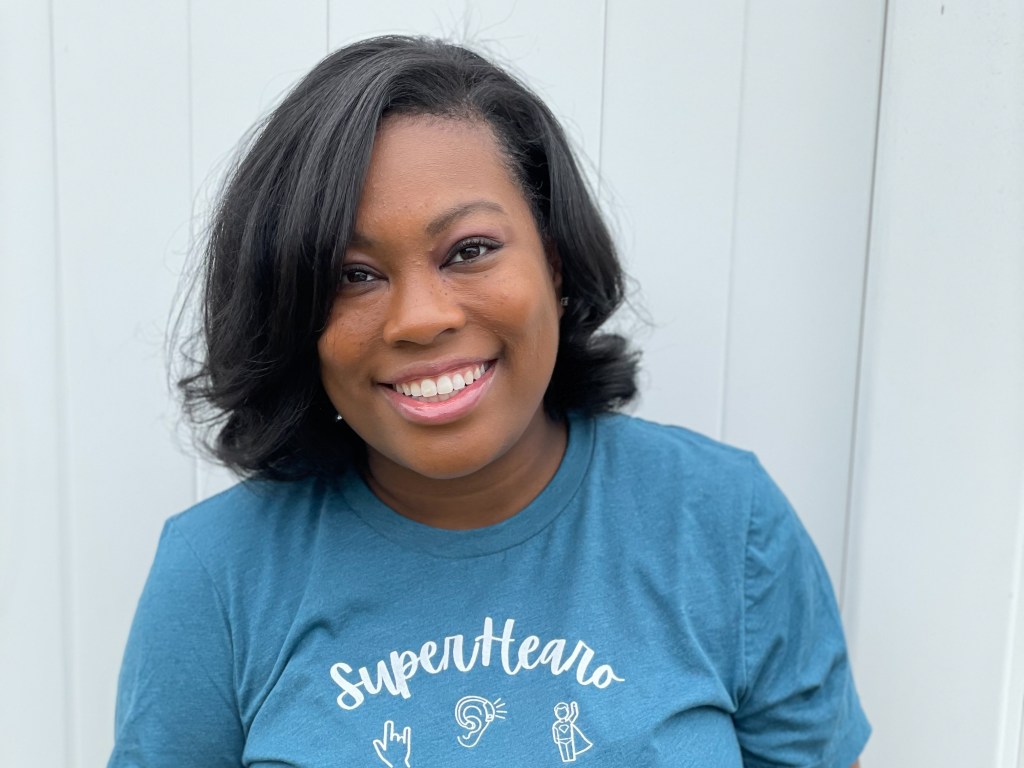
Connect with Sydney on Instagram (@thelisteningslp) or Facebook (sydney.bassard). You can also get in touch with her through The Listening SLP, LLC website.
In this episode, Sydney shared information about ASHA’s SPARC Award which you can learn more about here. She also mentioned free continuing education courses from Hearing First for those interested in pursuing an Auditory-Verbal Certification.

S2E21. Negotiating for Faculty Positions – About, From, & With: An SLP Podcast
Podcast Transcript
NOTE: This podcast was transcribed by a free tool called Otter.ai. Please forgive any typos or errors.
Danika Pfeiffer 0:05
Welcome to the About, From, and With podcast, a podcast showcasing speech language pathologists journeys to finding their passion and purpose in the field. I’m your host, Dr. Danika Pfeiffer. In each episode, we’ll learn about from and with SLP clinicians and researchers as they share their experiences, advice and expertise.
Today, I am excited to share Sydney Bassard’s SLP journey, Sydney is a pediatric SLP with a passion for literacy and working with children who are deaf and hard of hearing, Sydney is an advocate for assisting families in finding functional ways to build their children’s language skills. She is also the owner of the listening SLP LLC, which provides low cost, Parent and Family Education Services. Today Sidney is sharing how she has built a family centered career by advocating for families providing free resources and establishing collaborative partnerships. In addition to her story. She also shares advice for building and sustaining relationships with families. I really hope you enjoyed this conversation. Also, I’d love to hear what you think of these first few episodes, please consider leaving a review of the podcast and sharing your feedback reviews help to make the podcast, easier for others to find and are helpful in planning future episodes. I can’t wait to hear what you think.
Hi Sydney! Welcome to About, From, and With! I’m really excited to have you here today and hear about your SLP journey.
Sydney Bassard 1:51
Yeah, thank you so much for having me.
Danika Pfeiffer 1:54
Of cours! It’s great to have you here. I thought talking about your journey, it makes sense for us to start with your undergrad career, and I know you started out as pre-Pharmacy at the University of South Carolina. So tell us a little bit about why pre pharmacy.
Sydney Bassard 2:05
That’s a great question. I kind of asked myself that all the time now too.
So I really liked science so I thought, and I was like you know this is a great field to get into so where I could still be hands on with science syllabi helping people. I really had shadowed a pharmacist who did compounding pharmacy, so that’s for people who like aren’t able to take regular over the counter drugs because they have some component in them that they can’t have due to like reactions, so they can get special drugs made through a compounding pharmacy animals sometimes that have allergic reactions might also get drugs made through compounding pharmacy, so I was fascinated with that I was like oh yes this is what I’m going to do. And then I got into my studies, I was doing okay. And then I took organic chemistry. And that’s when the ball fell out. It was and I quickly realized like if this is what pharmacy is going to be like this is definitely not for me.
Danika Pfeiffer 3:13
But you went farther than I did, I was thinking, occupational therapy at the start and I saw that so much science was required, and I didn’t even take any of the science classes I just switched to speech. Okay so after you made the realization that pharmacy was not for you, you switch to a public health major, tell me about that.
Sydney Bassard 3:33
Yeah, so I decided to switch to public health because the University of South Carolina does not have an undergraduate in speech pathology or communication sciences and disorders, but they have one class for undergraduates there and so that could be part of your degree track, and that was what was going to get me out of undergrad the fastest. So I went ahead and switched my degree to public health, and I took that class. The fall of my senior year, like while I was applying to graduate school and I just fell in love with the connection between public health and as speech language pathology.
Danika Pfeiffer 4:13
Okay, and how did you learn about speech language pathology.
Sydney Bassard 4:17
So, my brother is dyslexic, and he went and got reading intervention at a Literacy Center, when he was in sixth grade, which was around the time that I was trying to figure out what I wanted to do. So, after kind of like seeing his journey I ended up getting a job there working there in the summers, and then I decided that I wanted to be a speech pathologist, it was the closest thing that I could do to like being a reading interventionist, and working with literacy still without having to extend my time in undergrad to go back and be an education major.
Danika Pfeiffer 4:55
That makes a lot of sense. That’s that must have been a great experience, then for you to kind of see your father going through therapy and, and have been inspired that that’s something that you wanted to do too. Oh absolutely, absolutely, then you decided to stay at the University of South Carolina for your master’s program, how did you decide to stay.
Sydney Bassard 5:18
So I decided to say because I was kind of volunteering in a research lab. In my senior year, and the research that was being done was looking at spoken language and literacy outcomes for children with hearing loss. And I was like this is really cool. So I kind of wanted to stick around to keep working on that, but also I really loved the University of South Carolina. I went there for undergrad I was comfortable with that area. I was comfortable with campus and so the thought of moving somewhere new, and having to uproot and get to know new people and faculty again was a little daunting, so I kind of am a little bit of a homebody so I enjoyed staying close to where I already knew people.
Danika Pfeiffer 6:06
Yes, I totally get that. How did you find that undergrad research opportunity.
Sydney Bassard 6:12
So actually the professor came and spoke to the undergrad comedy class that I was in, and they were looking for student volunteers and so I wrote down their email and I was like, oh yeah I definitely want to volunteer and get some more hands on experience.
Danika Pfeiffer 6:30
That’s great, what kinds of opportunities, did you have doing research during undergrad.
Sydney Bassard 6:36
So it was a little limited because I didn’t decide that I wanted to be an SLP until a little later in the game. But while working in the lab like you got experience with data collection with data analysis, even in that lab even got some experience with like dissemination and writing, so it was just a really well rounded experience, especially for somebody who was a little bit newer to the field and didn’t know as much. It was really nice to kind of be on the frontlines of research and see what that looked like in our field.
Danika Pfeiffer 7:10
Yeah, that sounds like great exposure to seeing kind of all that behind the scenes, and what goes into a research project, then you started grad school over the summer, and how did that transition go into, you know, really diving into speech language pathology. Yeah, so
Sydney Bassard 7:27
the transition that summer was actually not as bad as I think people would think it is. So yeah, we were starting grad school, but all the people that started with me in the summer, also were non traditional or non background students so we all had undergraduates and something besides comedy so it was a learning curve for everybody, but it was also kind of nice because a lot of things that I was learning or things that I learned in other classes, just in a different context, so I took a lot of mathematics linguistics courses when I was in undergrad, and so taking phonetics like those two go hand in hand. So you’ve been exposed to those things. Same thing with anatomy and physiology, it’s just with a different lens on, so it was really cool to kind of look at it from a different perspective.
Danika Pfeiffer 8:18
That’s great, that’s nice that you had a cohort How big was your cohort of students that we’re transitioning over the summer with you. I want to say it was like 15 to 20 of us. Oh that’s a nice size. Yeah that’s pretty that’s nice that you have others to kind of understand what you’re going through and making that transition. Yeah, it definitely made the transition in the phone a lot easier. That’s great. When you continued into your master’s then I know you were offered an assistantship, tell us a little bit about that assistantship.
Sydney Bassard 8:56
So I was offered an assistantship in that same lab that I volunteer then as an undergrad, and it was a wonderful experience. It was different because I hadn’t been around research beyond being in that lab, and so it was stepping into a new role. I actually was fortunate enough to be the Project Coordinator for the project that I had been working on and kind of learning about as an undergrad, so that was a lot of fun to kind of learn about what the recruitment process was like, what data collection, data analysis and all the way through to dissemination, for the same project and really kind of see like what the life is like of somebody who works in academia, but also as a student being able to take the knowledge that you’re gaining from the research that you’re conducting and then also seeing the clinical applications to like how does this impact our treatment of our patients and our client populations.
Danika Pfeiffer 9:55
That sounds like a really great experience and that’s kind of nice that you could come full circle working on the same project. What was that project looking at
Sydney Bassard 10:05
that so that project was looking at minimal hearing loss and reading impairment, and seeing if there was any type of correlation between students who had minimal hearing loss and if they also had any type of meeting impairment. So that was a really, really cool project they kind of touched on both aspects of my labs as looking at hearing loss but also looking at dyslexia. So the that paper is actually out currently and the findings of it I will say are really really informative and I think it gives us something to think about when we’re screening kids, especially in elementary school for those hearing screens that they do.
Danika Pfeiffer 10:48
Wow, that’s really exciting. I know you mentioned you had lots of responsibilities in this project coordinator role did you also have opportunities to present this information during that time.
Sydney Bassard 11:00
Yes I did, I actually got to present at assha a technical talk with this information, and then we’ve done some other type of analysis on the samples that we collected. So I presented assha again, kind of looking at some spelling error analysis and 2019.
Danika Pfeiffer 11:20
That’s great. That’s really great experience. I know not everyone gets that experienced during grad school and or during undergrad so that’s really great. Did you face any challenges when you were taking part in this research and working as a project coordinator and trying to balance your research in your coursework.
Sydney Bassard 11:41
So, me personally, I didn’t. But that’s not to say that I know other people haven’t, I would say that I had a really really awesome person who was the head of like the lab, and the director of the lab, and Dr. Krystal Werfel was really really thoughtful and making sure that like we were balanced as students, as well as working in the lab, and really mindful, you know, I think, in this last year a lot of attention has been brought to like mental health and making sure that people are like happy and fulfilled in their job and their roles and whatever they’re doing, and making sure that there’s a good work life balance. But I’ll say like, all the time in that lab that was emphasize, you know, making sure that we were not burning ourselves out was huge. And so it did that really made a difference to stay balanced was knowing that the person who’s the director is like really supportive of taking care of yourself so you never felt stressed about saying like hey like I am not able to get this done this week because I have a lot of classwork going on or I have a big test, because she knew like maybe this week you didn’t get everything done but like the next week you got that done, plus more.
So I think that really helped to keep things not as stressful trying to balance both of them.
Danika Pfeiffer 13:11
Yeah, Cuz that can be such a stressful time when you’re in grad school and you’re taking on so many new things. So I think some people are cautious about whether or not they can take on an assistantship so I’m really glad that you had such a great experience in such a supportive environment to really be able to learn both skills, like clinical skills and see what the research is like to. Yeah, I
Sydney Bassard 13:35
think that that’s like a big thing DNI that is like we have to support students while they’re in this journey. And I think more people would probably be interested in research and learning about research, if they like, saw the balance that can happen and weren’t completely stressed out with coursework. So it’s really important that faculty kind of let students know like we’re all in your corner, and we want you to take care of yourself, while also learning all of these like amazing skills at the same time.
Danika Pfeiffer 14:06
Yes, exactly. And I think sometimes that message can be hard to convey. And I think that’s really great advice to, I mean if you sit back and put yourself in the students shoes, you know we’ve all been there, where it’s a stressful time and there’s a lot to balance but really after grad school if you’re going on to be a clinician, it can be more challenging to find these research opportunities and see what it’s like to put these research articles out there and actually do all the work to get them there so I think if you have the opportunity and you’re able to do it all feeling like beat the healthy balance that is a great opportunity throughout your grad school career. Were there any other specific experiences that you had that you feel like have really shaped you into the clinician that you are today.
Sydney Bassard 14:56
Yeah, so I think the one that comes to mind the most is in 2018 I was awarded the assha Spark Award which has students preparing for academic research for years, and why that really shaped me in the clinician that I become is because, through that award it primarily focuses on people that are thinking about going on for a PhD and working in academia. And so a lot of people focus on like writing a thesis or, you know, doing research and disseminating, but I also made sure to add in the mind, looking at the faculty aspect, and looking at service, and ways to recruit people into the field, and so I think that shaped my experience in being a clinician, even with that, I wanted to be well rounded and making sure that I wasn’t just touching on one aspect of what life is like as an SLP or a researcher, but really the whole picture. And for me like that whole picture is making sure that, regardless if I’m having my needs met and a job or a situation. I’ve always always focusing on my patients, or focusing on the students that you’re working with focusing on other people and making sure that I’m my best so that I can do my best for them, really making sure that like the information that I’m giving you is top notch, and that is the best out there, and that you are getting the best education you’re getting the best information coming from me. So I think that that helped me to like have a better perspective and understanding of what it looks like to disseminate good information and also realize like how do you support other people in your role.
Danika Pfeiffer 16:35
Absolutely. That sounds like a wonderful opportunity. How did this opportunity come about, how did you find out about it.
Sydney Bassard 16:43
So the same research lab and anybody. This is pertaining, but no doctor or full like kind of told like all over God’s students about it, and she’s also had several people who’ve worked like in her lab won that award. So she had us put in for it and she kind of coached us through the process for it and she served as my primary mentor while I had that award.
Danika Pfeiffer 17:13
Oh that’s wonderful, you start to see kind of how these opportunities start to present then the other opportunities in the future. What specifically did you do during this time with your Spark Award.
Sydney Bassard 17:25
So I, that’s when I looked at spelling error analysis for the other research project that I had worked on and kind of dug a little bit deeper into research in that way. So obviously you have when you go into a research project, you have the big questions that you’re trying to answer. Along the way there are other little questions and things that you might want to investigate to with that you can look that within the same sample so being able to do that was one of them. Another opportunity that I was able to do was there was a local school not too far from us, and that school doesn’t have a speech pathology program, the students don’t know a lot about speech pathology, from the undergraduate level and even how to go through to grad school until I was fortunate enough to go and speak as a graduate student to these undergraduates about what being an SLP was, how would their current course of study is limbus linguistic majors could fit into being an SLP and how that would really come in handy. So those were like two of the most memorable things that I did while I had the sparkler and presenting it ash, I would, I think that’s definitely,
Danika Pfeiffer 18:40
if someone is interested in looking into this program to apply when is a good time for them to apply to this program.
Sydney Bassard 18:48
So I believe that applications are due on this spring before ashes so around like that, March, April, time, so if you’re interested, I highly recommend kind of looking like at the end of that semester of November, December, looking at what the requirements are seeing what information you kind of need to pull together for yourself, then that way you can like slowly take your time to build and work on it instead of feeling like you have to rush,
Danika Pfeiffer 19:15
okay and you’re would that be in their first year then of grad school.
Sydney Bassard 19:20
Correct, yeah you want to do that in your first year of grad school,
Danika Pfeiffer 19:24
perfect, I will put some information about this program in the show notes for anyone who might be interested.
Sydney Bassard 19:31
And, and Don’t misquote me, but I also believe that undergraduates can apply for that award too. So it’s not just exclusively to graduate students.
Danika Pfeiffer 19:40
Great, so just really, anyone that’s looking to get some more experience in research. Now, looking back, is there anything that you would tell yourself in grad school, knowing what you know now about being a clinician or any advice that you might give yourself.
Sydney Bassard 20:00
You always have good questions. I think the biggest advice that I would give to myself is to relax. And I know that sounds easy right like you are a therapist value you’re working you have a job. But people stress way too much in grad school, and I just way too much about things that really just did not matter in the grand scheme of things. So the biggest lesson that I’ve learned as like working that I would encourage myself to have done is put things in categories like is this a big problem that result into like, we need immediate action and maybe like a little bit of a panic, or is this a problem that’s not that big, and is manageable, and it might feel like the end of the world because we’re in the moment, but it’s really not. And so that kind of helps you to be like, okay I can relax because like these are issues that I feel like are massive are really small, and I don’t need to work myself up.
Danika Pfeiffer 21:05
I think that can be so hard, everything feels so big when you’re learning all of these new things, I think something that helped me with that was just trying to keep in contact with people that are not in your program like remember those people and talk to them, talk to your family and your friends that are not in your program because it can really help ground you and remind you that there is a world out there outside of grad school, and there is a life out there that is not all revolving around your schoolwork and your coursework and you can you can be a real person to and have other hobbies and interests. Exactly, and that helps you to stay balanced and not, like,
Sydney Bassard 21:46
everything is not smooth, even though we would love it to be. But we are still people like you are a person before you’re a speech therapists.
Danika Pfeiffer 21:55
Yes, absolutely. And you have to be able to be your, your whole self to be a good speech therapist, okay so now you’re finishing up your, your master’s program, you have the Spark Award, and you’ve attended assha, and then tell us about your transition into your CF.
Sydney Bassard 22:11
Yeah so that was an interesting transition so my CF was actually where I did my final externship. So the nice thing was, I kind of knew all the systems I work in outpatient pediatrics. So knowing the EMR, was really nice like gateway into things knowing about the documentation kind of how some of the like more administrative things worked, was really really nice and helpful because that was just a learning curve I didn’t have to deal with SNCF. But I think the hard part was perhaps will trains you really well to be a good therapist and commission, they don’t always train us the best about like how to interact with families and how to navigate sticky situations. And so, as a CF. It’d be the nice part, like I said like, I was there for my final internship that also bad part was I was there for my internship. And so, I still kind of felt like a student sometimes of, oh my goodness I don’t know what to do or, like, constantly feeling like I had to check in with my manager about different beings or let her know like every parent interaction that wasn’t the most positive, or where I felt like a parent left really upset with me. So, yeah.
Danika Pfeiffer 23:28
How did you decide to stay I’m sure others you know may have that opportunity and may think, Oh, maybe I should go somewhere else and get a different experience what ultimately made you stay so
Sydney Bassard 23:38
I wanted to work in outpatient pediatrics, I knew that that’s what I wanted to do. And I also looked at what opportunities the job was going to provide me so I wanted to continue working on my auditory verbal therapy certification. I wanted to be in a position where I could work on a cochlear implant team and have that multi disciplinary interprofessional relationship. And so that was offered to me when I decided to take this job and so those were factors that made me say that I will take this.
Danika Pfeiffer 24:09
Those are amazing opportunities, when did you begin that certification process for your auditory verbal certification.
Sydney Bassard 24:16
So I started part of it while I was in the master’s program, because at South Carolina, they have a abt track. So I was on that, and through that you take two mandatory classes, one which is cookware implants and then one which is like teaching you about the principles and strategies of Abt. So that counts towards your certification for your continuing education, and then you can carry like 75 hours from a master’s program, onto your certification and you have to get 900. So 75 is a nice little chunks to start with. And you can do some of your observations while you’re a student, so it was just a continuation of something that I’d already started.
Danika Pfeiffer 24:58
And that’s great and so you’re still working on that now. I am I’m in year two. Okay, wow, that’s exciting. What would you recommend for people that may want to pursue that, but maybe they didn’t have that experience in grad school.
Sydney Bassard 25:14
So I think the biggest thing is like look for continuing education’s hearing first outward offers some free continuing education’s via observation and also like, if you want to take a more structured class, I think the biggest thing with those is being flexible and keeping an open mind. So one of the things that like I kind of had to unlearn. As a CF was, I was really inundated with good education about spoken language, and everything was both in language in deaf and hard of hearing kids are going to use spoken language, and I started working, I started seeing kids that are deaf and hard of hearing that so the language wasn’t coming to them as easily as like abt can typically look. Maybe they had some other things going on that work I’m inhibiting that, but they were using sign language and spoken language, and still making progress. So I think keeping that open mind, that like abt is wonderful, but also like kids can use sign, or they can use other communication systems and still be successful.
Danika Pfeiffer 26:19
Exactly. Oh, that’s great. So now, you are still working in the same position and outpatient pediatrics and you’re mainly working with children that are deaf and hard of hearing, is that correct, yes. How is that experience have you found it to be rewarding.
Sydney Bassard 26:33
Oh yeah, I think it’s so much fun because it ADT is modeled after the Early Intervention coaching model. So it’s a lot of family interaction. It’s a lot of like seeing those little moments with families and celebrating together. It’s a lot of work, a lot it’s a lot of work, a lot of input, a lot of time, but when I start to see like the wheels moving in those light bulbs clicking it is no greater feeling.
Danika Pfeiffer 27:04
Oh I bet, I bet you are tired when you go home but it is worth it. Absolutely. And on top of all of this, all of these exciting things you have going on you recently started your own business, LLC. So tell us kind of what inspired you to start your own business.
Sydney Bassard 27:25
So I started my Instagram after assha 2019 And my original goal was like the listening SLP because I was focusing on listening and spoken language. And so that’s kind of how I got my name, but I feel like my, like, focus and things have shifted over these past two years. So now I look at the listening SLP is a place for us to as professionals and parents like listen, where I’m an advocate together. And so that’s kind of why I wanted to start my business. I’m a firm believer that everybody deserves, high quality access to care. And the reality is that like that is not happening due to various factors, but through the internet and being able to provide a service to kind of at least give parents some idea of what’s going on, we’re able to do that so that’s kind of the foundation of my business, I offer these parent and family education sessions, and I don’t charge for them. And I just have like if families want to donate they’re more than welcome to but if they don’t want to that’s also fine. And the reason I did that is to be accessible to people that may not have the funds to go to speech and language therapy. I think a lot of people are really fortunate to but there are some people who like their insurance doesn’t cover it, and they can’t afford, out of pocket for therapy, or like, there’s some waitlist for therapy is really really long especially with pediatrics, so being able to kind of talk with the families about what their concerns are and what are some things in language strategies that they can kind of implement themselves before they even get to the evaluation, especially if it’s taking a lot longer, or helping families to locate services I think that sometimes as therapists we think that it’s really easy to find us. But when you’re on the other side like working with some of these families. They have no idea where to start. So that’s kind of how I got started. Those are the main pieces of my business. And then it’s also like booking speaking engagements, and I’m excited because I’m adding on virtual consultations with other professionals and with students, starting in May so,
Danika Pfeiffer 29:35
wow, this business is already growing so quickly, it sounds like, wow, that is so awesome I want to go back to what you were talking about about parents and and just connecting them with some of these resources and helping them find services I think you’re really helping to fill that gap. A lot of times especially parents of younger kids, they feel really lost in trying to find any help and, You know, getting people to validate their concerns and so I feel like the services that you’re offering are going to be really helpful, especially for those parents. Thank you. I hope so. On your website you offer some free resources for families, what kind of inspired you to create these resources.
Sydney Bassard 30:19
Oh yeah, so, um, when I was in my master’s program we had to learn how to create infographics and be able to kind of know how to like give information and parent friendly ways so that’s how I got started with working on Canva is the platform that I use. So navigating camera and figuring out how to like create graphics and things of that nature. So that’s what kind of inspired me to keep going with a lot of the free downloads that I have. I think that like parents when they are in the midst of trying to find help for their child. Don’t want to encounter paywalls or things that are really difficult to read. So I like to make handouts that are really like health literacy friendly and friendly to parents as well as professionals to use and give to people.
Danika Pfeiffer 31:10
Yeah, that’s great. I’m sure that they will really appreciate you having those resources, especially if they’re not connected with any, any therapists yet to receive therapy, just like you were saying just simple things they can do in their routines and, and things at home to help their children I’m sure they will be really grateful for those, it sounds like they’re all of this kind of a common theme has been that you are really passionate about working with families and forming relationships with families providing them with these resources, what advice do you have for clinicians to help them build these strong solid relationships with families that you’re working with.
Sydney Bassard 31:45
Yeah, that’s a great question. I think the biggest thing is, before we think about what the concern is, ask the parent about their child, you know, these children that we work with and are fortunate to work with are still human beings. So even if they’re having difficulties with communication, you know there’s still things that make them laugh, they’re things that make them smile they’re things that they enjoy. They’re things that they do not like. And so I think humanizing them as a person first before going directly into treatment really helps families to know that like you care about knowing who their child is, and you’re not just seeing them as someone that you have to treat. Then also I like to do check ins with my family so I sometimes ask parents like, how are you doing, you know, are you taking care of yourself, are you setting time apart for yourself because a lot of these parents a lot of these caregivers, their whole life right now is centering around this child who is having some of these difficulties, and sometimes they can get lost and forget that they themselves are a human, and they need to take care of themselves too, so it helps them to know that like, I’m not only just here for your child, but I’m a part of your support team too, and being a part of like the support team for your family means like we all got to make sure that we’re taking care of ourselves so that we can accomplish our goals.
Danika Pfeiffer 33:07
Yes, absolutely. I think there’s this big push for family and patient centered care and that is exactly what you’re describing just really honing in on, you know, the family on the child on their needs, their priorities, and, and really trying to build our care around those things instead of us being in the driving seat you know and steering them, how we want them to go it’s really important to get that feedback.
Sydney Bassard 33:31
Yeah absolutely and I loved how you mentioned like, what their priorities are, I think that that like makes or breaks the relationship because sometimes, like especially when we are like a little bit nervous about a diagnosis that a child has, or we’re not as familiar with how to maybe treat like this child. We go in with our tunnel vision goggles on like these are the goals that were written this is the valuation and this is what I’m going to do, and we forget like maybe these goals that somebody wrote based on evaluation this family doesn’t care anything about, like, it could not mean anything to them, but they have other goals that are going to be like more functional for them. And so when you’re targeting goals that are functional for the family, that can kind of make that family life easier. The like payout is, they’re also going to buy into your therapy because they’re really motivated to get whatever this is done to make home life.
Danika Pfeiffer 34:28
Absolutely, absolutely, that is, that is reminding me one time that I was checking in with the family and I asked them, you know if the goals that I’d created, you know resonated with them if there’s anything else they would like to add, and they asked me if I could teach their son how to whistle. And I said, Oh, no I cannot do that. But it’s really good to have those check ins and make sure that they feel like their needs are being met. Have you found now that you know we’re moving into this new era where there’s a lot more teletherapy happening. Have you found any differences in trying to establish these relationships with parents, virtually versus in person.
Sydney Bassard 35:12
Yeah so I think that, so my husband and I have met most of my families in person even if I am seeing them and telehealth so that’s kind of the one benefit. But I think the reality is, you’re seeing a different side of these families that like, you’d never probably would have seen before. And so I think people are a little bit more appreciative, and a little bit more open because the things that you maybe wouldn’t have seen before in the clinic, they can’t hide it, you know, You can literally see what is going on in real time. So I think that it’s allowing like for us to kind of get a better idea of really what’s going on and then really be a more of assistance to the family and saying like, okay, so, you know, maybe we need to make some adjustments here or make some adjustments there and then let’s see how things kind of work but I am really hoping that they keep teletherapy around. I found that it’s been really great especially for some of my really small kids that have struggled coming into the clinic. It’s been really nice to see them in their home environment, and see, like your family interactions has been priceless.
Danika Pfeiffer 36:24
Oh that’s awesome yeah I think that it will stick around, I think, you know, we’ve kind of been pushed to go there quickly, but I think that as a field we’ve, we’ve learned really quickly and, and I bet it’s really nice to be able to see them in their home environment and maybe you know identify other factors that may be influencing their communication that we can start to address with the families. Yeah, absolutely. What advice do you have for working with parents that may be a little bit more difficult to connect with, and form that trusting relationship with.
Sydney Bassard 36:57
So I think Perception is everything. And so I think sometimes we perceive like oh this family is really difficult. And so in our minds we go ahead and start like planning all the things that could go wrong because our perception is so big, The biggest thing is like, figuring out kind of like, what is the root cause sometimes tends to help, because it may not always be you. Like some of a lot of people right now are really stressed but it has nothing at all to do with you, or the service you’re providing or what you said that they are stressed out of their mind so being able to sometimes go to the root cause. If that’s not going to work, like trying to meet them where they’re at and be amenable really listen to what they’re saying. Instead of trying to come back with a response, and if you have a family that is just like, not trying to work with you. Just do your job, you know, be honest with them, be direct in your communication, but just to your job, maybe they’re not a family that really wants like a close relationship with a therapist, maybe they just want you to treat their child. And so, that’s also okay to some people don’t want like support coming from you. They just want to sit their child in front of you, they do their thing, and then you do your thing, so don’t let your perceptions that this person is difficult or might be challenging kind of influence how you treat them really keep an open mind. I think even for families that I’m like wow this is gonna be a little bit different. I have to adjust my mindset and say like, Okay, what is the bottom line. The bottom line is I have to do my job and I need to do a good job of that. And so sometimes, like when you do that, sometimes those families are a little bit tougher to like navigate with tend to like relax, over time, especially when they can see the progress that’s been.
Danika Pfeiffer 38:51
Yeah, absolutely. I think those relationships can kind of change over time as you get to know them more and like you said, I think it all comes back to just figuring out what their expectations are, you know, what are their priorities and how can you help them and help their child achieve those goals. And you mentioned a little bit earlier how your work is a little bit interdisciplinary as well where you’re working with other professionals, is that right you’re sharing some of these clients with other professionals in your workplace.
Sydney Bassard 39:21
Yeah, so I work really closely with audiology. I also work with ear nose and throat and tea. We’re really fortunate that the place where I work, we have social workers on our team as well as nursing. So really nice cohesive.
Danika Pfeiffer 39:38
Yes. And do you all have times where you kind of share this information then you, you talk about the parents priorities and things like that.
Sydney Bassard 39:46
So we have scheduled monthly meetings in which we like to talk and share different things that we’re seeing across our disciplines and what one person might have said in an appointment that they want the other professional to now, I will say that like I have most of the audiologist I work with cell numbers so if something like important comes up or if like something has happened and we just have to tell them like, Guess what, so and so is doing. We definitely will sit there and be like, oh my goodness, like I have to tell you this so we do kind of check ins, and then also the building where I work in his audiology suite on the first floor, so sometimes some of my kids will go down into the booth and they can check in with their audiologist there as well as trying to get some hearing tests done and getting them conditioned to the booth. So it’s really flexible and kinda nice because you get to do co-treatments in kinda a different type of way than what we generally think of as SLPs.
Danika Pfeiffer 40:58
Right, so you’re not necessarily in the room at the same time, but you’re sharing information back and forth. That’s great. I think some SLPs might think that’s a luxury to have you all in the same building. But that must be a really great experience for your families as well to know that you all are so connected with each other and you’re sharing that information.
Sydney Bassard 41:18
Yeah, and I mean, I will be honest. It is a luxury. It is something that we are really fortunate to have but it also takes work. Because we’re not all housed in the same place and so it does take that communication of hey, this is what’s going on or I see that you’re gonna be at this site today, can we come down? So it does take coordination, it does take planning sometimes. Or having side calls to discuss things that we may need to discuss, but at the end of the day, I will say, my families really really appreciate it because they know that we are working as a team.
Danika Pfeiffer 41:57
Right. That’s awesome. That’s great. That must be such a rewarding experience. Ok, so I have a few questions here as we’re wrapping up. Three rapid fire questions that I’m going to ask all my guests. So the first one is what is one resource that you couldn’t live without in your daily practice?
Sydney Bassard 42:18
Oh, that’s a really good one! Oh goodness. That’s hard.
Danika Pfeiffer 42:24
There’s a lot to choose from!
Sydney Bassard 42:25
Yeah! There is a lot to choose from. Ok the thing that I probably use the most is probably these play microphones that we have and I love them. They’re like the little dollar store microphones. But for some reason, no matter what you’re targeting, kids like hearing their own voice back. And they think it’s so silly! And it works like a charm! Especially if you have someone that doesn’t really wanna do it. It’s like, how about you listen to this?
Danika Pfeiffer 42:52
I love that! I can just see that now. Especially if you have someone that’s a little shy. That’s so fun. We just kinda talked through your SLP journey so far. What would you say has been one defining moment of your journey?
Sydney Bassard 43:06
I would have to say working in the research lab was probably the most defining. It really helped. All the mentoring that I got really helped shape me into the clinician that I am today.
Danika Pfeiffer 43:19
That’s so great to hear. What is one thing on your professional bucket list? Probably several things!
Sydney Bassard 42:24
Oh! Yeah. I feel like just starting a business. That was probably…that one was never on there but it kinda happened and now that’s there. I think probably a big one would be getting a big conference. Like speaking as an invited guest at a big conference is something I’d like to do one day.
Danika Pfeiffer 43:48
Yes, well I think that is definitely in your future. Where can people connect with you and learn more about your business and the work that you do?
Sydney Bassard 44:58
You can find me on Instagram and Facebook at the Listening SLP. I also have a website at thelisteningslp.com. You can also find more information about my business. And on my website it also has links to my Instagram and Facebook.
Danika Pfeiffer 44:16
Ok perfect. I’ll put all of that in the show notes so it’s easy for everyone to find! Thank you so much for joining me today. I’ve loved learning about your journey. And like I said, I think there are very bright things in your future ahead!
Sydney Bassard 44:30
Thank you so much for having me!
Danika Pfeiffer 44:32
Thank you so much for listening to this episode! I encourage you to follow the podcast so you’ll be notified of new episodes as they come out. Also, I’d really appreciate if you’d consider taking a minute to leave a review so more people can find the podcast. You can find the show notes and transcripts of the podcast at aboutfromandwith.com Until next time, stay humble and kind!
 About, From, & With